Vigilance

India, stop big trader Jane Street: 'Manipulates the derivatives market'

Restrictions only go away when the US giant deposits $567 million in an escrow account
by Marco Masciaga

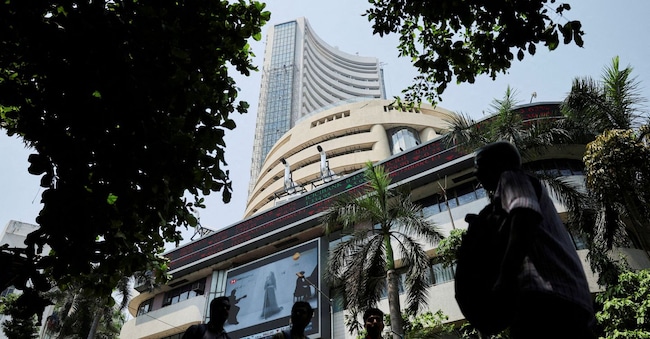
 Uomini passano davanti a uno schermo che mostra i risultati del mercato all'esterno della Borsa di Bombay (BSE) a Mumbai, India, 7 aprile 2025.

2' min read

2' min read

From our correspondent

NEW DELHI - The Securities and Exchange Board of India (Sebi) has temporarily suspended the local operations of US trading giant Jane Street on charges of making 'ill-gotten gains' by manipulating the derivatives markets.

Loading...

India's equivalent of Consob has ruled that the restrictions will only be lifted when Jane Street deposits 48.4 billion rupees, equivalent to USD 567 million, into an escrow account.

Until then, the New York-based company's traders will not be allowed to approach the Indian derivatives market, which is now the scene of 60% of the world's transactions and which, between January 2023 and March this year, returned the equivalent of USD 4.3 billion to the company under investigation.

The 105-page order published on Thursday evening on the Sebi website states that Jane Street allegedly moved large amounts of funds on the weekly expiry days of index options in order to influence price movements in the futures and spot market, where volumes are relatively low, and by taking 'significantly larger and more profitable positions' in the options market, which is much more liquid.

The documents made public by Sebi focus on 18 episodes, the most sensational of which dates back to 17 January 2024 and earned Jane Street a capital gain of USD 86 million. According to the Indian regulators' reconstruction, in the first two-and-a-half hours of a session that had opened with the Banknifty banking sub-index falling, Jane Street traders aggressively bought into the futures and spot market for the underlying securities, driving up prices and attracting flocks of retail investors.

At the same time, they would 'bet' on a fall in the index, hoarding put options (which give the right to sell a security at a certain price even when its market value is lower), which became increasingly cheap as the index climbed, until they created a position 7.3 times larger than the bullish position in cash and futures.

At that point, they would start selling, getting rid of the securities they had bought in the first part of the session, causing the Banknifty index to plummet and accumulating losses, but far less than the gains secured by the concomitant surge in the value of the put options, partly exercised and partly sold at a higher price than the purchase price.

According to Sebi, the trading patterns used by Jane Street constituted 'serious manipulation of stock prices and benchmark indices for illicit gains, to the detriment of several hundred thousand small investors'. The Indian authorities had already warned Jane Street to avoid such practices in January. The investigation reportedly found, however, that the accused strategy was still being used in May.

Copyright reserved ©
Loading...

Brand connect

Loading...

Newsletter

Notizie e approfondimenti sugli avvenimenti politici, economici e finanziari.

Iscriviti