Europe

Industry and philanthropy: an example from Turkey

from our correspondent Beda Romano

Aggiungi Il Sole 24 Ore
ai preferiti su Google
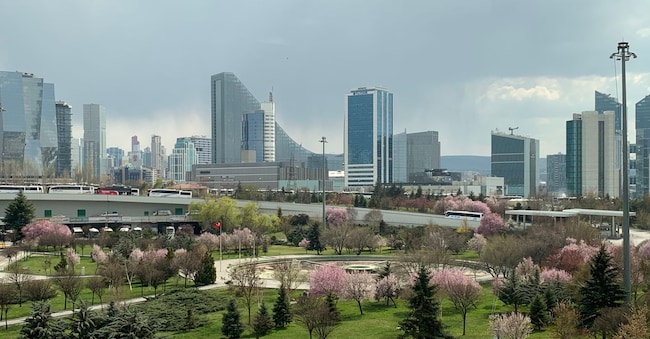
Il quartiere moderno di Söğütözü ad Ankara. Ospita i grattacieli e i centri commerciali più moderni della capitale turca (Foto tratta da Internet)

3' min read

Translated by AI
Versione italiana

3' min read

Translated by AI
Versione italiana

ANKARA – Turkish television is currently airing an unusual advert. The advert celebrates the first hundred years of the country’s most important company: Koç Holding. Over the course of a century, the company has transformed itself from a grocery shop in a suburb of Ankara into a world-class industrial and financial group. A story, the reader might think, similar to that of other European companies. Yet what is striking is the company’s philanthropic commitment, which is so extraordinary that it softens the image of Recep Tayyip Erdoğan’s Turkey that currently prevails in Europe.

The history of Koç Holding is worth a brief summary. The company was founded by Vehbi Koç in 1926, three years after Mustafa Atatürk established the republic. It is currently run by the third generation. A brochure explains that the company is Turkey’s largest industrial group. It is also the only Turkish company to feature in the Fortune Global 500 list. It employs 120,000 people across 60 countries.

Loading...

In Ankara in June, the chairman of the board of directors, Ömer Koç, reiterated the company’s philosophy: ‘Throughout its history, our group has developed hand in hand with our Republic’s commitment to the country’s economic and social progress’. “We have never defined growth solely in numerical terms. We believe that true success lies in strengthening our country’s industrial capabilities and supporting human capital.”

The film celebrates the company’s role in the modernisation of the country, from the arrival of the first cars and tractors, thanks to numerous international agreements. Above all, it highlights the philanthropic commitment of the Vehbi Koç Foundation, which since 1969 has been putting the founder’s motto into practice: ‘I live and prosper alongside my country’.

In 1988, the Koç Foundation established the Koç High School in Istanbul, which is now one of the most renowned in the country. Five years later, it founded a university in the same city – the ancient Constantinople – which is ranked as the top university in Turkey in global rankings. In 1998, to mark the 75th anniversary of the Republic, the Koç Foundation opened 13 primary schools across the country. Today there are 21. In the Beyoğlu district of Istanbul, the Atatürk Library was funded by the Koç Foundation and now holds 500,000 volumes.

In 1995, the foundation’s philanthropic activities were extended to scientific research when it acquired the American Hospital of Istanbul, with a commitment to open branches in Bodrum and Izmir. In 2014, Koç University in Istanbul opened its own clinic. On the cultural front, the Koç Foundation runs museums, art galleries and exhibition spaces across the country. Since 2011, the Metropolitan Museum in New York has housed two galleries dedicated to Ottoman art, funded by Koç Holding.

The Koç Foundation’s social commitment – which, amongst other things, promotes gender equality and awards university scholarships every year – paints a different picture of Turkey: one that is more modern and liberal than that of a country flirting with authoritarianism and watering down Atatürk’s secularism. How is this possible? We spoke to Şevket Pamuk, author of several well-known works on economic history, including A Monetary History of the Ottoman Empire (Cambridge University Press, 2008)

“So far, the Koç family have been skilful in managing their relationship with the government, whilst continuing to fund generous philanthropic projects,” explains Professor Pamuk from Istanbul. “In recent years, the government has become more aggressive. In its bid to control the economy, it is forcing private companies to accept expropriation, often on dubious grounds. The president, however, is cautious about taking on the Koç family head-on (…) During a recent controversy, Devlet Bahçeli, leader of the nationalist MHB party and an ally of President Erdoğan, did not hesitate to defend one of the members of the Koç family.”

It would be detrimental for the president to alienate a company of which the country is proud – assuming he even wishes to do so. After all, the company alone accounts for 8 per cent of Turkey’s exports. In June, Ömer Koç gave assurances that his group would continue ‘to embrace the values of the secular Republic’. In their own way, the Koç family are a hallmark of the Atatürk era, which no one (for the time being) dares to disavow tout court. In this sense, they may even act as a bulwark against Turkey drifting further off course.

Copyright reserved ©
Loading...

Brand connect

Loading...

Newsletter

Notizie e approfondimenti sugli avvenimenti politici, economici e finanziari.

Iscriviti