
iNEST for the Blue Economy

The consortium iNEST - Interconnected North-East Innovation Ecosystem (www.consorzioinest.it) represents one of the national ecosystems promoted by the national recovery and resilience plan PNRR. The University of Trieste, in this context, is coordinating a Spoke, focused on research and innovation activities aimed at the development of maritime, marine and inland waters technologies, converging towards the development of a Digital Twin of the Northern Adriatic Sea.
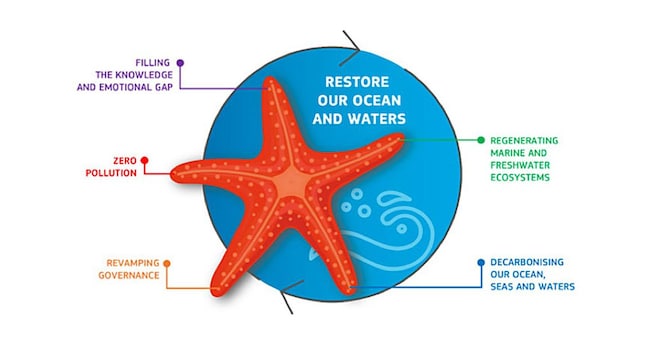
The activities of Spoke 8 are strongly inspired by the European priorities, in particular by the ambitious Programme called "Starfish Mission" aimed at knowing, protecting and restoring our waters by 2030.
The subject of the Blue Economy is becoming increasingly important economically, politically and socially, and touches multiple sectors including transport, logistics, security, fishing, and tourism.
And recently also the underwater world for everything that lies beneath the surface of the sea.
The seas, however, and in particular the Mediterranean Sea, are suffering from pollution and overexploitation. In order to make the most of this extraordinary resource, we must develop and use a concept of sustainability in the use of resources.
To this end, in order to better protect marine life and strengthen the blue economy, the European Ocean Pact was launched at the UN Nice Conference - June 25-
In these "blue" processes, everyone should be involved: the world of research, companies, institutions, citizens, In particular, society, citizens, children must be conscious protagonists and primary actors of a positive change.
But what do citizens know about the problems of the hydrosphere? How involved are they in the monitoring and protection of the seas? If Europe is asking us to implement the digital twin of the sea (a very complex operation), do citizens know what we are talking about?
We therefore wanted to ask citizens for their opinion; this was done by means of a survey carried out together with Rachael, as part of iNEST's cross-cutting activity dedicated to Citizens Engagement.
Two surveys were carried out, respectively in the periods 1-19 March 2024 and 26 May-10 June 2025, with interviews administered with hybrid online (CAWI) and telephone (CATI) methodology on representative samples of adults resident in Veneto, Friuli Venezia Giulia and Trentino Alto Adige, according to geographical area, age and gender. The sample sizes were 2,000 in 2024 and 1,219 in 2025.
The project coordinators are Maria Cristina Pedicchio of the University of Trieste and Luigi Tronca of the University of Verona together with RACHAEL Srl.
The Digital Twin of the Sea
A priority theme for the EU is to build a digital twin of the seas, i.e. a virtual copy that allows us to know and balance aspects of economic growth with sustainable environmental protection; economy and ecology must work together.
But, even if the citizen, in general, knows what digital twins of physical realities like a ship are... when it comes to the sea, he or she does not know what it is.
Sea pollution
Much of the time, we talk about the pollution of the sea by plastics and, recently, the issue of microplastics is also becoming prominent and of general concern.
An emerging sea pollution problem, still little known is also that of noise pollution
.
These data encourage the promotion of more and more information activities, and more active involvement of citizens.
Society must be directly involved, not only at the level of information and communication, but also at a planning and implementation stage.
Citizens should be called upon to co-design, co-implement and co-assess all programmes. They should play a key role in the research and innovation cycle by providing feedback on new technologies and ensuring societal adoption of disruptive solutions.
There are many benefits of citizen involvement, mainly to raise awareness of the importance and impact of research and innovation in people's daily lives and to increase confidence in science.
How to explain the sea to people of all ages.
For children aged 4-6, iNEST has published a volume: "Martina (starfish) goes to the concert" produced with Nicoletta Costa. Supported by an interactive reading, listening and drawing format, children discover that, contrary to popular belief, fish are not at all silent. Thanks to the collaboration with the Protected Marine Area of Miramare, the volume also allows them to listen to some of the "voices of the sea" such as the sounds of the corvina and scorpion fish, and anthropogenic noises, such as those of boats, which often obstruct and confuse the inhabitants of the sea.
Aimed at all citizens, iNEST has set up a multi-media and interactive exhibit - "Down in the Deep"- at the Museum of Scientific Imagery in Trieste, inviting visitors to descend into the ocean depths to discover extraordinary hidden landscapes. But that's not all: the exhibit also shows the infrastructures that criss-cross the sea, from telecommunication cables to offshore wind farms, bearing witness to how human society interacts with this remote environment. The experience is enriched, thanks also to the support of OGS, by a section dedicated to the instrumentation used by research to "see the invisible".

