
"Infineon Technologies is well positioned"
“It will benefit from the growing demand for semiconductors. I’d also highlight Acm Research, Corning, Snowflake and Spotify”

Key points
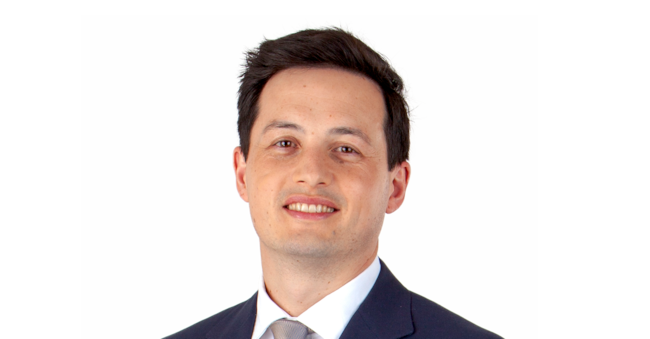
Richard Clode, portfolio manager on the Global Technology Leaders team at Janus Henderson, provides a very comprehensive and detailed overview of the technology sector and the growing influence of artificial intelligence.
The technology sector has experienced months of high volatility. With the upcoming quarterly results, what guidance do you expect from the hyperscalers regarding future investments?
The hyperscalers’ aim remains to convince the market that the sharp rise in capital expenditure (capex) and the deterioration in free cash flow are justified. The challenge lies in the time lag between investments and future revenues. Capex will continue to rise: Google has spoken of significantly higher and sustainable investment, whilst Meta’s plans for cloud AI appear to be paving the way for a further acceleration. Management’s focus will be on monetising artificial intelligence, accelerating the business and improving operational efficiency. These factors are expected to improve over the course of the year, although it is not certain that they will be enough to reassure the market. As active fund managers, we aim to manage this divergence in performance amongst these major index constituents.
How do you view valuations in the sector today, following SpaceX’s IPO and ahead of the listings of Anthropic and OpenAI?
The technology sector is very broad and diverse, so discussing valuations in aggregate terms can be misleading. On average, the sector is trading at one of the lowest premiums relative to the market over the past decade, due to the compression of software multiples, the re-rating of megacaps and the subdued valuations of certain segments of the semiconductor sector. Whilst we consider overall valuations to be reasonable, there are certain areas — in semiconductors, in thematic sectors such as space and quantum computing, and in individual blue-chip companies such as Tesla and SpaceX — where we struggle to justify current valuations. Public markets are more disciplined when it comes to valuations, which probably explains why OpenAI’s IPO has been postponed until next year. However, the return of momentum-driven retail investors has reduced valuation discipline in certain niches of the sector. As active managers, we can protect our clients from these areas.
What factors do you look at to distinguish a simple market correction from a structural shift in the AI cycle?
We try not to be swayed by market sentiment, focusing instead on the fundamentals. We monitor developments in AI technology, assessing whether it is reaching its limits in terms of scalability, capacity, added value and costs. We also analyse the ability to monetise investments: without an adequate financial return, the expenditure required to support the adoption of AI would become unsustainable. Finally, we assess market expectations and valuations. A significant deterioration in any of these factors could signal a structural shift in the cycle.
Apart from AI, what else do you pay close attention to?
Beyond AI, we are looking with interest at industrial technologies. The sector is emerging from a long bear market, which was also slowed by last year’s ‘Liberation Day’, but the deglobalisation of supply chains, the growing automation driven by AI and the cyclical recovery are creating a favourable environment for industrial automation and for semiconductors exposed to this sector.


