
Inflation: Meloni writes to von der Leyen, calling for greater flexibility. Fuel: Tamoil also set to adopt a price cap
The Prime Minister is stepping up pressure on Brussels, whilst talks with Libya regarding the country’s compliance with the price cap on petrol and diesel are ‘well under way’

Key points
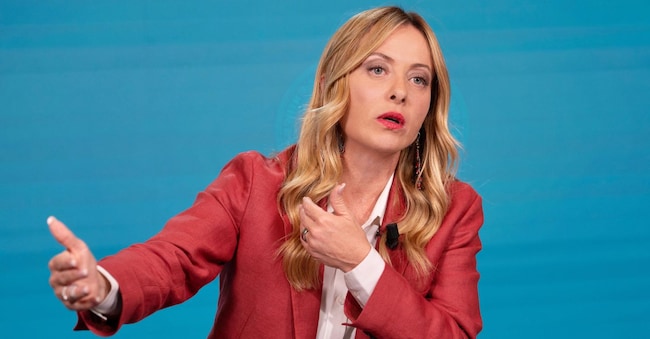
On the day that Istat confirmed inflation had soared to +4.2 per cent year-on-year (up from +3.3 per cent in August) Giorgia Meloni once again takes pen and paper and writes to Ursula von der Leyen. Her aim: to ask the President of the European Commission to put on the agenda for next week’s Ecofin meeting in Luxembourg (to be discussed at the European Council in mid-October) the granting of “additional flexibility to support households and businesses, in the face of rising inflation caused by high global energy prices”.
The request to the EU: to take higher inflation into account
The call to take higher inflation into account when calculating European parameters and the permitted deficit is not a new one: the Italian Government has already raised this issue at Ecofin, as the Prime Minister pointed out during a video link-up with the annual event organised by the daily newspaper Il Gazzettino, emphasising that she has long been calling for effective, coordinated measures to tackle rising energy prices.
ETS: ‘No more extra environmental taxes on businesses’
Meloni says she agrees with the call for the EU to ‘wake up’ issued by the president of Confindustria Emanuele Orsini; to wake up so as to abandon ‘ideology’ and ‘face up to the fact that some measures, rather than solving problems, risk creating them’. The most striking example? The “long-running saga” of the ETS, with the revision proposed by Brussels deemed “totally insufficient”, to which she opposes the six proposals agreed on Tuesday in Prague with Czech Prime Minister Andrej Babiš. “We cannot continue to burden our manufacturing companies with additional environmental taxation, further damaging their ability to compete in a global market where our main competitors are not subject to the same level of carbon costs and the same constraints,” the Prime Minister emphasises. “Failing to understand this means condemning Europe to deindustrialisation.”
Energy: the Government will make full use of the 14 billion flexibility
Meloni is looking to the production sector to make full use of the flexibility of 14 billion euros (0.3 per cent of GDP in 2026 and 2027) already granted by the EU for green energy investments. “We want to use it,” he explains, “to bring about a structural reduction in energy prices for businesses.”
Discussions with Libya regarding Tamoil’s participation in the price cap
The Government’s strategy is thus becoming clearer: on the one hand, to focus additional resources on businesses, to which it is once again promising that, at one of the forthcoming Cabinet meetings, the simplifications under the Single Special Economic Zone (ZES) will be extended; on the other hand, to help households by scrapping the car tax by 2027 and through the discounts offered – following moral suasion from the Government – by the major oil companies. Sources at Palazzo Chigi report that, following the decisions already taken by Eni, IP and Q8, discussions between the Prime Minister’s Office and the Libyan Government are ‘well under way’ to encourage Tamoil to join the call for a price cap on fuel.


