
Infographics, comics and puppets: how have image generators changed?
The latest evolution of ChatGpt has increased the potential of this technology.

3' min read
3' min read
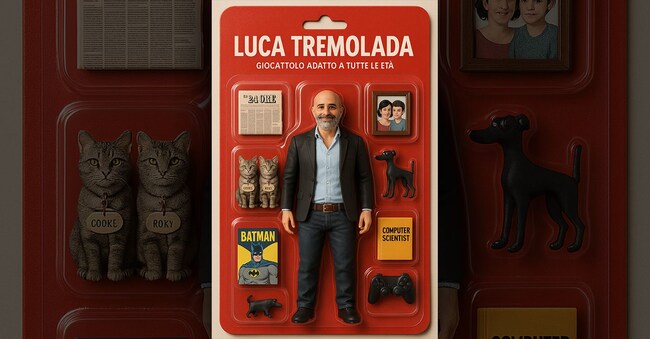
Why are social media flooded with action figures featuring characters from politics, the movies, the news? And why do so many post very plausible fake receipts, thus - among other things - sending a shiver down the spine of company managers who check employees' expense reports? All the fault of ChatGpt's latest development. Or all credit, if you like: because its new functions open up a mode of application between the amusing (for new modes of expression or satire, for example) and the professional. Infographics, illustrations, comics for use on social or even editorial products.
Behind the scenes, it happens that Openai has now brought image generation into the Gpt-4o model by integrating multimodal capabilities directly into its architecture. Previously, it used the Dall-E model instead, which was based on different (diffusion-type) AI approaches.
It means that the model now generates images sequentially, pixel by pixel or blocks of pixels, thus allowing for more precise control and greater consistency with the user-supplied prompt.
The progress made is evident at each of our prompts. For example, the writing is now almost always correct (whereas with diffusion it was almost always wrong).
We can, for example, turn textual descriptions into a comic strip with detailed vignettes.

