
Infrastructure, the digital game from planning to decommissioning. 'Now run'
Presented in Rome the cognitive investigation of the Public Works Commission of Palazzo Madama. Vice-President Basso (Pd): 'We must plan for the next twenty years, the risk is of falling behind'
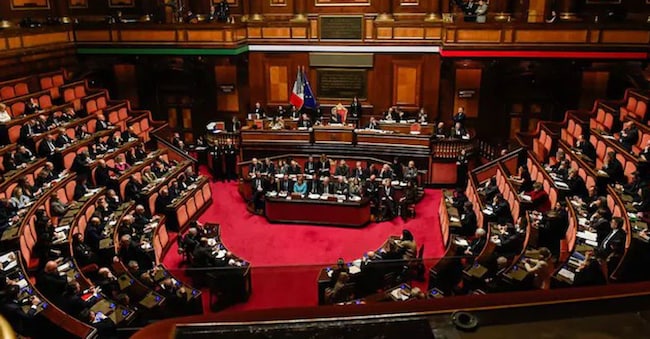
Thirteen hearings, forty-four subjects involved, twenty-eight documents acquired. At the centre, a passage that no one questions any more: without digital and artificial intelligence, infrastructures, bridges, roads, ports and motorways risk remaining imprisoned in the disease that grips them, the absence of maintenance. In addition to a serious delay in the country's competitive performance. This is the content of the cognitive investigation voted unanimously and presented on 23 April in Palazzo Madama, edited by the Dem vice-chairman of the Environment Committee Lorenzo Basso with the bipartisan support of the entire parliamentary arch. A work that tries to open the cage of technicalities and enter the political discourse. 'The will was to do parliamentary work, to create the necessary know-how as a legislator and deliberate in a conscious manner,' says Basso. Because, insists the Ligurian senator, 'there are big challenges for the country behind these issues. The crux of the matter is this: technologies are running, while the infrastructure network is struggling to modernise.
The investigation
It is therefore not surprising that the survey insists on a change of scale: continuous monitoring, predictive maintenance, integration of data throughout the life cycle of works. From design to operation, to decommissioning. With its gaze fixed on the logistics system, the invisible but capillary network on which goods move and industry manages to march. The endeavour is all here: to put an end to the separation of physical and digital infrastructure. Sensors, IoT, digital twin, data platforms. Infrastructures become 'active platforms', capable of producing information and guiding decisions. A paradigm shift that, however, comes up against known limitations: regulatory fragmentation, lack of expertise, still weak interoperability.
Loading...
The Government
This is where the government comes in. Deputy Minister for Infrastructure Edoardo Rixi puts his finger on the sore spot: "We have an infrastructure network built in another era, with geometries and characteristics that today make it difficult to intervene. Translated: complicated maintenance, building sites that block traffic and supply chains, costs that go up. Overwhelmed by the increase in flows and a logistical demand that has exploded in the last twenty years, the current systems no longer hold up. "It is not possible to think of managing everything in an analogue way," warns Rixi. Hence the push for predictive maintenance, advanced control centres. And another front growing under the radar: security. 'We have had a lot of attacks,' he says, referring to network cybersecurity.
The enterprises
The picture that emerges is that of a two-speed system. On the one hand, investments and Pnrr pushing - 250 million for the digitalisation of logistics alone - on the other, a structure that remains uneven, with different technologies coexisting on the same network. Within this scenario, the point of view of companies fits. "Data collection and open digital platforms are exactly what a country made up of small and medium-sized enterprises needs," explains Ance president Federica Brancaccio. The signal is clear: more than 50 per cent of companies are ready to invest in technological innovation. Not just productivity. On construction sites, says Brancaccio, digital also means safety. A theme that returns several times in the survey, along with accident reduction and network efficiency.
The final document
The commission's proposals move along four lines: monitoring and regeneration of works, augmented logistics, national data space for infrastructure and mobility, digital ecosystem for intermodal transport. Broad lines, yet to be translated into concrete acts. The political point remains. "We must plan for the next twenty years," says Basso. The risk, otherwise, is that we will fall behind and never catch up.
Copyright reserved ©


Brand connect
Loading...
