
'Innovative reform that responds to the market'
Carmela Bucalo says: now it is necessary to work well on orientation with students, families and in schools themselves.
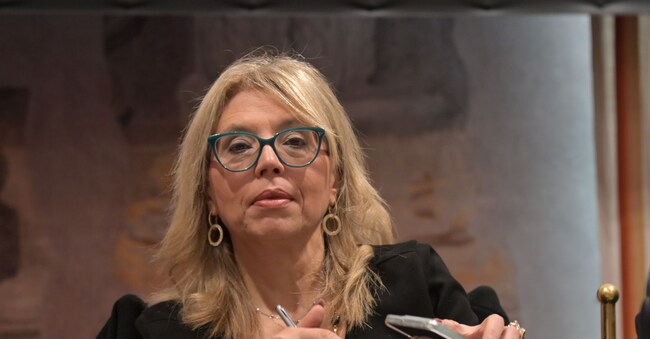
"4+2 has two obvious advantages," Senator Carmela Bucalo, Fdi's historic school expert and a member of the Education Committee at Palazzo Madama, tells us. "The first is that it reduces the duration of the school cycle by one year, thus enabling young people to enter the world of work sooner, as many of their peers around the world already do. The second, which is just as important, is that it directly links the school to the production chains and territories, with the direct outlet in the Its Academy, which has a very high employment rate (over 80%) and, above all, it is a job that is 100%, or almost 100%, consistent with the training course, both theoretical and practical, carried out by the young people'. Not only that. "For me, who started 40 years ago working in a vocational school, the new technical sector, created and supported by Giuseppe Valditara and the entire Meloni government, finally recognises the equal dignity of knowledge, overcoming ungenerous and untrue labels that have always branded technical and vocational education as second-class compared to high school.
On the other hand, 4+2, which will become standard from 2026/27, is a "highly innovative reform," Bucalo continued, "because it responds to the needs of the labour market, envisages a strong involvement of businesses, including in specialised teaching, and provides students who choose it (there are already more than 10,500 in the first and second years, ed. I am pleased with the support of Confindustria, and of the entire business world, because it is time for technical education, as in the 1950s/60s, to return to the role it deserves, for the growth of the country'.
Now, Bucalo added, "it is necessary to work well on orientation among students, families, and in the schools themselves, to make the 4+2 grow. Additional funding for the Its Academies is also important, since they have strongly increased the number of students attending, also thanks to the push of the NRP and the national law, and will grow even more with the new technological-professional training chain. Regional vocational education and training must also be structurally involved. In Sicily, my region, we have already started. Lombardy, Piedmont, Veneto and Emilia Romana are also ahead. I hope the time of contrasts, especially ideological ones, between school and work is over for good. In this perspective, the training of teachers is also fundamental, and I have great confidence in them'.

Brand connect


Newsletter Scuola+
La newsletter premium dedicata al mondo della scuola con approfondimenti normativi, analisi e guide operative
Abbonati