Products

Inside the Huawei lab where the smartwatch is being developed into a health assistant

At the Huawei Health Lab in Songshan Lake, engineers and researchers are trying to teach smartwatches to understand what is happening inside the human body.

4' min read

Translated by AI
Versione italiana

4' min read

Translated by AI
Versione italiana

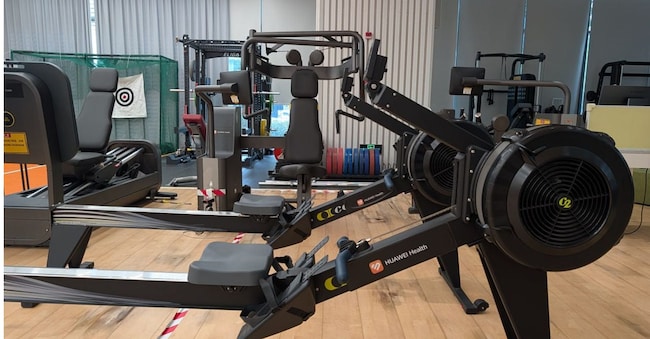
DONGGUAN (China) – There are treadmills, exercise bikes, machines to simulate ascents and descents, swimming pools and diving tanks, and even basketball courts monitored by 28 cameras. And then there are sensors everywhere, electrodes, mannequins, environmental chambers and measuring instruments that look more like they’ve come from a sports medicine centre than a smartphone factory. The Huawei Health Lab in Songshan Lake, Dongguan – some 70 kilometres from Shenzhen – began operations in November 2021.
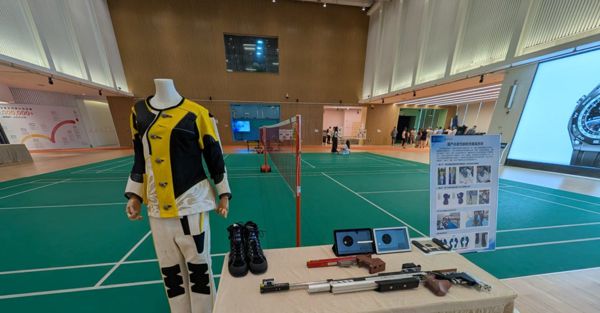
Le tecnologie Huawei sono state usate per progettare le divise degli atleti che hanno partecipato alle gare di tiro delle olimpiadi del 2024

Here, engineers, doctors and researchers are trying to teach smartwatches to understand what happens inside the human body.

Loading...

The idea is simple to explain but far less simple to put into practice: turning the wrist into a permanent monitoring point. Heart rate, blood oxygen levels, electrocardiogram, temperature, sleep, movement and blood pressure all become pieces of the same jigsaw. Huawei calls this architecture TruSense. It is not a single sensor, but a chain that starts with the hardware, passes through algorithms and leads to healthcare services.

The laboratory is specifically designed to build and verify this chain. An athlete runs whilst reference systems simultaneously measure their body. The smartwatch records its own signal. The two results are then compared. It’s a bit like calibrating a set of scales, except that in this case the scales have to work whilst we’re asleep, running or in a meeting.
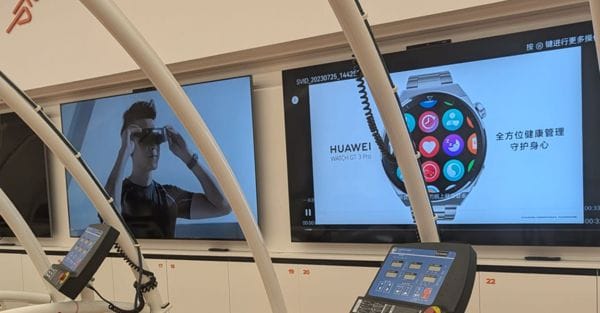
The data collected by the device is first processed by the sensors and proprietary algorithms. Heart rate, HRV, ECG, SpO2, movement and sleep can then be combined to produce more complex indicators: stress, recovery, cardiovascular risk or sleep quality. With the user’s consent, this data can be integrated into the Huawei Health ecosystem and, in research projects, used in a regulated manner to build and validate models in collaboration with hospitals and universities. Huawei reports having over 180 partner institutions and more than 340 research projects. According to figures provided by the company, its Health platform has over 570 million users.

Blood pressure is the most concrete example. The Watch D2 uses a micro-pump and a small airbag built into the strap: it inflates just like a doctor’s cuff, only in miniature. It can perform 24-hour ambulatory monitoring and is certified in the European Union as a CE-MDR medical device. Here, the wearable goes beyond simply estimating a parameter through optical correlations and introduces a genuine oscillometric measurement.

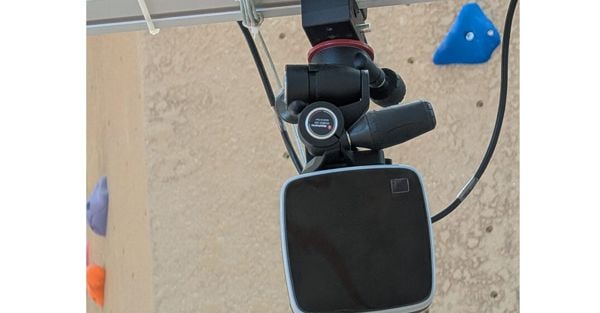
Un delle 28 telecamere appese ai bordi del campo di basket per riprendere e studiare i movimenti degli atleti

The next frontier is glucose. And it is also the most challenging. Currently, certain Huawei smartwatches used in China can take part in a study that continuously collects physiological data over a period of between three and fourteen days and produces an assessment of the risk of hyperglycaemia. Huawei specifies, however, that the system does not provide a blood glucose reading and is not a medical device. It is a risk screening tool, not a substitute for a blood glucose monitor. Certifications will be required, and the company is currently working on these.

The real aim is to measure glucose without pricking the skin. In the projects showcased in Dongguan, Huawei is exploring several avenues. In practice, the aim is to observe the effects of metabolism on light, electricity, temperature and circulation, and then let artificial intelligence piece the clues together. It is a kind of scientific investigation: as glucose cannot be seen directly, the aim is to look for its ‘fingerprints’.

This is where Huawei’s vision for wearables comes to the fore. A watch should not be limited to counting steps or calories. It should become a longitudinal sensor, capable of monitoring a person over months and years. Traditional medicine takes snapshots during a consultation; the wearable device attempts to shoot a film. For research, millions of hours of physiological signals are equivalent to a vast distributed laboratory.

Huawei has reached this point after a very different journey. Founded by Ren Zhengfei in Shenzhen in 1987, it began by selling telephone switchboards. It has since become one of the world’s leading manufacturers of telecommunications infrastructure, and has expanded into smartphones, cloud computing, chips, connected cars and consumer devices. In 2025, it generated a turnover of 880.9 billion yuan, investing 192.3 billion – 21.8 per cent – in research and development.

Loading...

However, since 2019, this story has been overshadowed by the technological standoff with Washington. Huawei remains on the US Department of Commerce’s blacklist, which restricts its access to US technology and components. This is the reason, amongst other things, why Google services are absent from new Huawei smartphones.

In Europe, the situation is different. Huawei smartwatches are still on sale, and some features – such as the blood pressure monitoring function on the Watch D2 – have obtained European medical certifications. However, not all health-related features available in China are automatically available in the European Union: validation, authorisation and regulatory compliance are required. Furthermore, in the telecoms sector, the European Commission considers Huawei and ZTE to be 5G suppliers posing significantly higher risks than other vendors, and several countries have introduced restrictions. In Songshan Lake, this tension remains in the background. In the foreground is a wrist. Huawei wants to turn it into a window onto the body’s metabolism. Blood pressure monitoring demonstrates that certain technologies can make the leap from the laboratory. Glucose monitoring will reveal just how far the watch can go.

Copyright reserved ©
  • Luca Tremolada

    Luca TremoladaGiornalista

    Luogo: Milano via Monte Rosa 91

    Lingue parlate: Inglese, Francese

    Argomenti: Tecnologia, scienza, finanza, startup, dati

    Premi: Premio Gabriele Lanfredini sull’informazione; Premio giornalistico State Street, categoria "Innovation"; DStars 2019, categoria journalism

Loading...

Brand connect

Loading...

Newsletter

Notizie e approfondimenti sugli avvenimenti politici, economici e finanziari.

Iscriviti