Inside the new immersive culture: the spectator at the centre of the images
The evolution of entertainment is not only through AI, but through spaces that, thanks to cutting-edge technology, recreate environments where the show is 360 degrees.
by Alba Solaro
 Aggiungi Il Sole 24 Ore
ai preferiti su Google
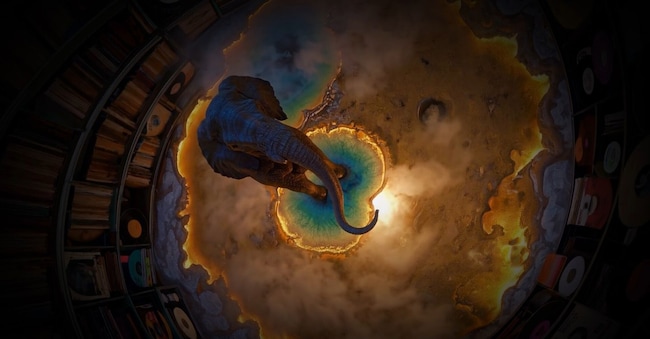
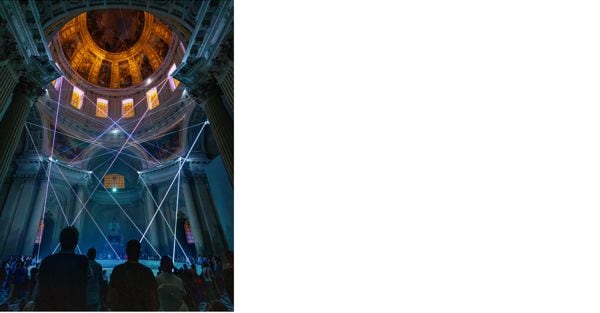
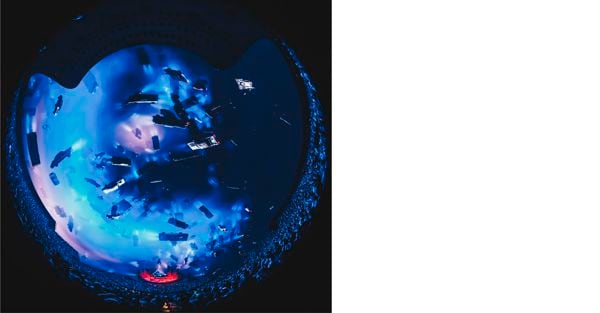
Seeing is no longer enough for us. We literally want to immerse ourselves: in a painting by Monet, in a starry night by van Gogh, in the virtual concert by Abba, in the corridors of Hogwarts castle with Harry Potter. Watching is increasingly an immersive experience, a magic and overused buzzword, at risk of overdose and immersive-washing - if we don't want to end up considering even video chatting with a friend as immersive. A different way of looking at it is to consider it as a further step in the evolution of the image society that began in the 1980s with music videos, which had created a new language, changed the way of consuming and thinking about music, but also fashion, cinema. And they had, for the first time, blurred the boundaries between content and marketing. Today it seems like prehistory to us, but videos are still the ones that keep us glued to the stories on our phones. Only now everything is immersive. And it will be more and more so. According to official data, in 2024 the total global entertainment market was about 114 billion dollars and it is estimated that it will quadruple, reaching 442 billion dollars by 2030. A boom where new technologies are, of course, the driving force. Artificial intelligence in the lead, but also the design of unprecedented spaces: huge domes whose walls incorporate LEDs, video projections mapped on a vast scale, where even the space where the spectator sits becomes part of the show. Where does all this take us? To a new form of art and communication, or to the risk of flattening everything into pure entertainment? We turned the question over to those working in this field at the highest level.
"A SOLUTION TO CONVICT PEOPLE TO GET OUT OF THE HOME"
At 15 he was shooting his first videos. At 28, he set foot in Hollywood with Demolition Man, a sci-fi action movie starring Sylvester Stallone and Wesley Snipes. Then Marco Brambilla, born in Milan in 1960, naturalised Canadian for many years, decided that video art was more exciting than the compromises demanded by the film industry.
One of his AI-driven digital moving image works, Approximations of Utopia, was simultaneously projected on 95 billboards in Times Square, New York. His video collages such as Megaplex, echoing the triptychs of Hieronymus Bosch, have passed through MoMa and the Guggenheim. "Now I am working with Donatien Grau, the curator of contemporary art at the Louvre, on my next work, The Body of the Emperor, inspired by Roman emperors to talk about this world increasingly focused on myth and the centralisation of power".
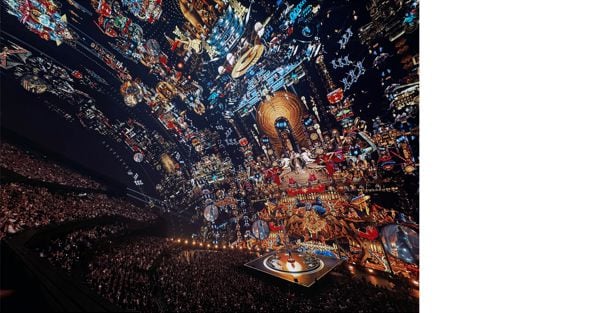
Brambilla's work is large-scale and highly immersive. After Utopia, which after Miami will be in Spain and then Montréal, uses very high screens as totems, "on which images (re-processed by AI) from 18 universal expos are projected. Expos have always fascinated me. They are wonderful time capsules, used to show the technological advances of different countries. When I moved to Canada as a kid, one of the first things I saw was the Expo in Montréal, then I managed to visit those in Osaka, Shanghai, Seville, Brussels'. Utopia, Brambilla recalls, means nowhere. 'A collective dream that has always been unattainable. When I was studying architecture, I was fascinated by the work of visionaries such as the Italians Archigram and Superstudio who, in the pre-digital world, designed models such as the Plug-In City, a utopia of a constantly evolving megastructure incorporating all services'.