Inside the Wave of Hokusai
In Lecco, the exhibition "Hokusai. Il segreto dell'Onda che attraversa l'Europa' is a journey into the world of the artist who spoke to everyone
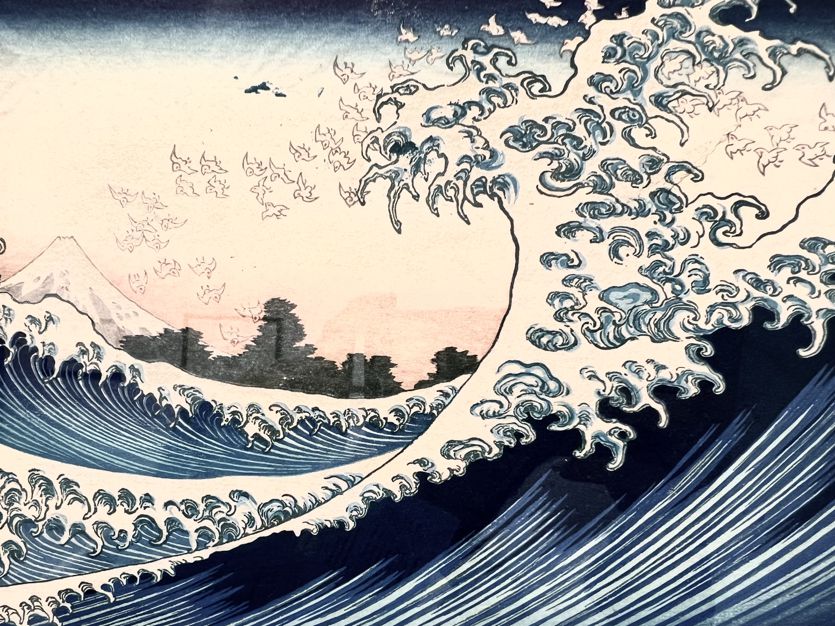
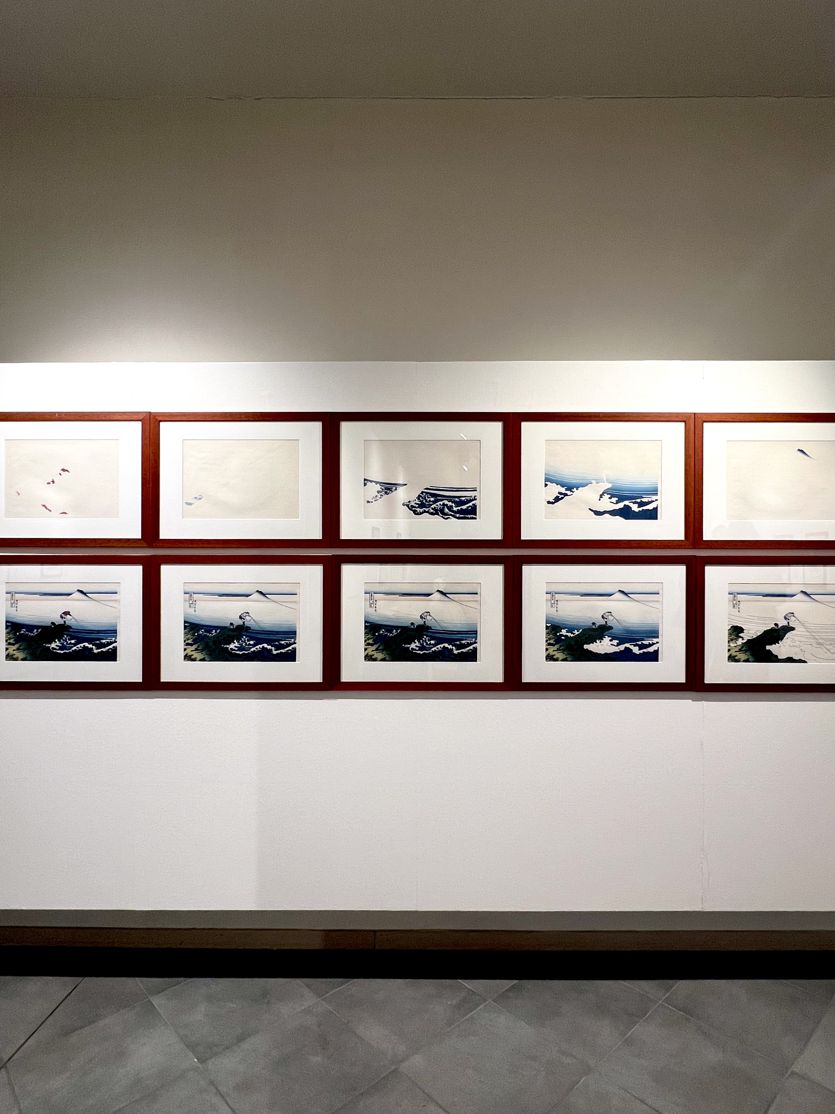
There is something surprisingly sober, almost countercultural, about the exhibition dedicated to Katsushika Hokusai staged at the Palazzo delle Paure in Lecco. Entitled Hokusai. Il segreto dell'Onda che attraversa l'Europa, curated by Paolo Linetti, produced and realised by ViDi Cultural and Ponte43, in collaboration with the Municipality of Lecco and the Sistema Museale Urbano Lecchese, and open from 21 March to 27 September 2026. The route is orderly and revolves around the structure of the image, built on clear nuclei such as the technique, the Fuji series and the study sheets, with water as the central element. As soon as one enters, one's instinct is to look for the most iconic work, the one seen on covers and advertisements, a wave now known and recognisable everywhere. But then, as you enter, your gaze settles on small-format works, executed with extreme precision, depicting scenes of everyday life in Japan in past centuries. Step by step, one is captured by colours, faces, gestures and natural elements. The work sought at first remains in the background, almost without the viewer noticing. Japanese artists work with great care. Each image is the result of coordinated and meticulous work. When one arrives at the most well-known work, one's gaze is changed, one observes it more carefully, and the reading becomes clearer.
Katsushika Hokusai
Katsushika Hokusai, active between the end of the 18th century and the first half of the 19th century, is one of the main exponents of ukiyo-e, an expression indicating a vision of life linked to the present, made up of lively and transitory moments. A painter and engraver, he left a large body of work. His woodcuts originate from a precise process: the artist designs, the engraver translates the mark on the wood, the printer constructs the image through successive passages of colour. In this system, Hokusai introduces the bokashi, a shading technique that allows gradual passes of colour giving more depth to sky and water. The series of the Thirty-six Views of Mount Fuji remains his most representative work. It highlights a continuous research, marked by assiduous movements, name changes and an almost obsessive search for an ever more precise formal rendering. His work also reached Europe and was reflected in 19th century painting, with visible effects in the work of Vincent van Gogh, Claude Monet and Edgar Degas. An important step concerns the introduction of Western perspective, which was known through European prints and models spread to Japan via Dutch trade. This method allowed the relationship between foreground and background to be organised more precisely. challenging Japanese iconic schemes that were based on hierarchical perspective where the size of figures reflected their importance. Also linked to this phase is the use of Prussian Blue, also introduced in Japan from the 1820s. An industrially produced pigment that is more stable and intense than natural colours, expanding the expressive possibilities and allowing for a deeper and more volumetric rendering of surfaces, particularly water.
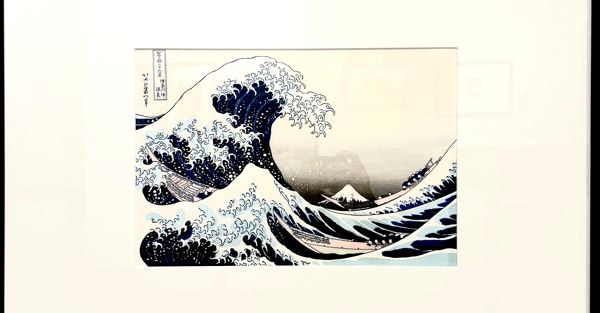
The Great Kanagawa Wave (1830-33)
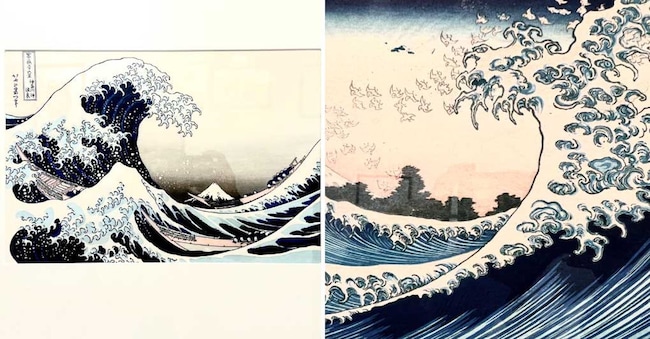
Reading the Great Wave of Kanagawa (1830-33) fits into this picture. The image presents a precise structure, with Mount Fuji in the centre, framed by a geometric construction. As Paolo Linetti observes, Hokusai applies Western rules and organises the scene through measured relationships with a clear definition of space. The composition develops around three poles: nature, man and the divine. Nature manifests itself in the wave, which recalls the shape of a large claw about to launch an attack. The human presence appears in the figures on the boats, overwhelmed by the motion of the sea, neither resisting nor stirring but bowing to a superior force. In the background, the mountain introduces a reference to the divine. Motionless and dominant, it acts as a pivot and orders the circular movement of the image. These elements build a unified structure, in which each contributes to an overall balance. In a historical period marked by Japan's isolation, the encounter between East and West nevertheless finds space. They move in both directions, driven by the desire to discover each other and to build connections between different cultures. This process shows man's drive towards knowledge and overcoming his own limits. In Hokusai's works, this idea is reflected in images that convey a sense of unity, in which different elements coexist harmoniously. A sense of unity then emerges where one is part of a cycle that holds everything together.