
Instagram cracks down on fake accounts: what’s changing (and what isn’t)
The ‘AI Creator’ label is being replaced by ‘AI-generated profile’: those who do not declare this risk being excluded from recommendation systems

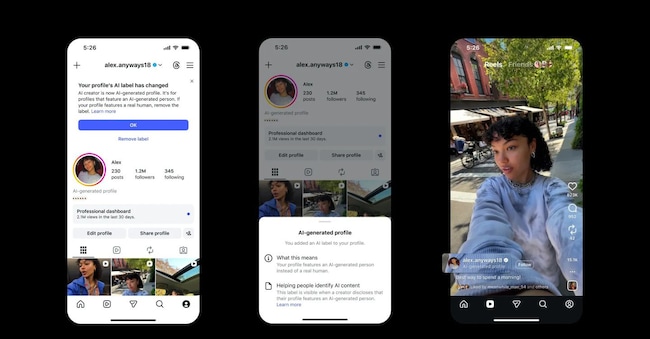
Instagram has decided to change the rules of the game for profiles generated using artificial intelligence. For the past few days, the label that creators were previously encouraged to apply voluntarily – ‘AI Creator’ – has been replaced by a more explicit label, ‘AI-generated profile’, designed to make it immediately clear that a profile depicts a non-real person. Meta announced this in an official statement published on its creators’ blog, explaining that the aim is to address a discrepancy experienced by users: discovering, often too late, that a human-looking profile was in fact entirely synthetic.
Until now, this declaration has been left to the creator’s good faith; from tomorrow, anyone who fails to label their artificial profile correctly will face an ‘algorithmic penalty’ – in practice, a substantial reduction in visibility: profiles that are undeclared and identified by Meta’s detection systems will be excluded from the Explore section, from Reels and, more generally, from all the platform’s automatic recommendation mechanisms. Not a ban, but a penalty. Meta provides two ways to resolve this situation: to apply the label retrospectively, or to lodge an appeal via the Account Status section, should the system have made a classification error.
There is also a distinction that the company is keen to make clear: the measure applies exclusively to profiles depicting a person generated by AI, not to human creators who simply use artificial intelligence tools as part of their creative process. The latter are not required to provide any additional labelling.
On paper, this represents a step towards greater transparency, in line with the direction taken over the past twelve months by YouTube, TikTok and Meta itself on Facebook and Instagram, where ‘AI info’ labels are already applied to content that includes metadata indicating synthetic origin or voluntary declarations by creators.
Observers remain sceptical as to whether this is a sufficient measure to counter the massive influx of AI-generated content on social media. This issue was also highlighted in an investigation by The Verge: labelling, however strict it may be, remains a structurally flawed tool. The platforms continue to refuse to offer users a genuine filter – a simple toggle that would allow them to exclude from their feeds anything that has been flagged as synthetic. When approached by The Verge, TikTok and Spotify did not respond; Google stated it had nothing to say; and Meta did not provide an attributable comment.

