
International collaboration as an obstacle to US-China competition?
The regulation of artificial intelligence (AI) is increasingly shaping up as a field of strategic competition between the US and China

3' min read
3' min read
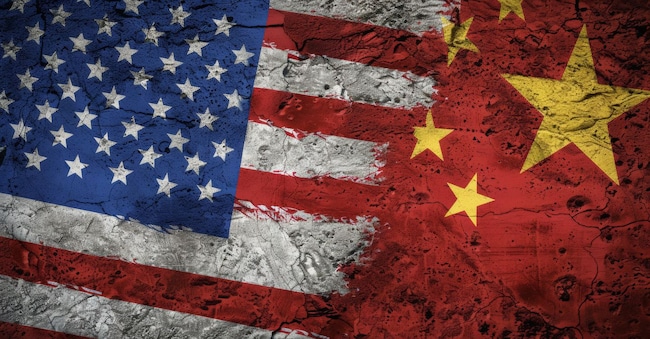
The regulation of artificial intelligence (AI) is increasingly shaping up as a field of strategic competition between the US and China. Both countries see AI as a key lever for economic, military and geopolitical primacy, adopting approaches that reflect their respective industrial and cultural priorities.
Stanford's Global AI Vibrancy Tool reports the US AI ecosystem as the most robust in the world, significantly outperforming all other countries. By 2023, the US would have attracted more AI-related private investment ($67.2 billion versus China's $7.8 billion) and developed more learning models (61 versus 15). In addition, El Capitan, the supercomputer hosted at the Lawrence Livermore National Laboratory in California, was recently ranked first in the Top500, the ranking of the world's most powerful supercomputers.
A recent letter from Senator Ted Cruz to the Justice Department, however, raised concerns about international collaboration strategies and, in particular, possible violations of the Foreign Agents Registration Act (FARA) by foreign actors, such as the UK's Centre for the Governance of AI and the European Union. These actors, according to Cruz, would actively participate in AI policy-making in the United States without registering as 'agents of foreign entities'. Moreover, the US administration, according to the same letter, would be coordinating with the UK and EU on joint AI initiatives without congressional authorisation. This conduct would risk leading to restrictive regulations that would slow down American innovation and indirectly favour China.
The growing fear of the US is also reflected in the annual report of the US-China Economic and Security Review Commission, which calls on the government to fund a Manhattan Project-like programme to overtake China in the race towards general artificial intelligence (AGI). China, while currently behind the US in terms of infrastructure and technology development, stands out for its speed in patenting, with over 38,000 patents related to generative AI registered between 2014 and 2023. Through the 2017 New Generation Artificial Intelligence Development Plan, the Chinese government has set technological self-sufficiency as a strategic pillar. The Chinese model is based on direct state intervention, with massive public subsidies to strategic sectors, thus avoiding the uncertainties of the global market. Another significant example of Chinese strategy and influence is the recent rumour that Apple has been warned that the launch of new AI capabilities in China could be significantly delayed, unless it collaborates with a local company.
The US-China Economic and Security Review Commission has suggested that Congress grant more powers in the field of AI to the executive, along with dedicated funds to support leading companies in the field to ensure adequate speed and competitiveness.

