World divided

Arrest warrant for Netanyahu: reactions, from Trump to Orban to Salvini

After the Court's historic decision, here is how the most important world leaders reacted

by Angelica Migliorisi

3' min read

3' min read

The decision of the International Criminal Court (ICC) to issue an arrest warrant against Israeli Prime Minister Benjamin Netanyahu and former Defence Minister Yoav Gallant has triggered a wave of global reaction. The accusation, linked to war crimes and crimes against humanity during the Gaz conflict, has polarised international opinion, generating condemnation, support and diplomatic stances.

Israel: unity against the mandate

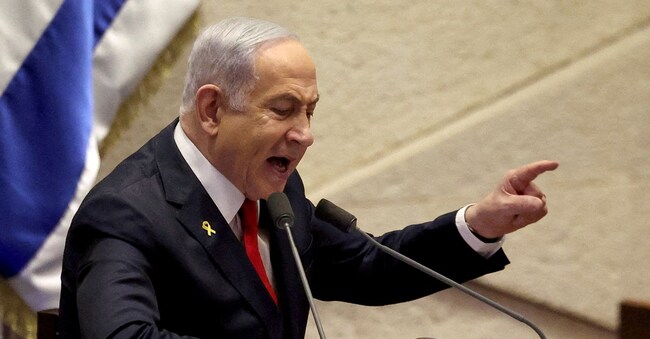
Israel strongly rejected the court's decision. Netanyahu called the accusations "absurd and false", accusing the body of being politicised and anti-Semitic. President Isaac Herzog spoke of a "dark day for justice", while the Minister of National Security, Itamar Ben-Gvir, proposed responding by extending Israeli sovereignty over the West Bank. Israeli public opinion and politics were united in rejecting the ruling, considered an attack on the country's sovereignty.

Loading...

Palestine: justice for victims

Palestinian representatives welcomed the mandate as a first step towards international accountability. Husam Zomlot, Palestinian ambassador to the UK, described the decision as a victory for the international order and Palestinian human rights organisations called the mandate 'a light of hope for the victims of Gaza'.

United States: a wall of support for Israel

The US strongly opposed the mandate. President Joe Biden called the decision 'outrageous' and reaffirmed unconditional support for Israel, declaring: 'There is no equivalence between Israel and Hamas'. Senator Lindsey Graham, close to Donald Trump, also called for new sanctions against the ICC.

The incoming Trump administration, according to Washington sources, is considering imposing sanctions against the Court, in particular against chief prosecutor Karim Khan. Mike Waltz, Trump's national security adviser, promised a strong response against what he called the "anti-Semitic bias of the ICC".

Europe between principles and pragmatism

In the European Union, reactions were mixed. The High Representative Josep Borrell called on the member states to respect the decision of the IPC. However, some countries took ambivalent positions.

In Italy, Foreign Minister Antonio Tajani stressed that the ruling would be evaluated with the allies, while Defence Minister Guido Crosetto called the mandate 'wrong' but pointed out that Italy, by adhering to the Rome Statute, would be obliged to apply it. Internal divisions also emerged from the parties: the Democratic Party supported respecting the decision, while the Lega criticised it as 'pro-Islamic'. Salvini declared: 'If Netanyahu comes to Italy he is welcome, the war criminals are others' and then added that PM Meloni would find 'a synthesis between the different positions of the members of the executive'. The M5S called for an arms embargo on Israel.

Hungarian Prime Minister Viktor Orban offered explicit support to Netanyahu, inviting him to Hungary to ensure that the mandate will not take effect.

France and the United Kingdom declared their respect for the ICC, but did not confirm whether they would arrest Netanyahu if he visited. In Belgium, on the other hand, the government emphasised the importance of fighting impunity and declared its full support for the Court.

Sweden, through Minister Maria Malmer Stenergard, confirmed support for the court and its independence. Similarly,Ireland and Norway expressed confidence in the role of the court, calling for it to proceed in accordance with the highest standards of due process.

Out of Europe

.

From Latin America, Argentine President Javier Milei severely criticised the ICC, accusing it of ignoring Israel's right to self-defence against Hamas and Hezbollah.

In contrast, South Africa strongly supported the decision, calling it a significant step towards justice for war crimes.

China maintained a cautious stance, asking the IPC to adopt an 'objective' approach in dealing with such complex cases.

The United Nations

.

The UN Secretary General, Antonio Guterres, reiterated his respect for the independence of the ICC, avoiding going into the political implications of the decision. Francesca Albanese, UN Special Rapporteur on Palestine, called the mandate a "moment of euphoria" for the victims of the conflicts in Gaza, praising the work of human rights organisations.

Copyright reserved ©
Loading...

Brand connect

Loading...

Newsletter

Notizie e approfondimenti sugli avvenimenti politici, economici e finanziari.

Iscriviti