
International Tensions: Impacts and Investment Strategies on the US
The truce on tariffs is not enough and Israel inflames the climate. Wall Street and Treasuries are pieces of a global portfolio, but less important

7' min read
Key points
7' min read
International tensions continue to weigh on financial markets.
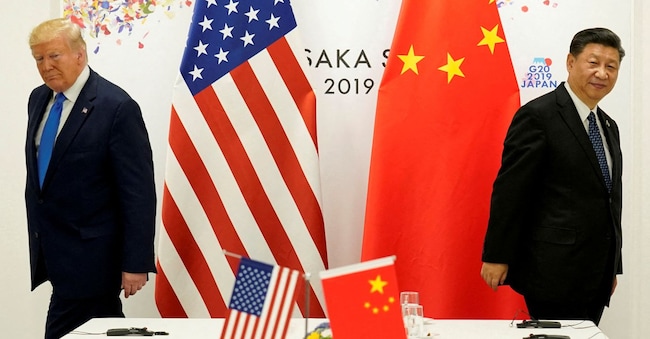
The meeting in London between the US and China resulted in a framework agreement for a truce on tariffs and the removal of US blockades on the sale of semiconductors, in exchange for the availability of Chinese rare earths. US President Donald Trump gave an enthusiastic account of the deal, but already the next day threatened high tariffs against all trade partners. Beijing, on the other hand, made no comment on this initial part of the negotiations, which are expected to be lengthy.
The first reaction to the news was lukewarm. In New York, the stock indices tergiversed, with the S&P500, Nasdaq and Dow Jones industrials around parity. The dollar weakened to above 1.14 against the euro and modest risk aversion brought back flows into Treasuries, the US government bonds. In fact, the selling of dollars and demand for Treasuries was also due to expectations for a Federal Reserve interest rate cut in July, as US inflation rose to 2.4 per cent, but less than estimates and only slightly above April's 2.3 per cent, the lowest level in more than four years.
The escalation of the war in the Middle East, then, with the Israeli attack on Iran, has inflamed the perception of risk.
The market
.In general, there is greater investor diversification away from US financial assets. Fears about the deterioration of the Stars and Stripes economy and the expansion of US government debt have weakened the greenback and Treasuries, so much so that the rating agency Moody's has stripped Washington's bonds of their AAA (the highest rating). Yields (which move inversely to prices) on US government bonds are now just under 4% for two-years and 4.4% for ten-years, almost half a point and 0.7% higher, respectively, than at the end of last September, when Trump's victory was only beginning to be assumed. Finally, one must also consider that the stocks of the S&P500 and Nasdaq have doubled in five years and quadrupled in the last decade; thus, profit-taking in a confusing environment is understandable.


