
Internet from space: is Iris² really the European answer to Musk's Starlink?
Because the EU satellite internet constellation will not be the answer to Elon Musk's network. At least in the beginning.

5' min read
5' min read
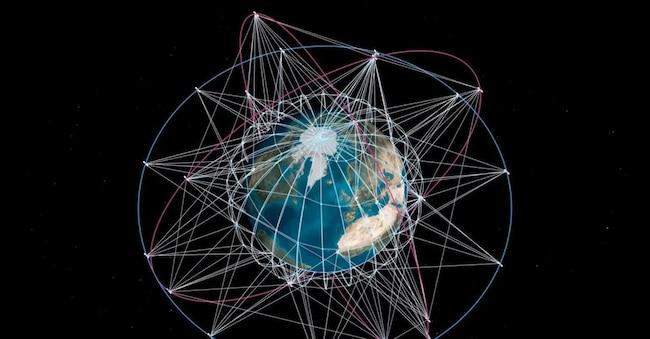
It has been described as 'Europe's answer to Starlink', but Iris², the multiorbital constellation to dispense internet from space to the European Union, is far from being able to compete with the network that, de facto, constitutes Elon Musk's true otherworldly power.
Although to explain the distance between the two infrastructures, it would suffice to take a snapshot of the difference in their targets - mostly public safety those of Iris² and commercial those of Starlink - and critical mass - less than 300 European satellites versus the 7,000 Starlink and growing - a few more details should be added to detail the issue.
The 10.6 billion euro concession
.On 16 December, the European Union kicked off the realisation of Iris², an acronym for 'Infrastructure for resilience, interconnectivity and security by satellite', the constellation designed to ensure secure, autonomous, efficient and high-quality connectivity in support of governments and institutions.
On that occasion, the European Commission formalised a 12-year concession contract with the sole bidder, SpaceRise, a consortium of companies formed ad hoc by three main operators, Eutelsat, Hispasat and Ses, together with numerous industrial subcontractors, including Thales Alenia Space, Ohb, Airbus Defence and Space, Telespazio, Deutsche Telekom, Orange, Hisdesat and Thales SIX.
The applications and services of Iris² will range from defence to emergencies and will also be guaranteed in critical situations, such as disasters or wars. Together with the Copernicus constellations (for Earth observation) and Galileo (for navigation, positioning and timing), the new infrastructure will constitute the third fundamental building block of European sovereignty, which is currently lacking.

