
Interview with Daron Acemoglu: the future of AI, data and sustainability
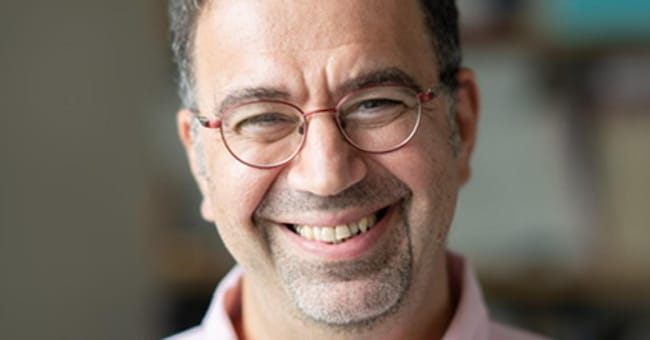
Daron Acemoglu, professor of economics at MIT, shares his vision of the future of exponential technologies. The interview was conducted before the Nobel Prize was awarded
by Frank Pagano
6' min read
6' min read
Exponential technologies will change our world, forever. This is our opinion, as technology optimists.
Now, it is always good to have a sanity check, or at least listen to the contrary view. We contacted Daron Acemoglu, professor of economics at the Massachusetts Institute of Technology (MIT), bestselling author, world-renowned speaker and winner of numerous prestigious awards, including the John Bates Clark Medal in 2005, awarded every two years to the best economist in the United States under the age of 40 by the American Economic Association. His CV is impressive and Acemoglu is now one of the most cited economists on the planet;
This is the exchange with the Master;
Which exponential technologies do you think will change our world by 2030 - between Blockchain, AI, Spatial Computing, Quantum?
It is hard to say. All these technologies are highly publicised. It remains to be seen which technologies will flourish and find impactful applications. I don't think blockchain has the potential to have pervasive effects, except in a few narrow applications. Artificial intelligence is a different story. While much of what is written and said about AI is exaggerated, there is no doubt that AI is advancing rapidly and is being implemented in many areas. On this basis alone, I predict that it will have an impact on many sectors of the economy, including social media, communication and human resource management. It remains to be seen whether it will penetrate into other activities, such as finance, law, education and healthcare. More importantly, even if it were to become widely used in areas such as education and healthcare, there is a big difference between good use and bad use. For example, distributing ChatGPT to millions of students and encouraging them to learn from the chatbot rather than from their teachers is easy. Making sure they learn the right material effectively is much more difficult;
AI is the land of the plausible, but not the profitable for now. What is the business model to make AI technology financially healthy for everyone?
I would say differently. At the moment, the only area where AI can be used profitably is in social media and research activities, and even their profits can come from manipulative uses (deep fakes, extensive information gathering, copyright violations, etc.). The key question is whether we can find a socially beneficial direction of AI, where the technology is used to provide better information to humans, so that they can make better decisions and become capable of performing more sophisticated tasks. This is unclear and unfortunately not an area in which industry is very interested;

