
Intrecci di luce, Foscarini experiments with dialogue with the world of textiles
Research on materials and technologies also goes through outsourcing of processing

It sounds paradoxical, but producing nothing can be a great asset. This is the starting point for chairman Carlo Urbinati to introduce us to the essence of Foscarini, the company he founded 45 years ago on the island of Murano (Venice) to navigate the potential of the light&design binomial with the principles of freedom and experimentation as a guide. "For us, everything is interesting, everything is challenging," he says from the headquarters of Ingo Maurer GmbH, in Munich, the historic German company acquired in 2022: "Not having a factory and outsourcing manufacturing is our first asset, our first fortune, what allows us to always go further in terms of materials, technologies, aesthetics".
It is an attitude that the brand (now based in Marcon, inland from the Serenissima) is also demonstrating at Design Week 2026: 'For some time now, when Euroluce (the biennial exhibition that takes place within the Salone del Mobile, ed.) is not on, we have been using the Milan showroom to display not finished products, but research projects.
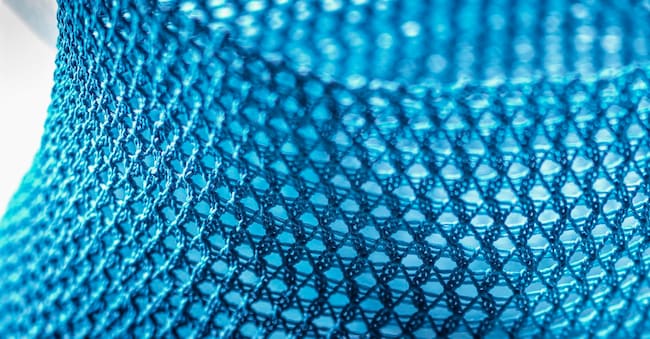
This year, the investigation focused on the encounter between light and three-dimensional, seamless knitwear, investigated with designers Lorenzo Palmeri and Jozeph Forakis: "The former was inspired by tailoring and the Japanese tradition of kirigami; he is a long-standing friend with whom we had never worked. The second, on the other hand, in 1993 came up with Havana, a lamp still in the catalogue, the first one we made without using glass".
That of fabrics, says Urbinati, is an area already explored by Foscarini in the past, 'for example with Nuée, designed by Marc Sadler. The challenge is to manage to obtain constant shapes, solid but not rigid, with a material that we usually want to be as soft as possible. We are interested in the familiarity that, perhaps unconsciously, binds us to textile products: we touch them, we wear them every day. It's an important closeness: if we want people to be attracted by our proposals, to make them part of their domestic sphere, experimenting with what conveys this feeling becomes fundamental".
Brand connect


Newsletter RealEstate+
La newsletter premium dedicata al mondo del mercato immobiliare con inchieste esclusive, notizie, analisi ed approfondimenti
Abbonati