South Africa

Investec Cape Town Art Fair: consolidation and new collecting routes

With 126 galleries and 34,000 visitors, the fair confirms itself as a strategic platform between international growth, maturation of the local market and the centrality of African galleries

by Maria Adelaide Marchesoni

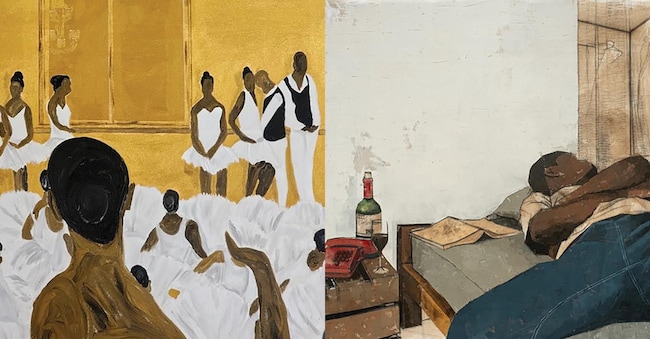
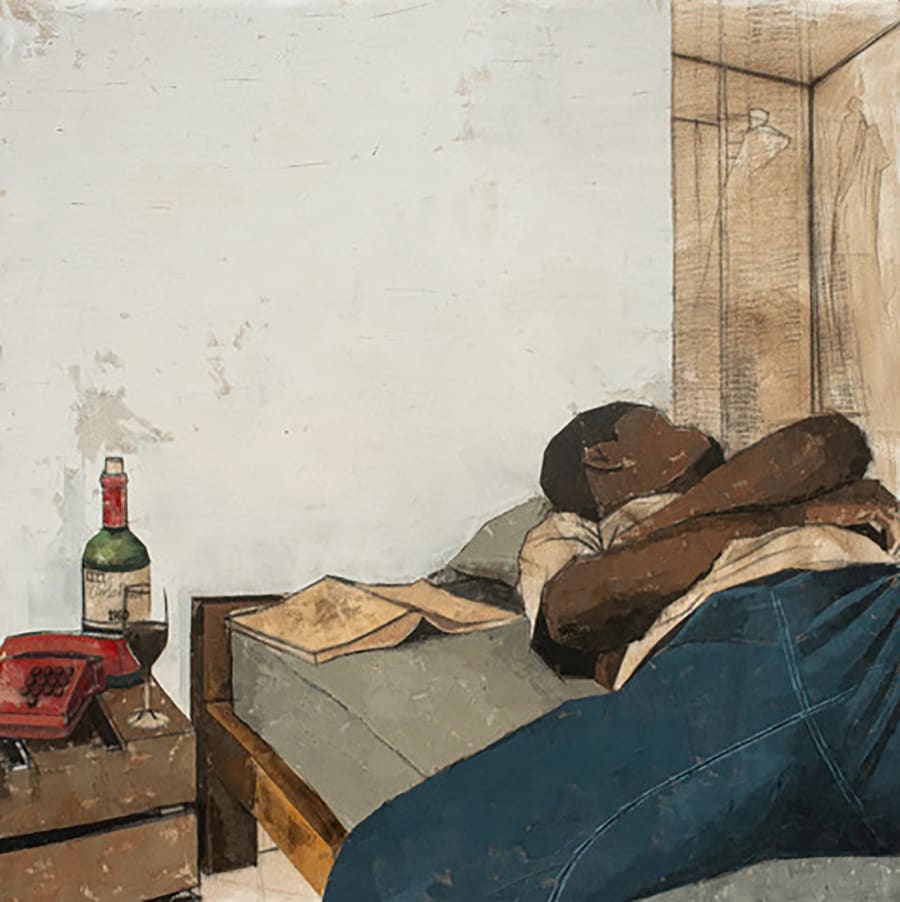
A sinistra: Themba Sibeko, «The Golden Waiting Room», 2023-2024 - Acrilico su tela (Courtesy: Wunika Mukan Gallery - Lagos). A destra: Ayotunde Ojo, «Stale Wine», 2022 - Mixed media su tela, 121,9 × 121,9 cm (Courtesy: Southern Guild)

6' min read

Translated by AI
Versione italiana

6' min read

Translated by AI
Versione italiana

At the Investec Cape Town Art Fair, Cape Town's main art event, the feeling is that something has escaped the standardisation that dominates the global circuit. In an international calendar where many fairs end up looking alike - same names, same galleries, same blue chip artists - here the centre of gravity shifts. Less predictability, more discovery.

In Cape Town the pace changes. The market is there, of course, but it does not take up all the space. Conversations do not end in negotiation; they stretch into critical exchanges, confrontations between artists, dialogues between different scenes. The relational - not just commercial - dimension is an integral part of the experience. What distinguishes the fair is a tangible sense of discovery towards practices and perspectives less aligned to the dominant tastes of the Western market. Here Africa is not a curatorial section. Its positioning is different: a city marked by deep historical stratifications, a scene that refuses homologation and a network of galleries working between local rootedness and international openness.

Loading...

This dynamism, however, coexists with a society marked by deep inequalities and the legacy of apartheid, and with certain structural fragilities. The cancellation of the South African Pavilion at the Venice Biennale does not restore a solid image of the country on an institutional level. While on the one hand the market and private initiative show vitality and organisational capacity, on the other hand criticalities emerge in the official cultural representation. It is a contrast that makes the role of independent platforms and fairs like this one in supporting the international visibility of South African artists even more evident. In this scenario, the fair takes on a weight that goes beyond the market: it is proof that the ecosystem manages to guarantee continuity, visibility and international connections where the institutional front shows structural cracks.
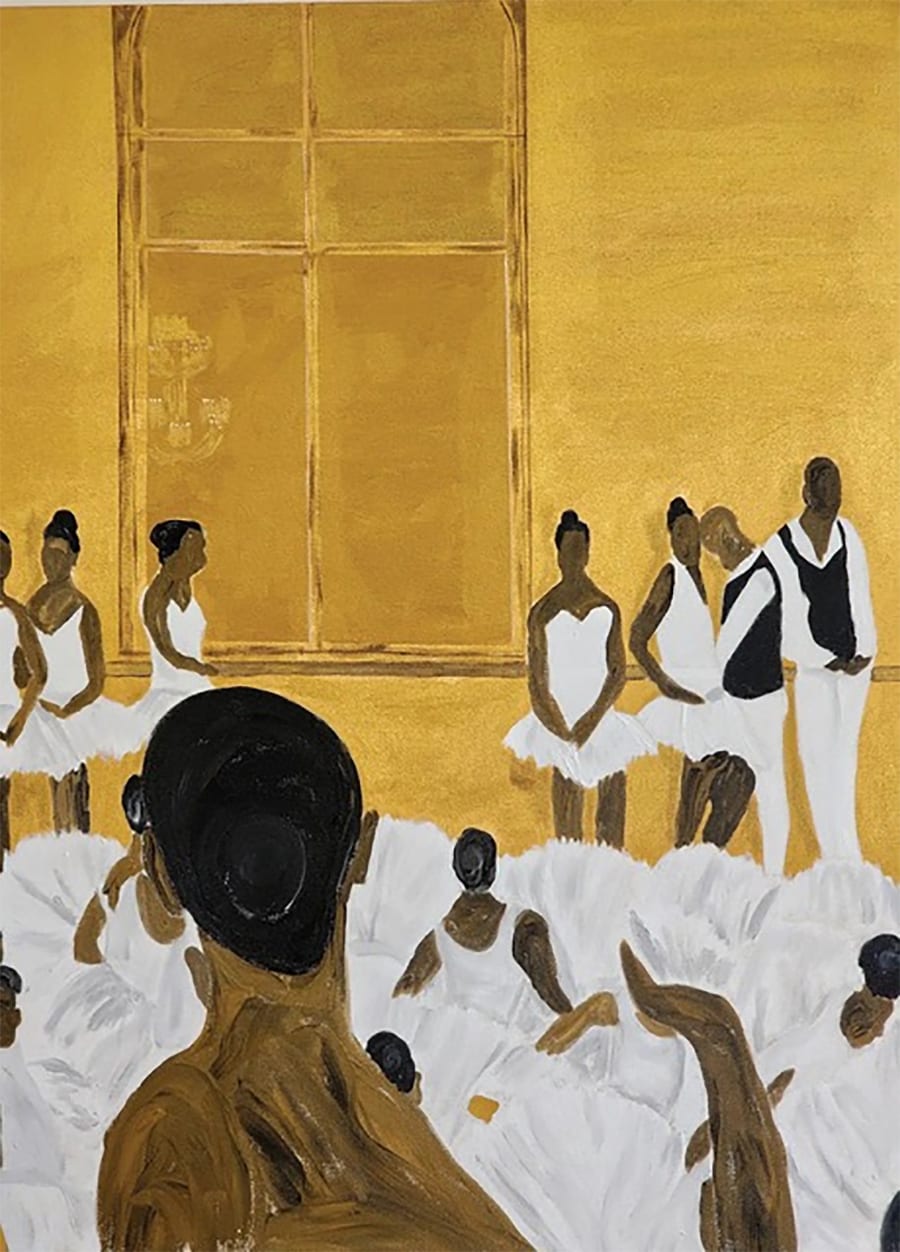
Themba Sibeko, «The Golden Waiting Room», 2023-2024 - Acrilico su tela (Courtesy: Wunika Mukan Gallery - Lagos)

Cape Town a must-see

Directed by Laura Vincenti and produced by Fiera Milano Exhibitions Africa (FMEA), a wholly-owned subsidiary of the Fiera Milano Group, with the financial group Investec as main sponsor, the thirteenth edition - held from 20 to 22 February at the Cape Town International Convention Centre (CTICC) - brought together 126 galleries from 34 cities, of which 42 were making their debut, presenting over 490 artists and welcoming some 34 thousand visitors.

The presence at the fair ranged from local realities to galleries in Kampala, Lusaka and Lagos, together with experimental spaces rooted in the creative districts of Cape Town, with a proposal of works starting from EUR 600 up to figures close to EUR 250,000. Eleven curated sections: Tomorrows/Today, dedicated to emerging and underrepresented artists; SOLO, with targeted presentations; Generations, promoting intergenerational dialogue; Connect, highlighting cultural institutions committed to safeguarding and supporting artistic practice, education and production, including the Zeitz Museum of Contemporary Art Africa and the Norval Foundation.
In this context, marked by increasing international attention to the continent's production, the debate also focuses on the factors that are driving this development. "The increasing presence of African artists or artists from the diaspora in international museums and exhibitions," says director Laura Vincenti, "has certainly contributed to increasing attention towards Africa. The somewhat fashionable wave of so-called 'African art' is gradually subsiding, leaving room for a consolidation of the market through acquisitions in important collections around the world,' emphasises the director.

The specificity of the fair emerges precisely at this stage of consolidation: 'It is the only international contemporary art fair on the African continent. It represents a cultural platform of exchange between artists, galleries, collectors and curators from all over the world, and is a unique opportunity to identify a common language between productions born in countries that are geographically distant, but share similar historical, social and political fabrics,' Vincenti continues.

The profile of collecting also reflects this dual dimension, local and global: 'Both levels are present. A growing number of international collectors have now included Cape Town among the must-see fairs, contributing to the growth of the event; at the same time, local collecting has matured organically together with the fair, supporting South African artists and contributing to the development of the country's art system,' concludes Laura Vincenti.

Ayotunde Ojo, «Stale Wine», 2022 - Mixed media su tela 48 × 48 in | 121.9 × 121.9 cm (Courtesy: Southern Guild)

Focus on African tunnels

In the main section, Southern Guild presents, alongside the powerful photographic portraits of Zanele Muholi (editions of 8, from $25,000), the works of young artists such as Bonolo Kavula (1992, Kimberley, lives and works in Cape Town), who reworks printmaking beyond traditional boundaries by using shweshwe thread and fabric to create abstract surfaces through a repetitive and meditative process, evoking themes of colonialism, family memory and transformation (prices from $14,000), and Ayotunde Ojo (1995), whose large canvases - inspired by everyday intimacy and the silent language of gestures - are offered at $18,000.

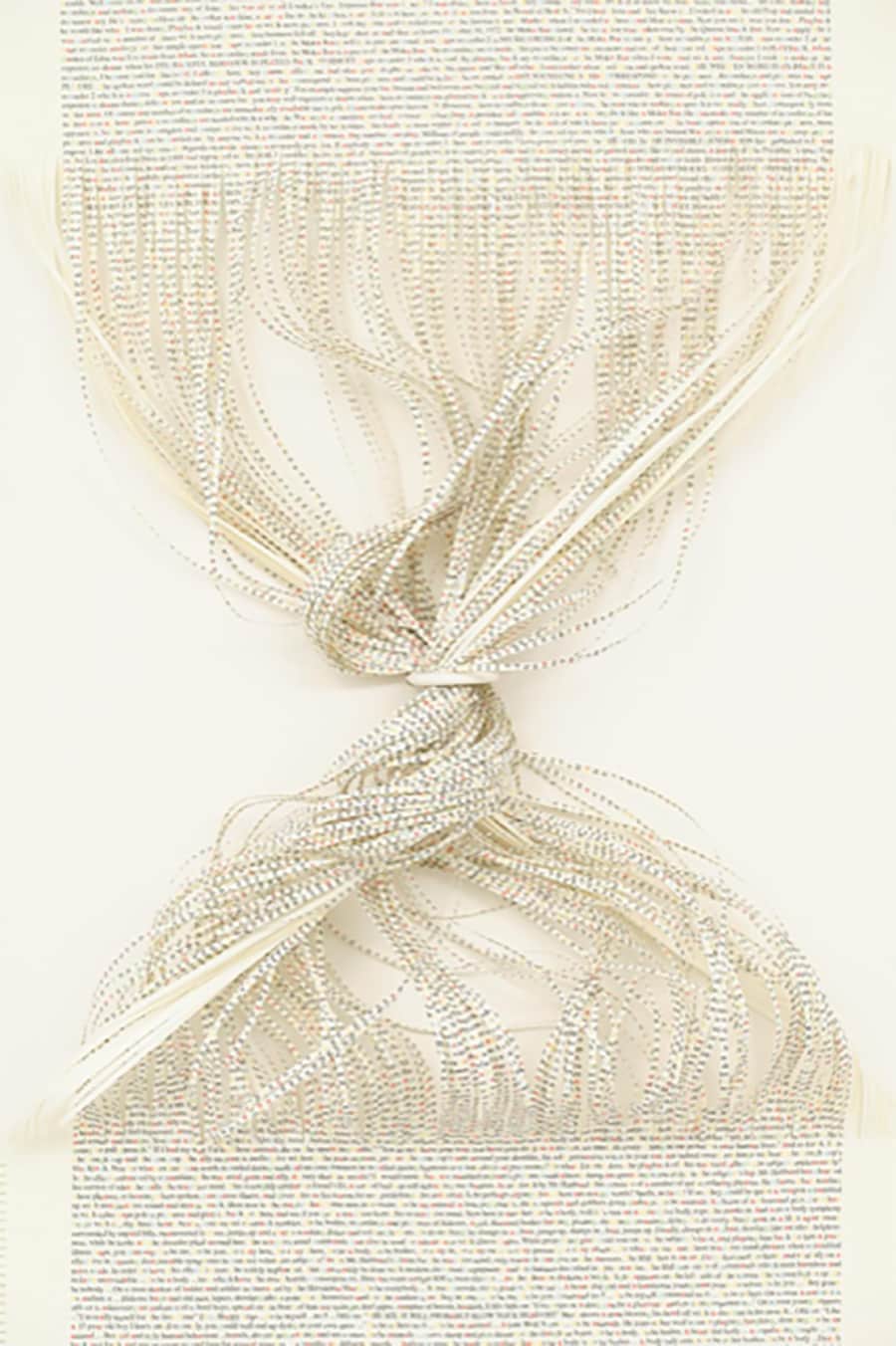
Dan Halter, «The DNA of The Electronic Revolution», 2025 - Hand woven archival ink-jet prints - 149 x 57 x 12 cm - 58 5/8 x 22 1/2 x 4 3/4 in Edition of 2 (#2/2) (Courtesy: Dan Halter and WHATIFTHEWORLD Gallery)

At What if the world, a gallery based in Cape Town, Dan Halter, who was born in Zimbabwe in 1977 and now works in Cape Town, reflects on his own diasporic condition: through materials and languages related to craftsmanship, as well as photography and video, he investigates the dislocated national identity and tensions of post-colonial Zimbabwe from a broader African perspective (prices from 5,000 to 20,000 euros). Traditional West African symbolism rooted in Yoruba cosmology and shaped by the experience of diaspora merges with the bold clarity of graphic art in the paintings of Abe Odedina (born 1960), presented by O'Da Art (Lagos, Nigeria, founded 2020; prices $4k depending on size).

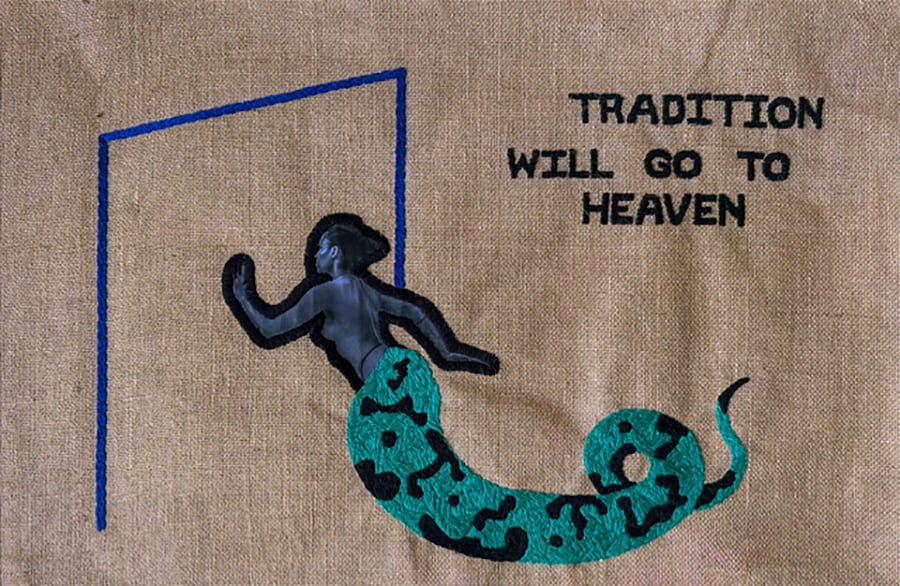
Yagazie Emezi, «Tradition will go to heaven», 2025 - Stampa su tela ricamata su tessuto di canapa - 60 × 157 cm (Courtesy: l’artista e Kó-artspace)

Another Nigerian gallery Kó-artspace presents several artists who, through painting, fabric and photo collage, redefine narratives that explore alternative histories and the representation of women. Among them Yagazie Emezi (born 1989) creates multimedia fabric works that explore indigenous motifs and the legacy of Uli design, an art form historically practised by women (prices from $7.500 dollars), those of Deborah Segun (Nigeria, 1994) are abstract paintings that reflect on the geometric harmony of mind and body (prices from $2,000), while Mobolaji Ogunrosoye (Nigeria,1991) makes collages from the female form to create fragmented layers that suggest complexity and psychological depth (prices from $5,000).

The artistic practice of Dimakatso Mathopa, (Mpumalanga in 1995, lives and works in Johannesburg) is rooted in photography and engraving, transforming his conceptual self-portraits into cyan-typical prints in the series 'Individual Beings Moving (IBM)', running from 2023, each work is unique, made with gouache colours on acetate framed between two glass panels on a wooden support (from Afronova gallery, prices from EUR 4,800).

Barry Yusufu - «SOLO», Dipinto della serie «Where We Left Love» (Courtesy: the artist, 99 Loop Gallery & Virginia Damtsa)

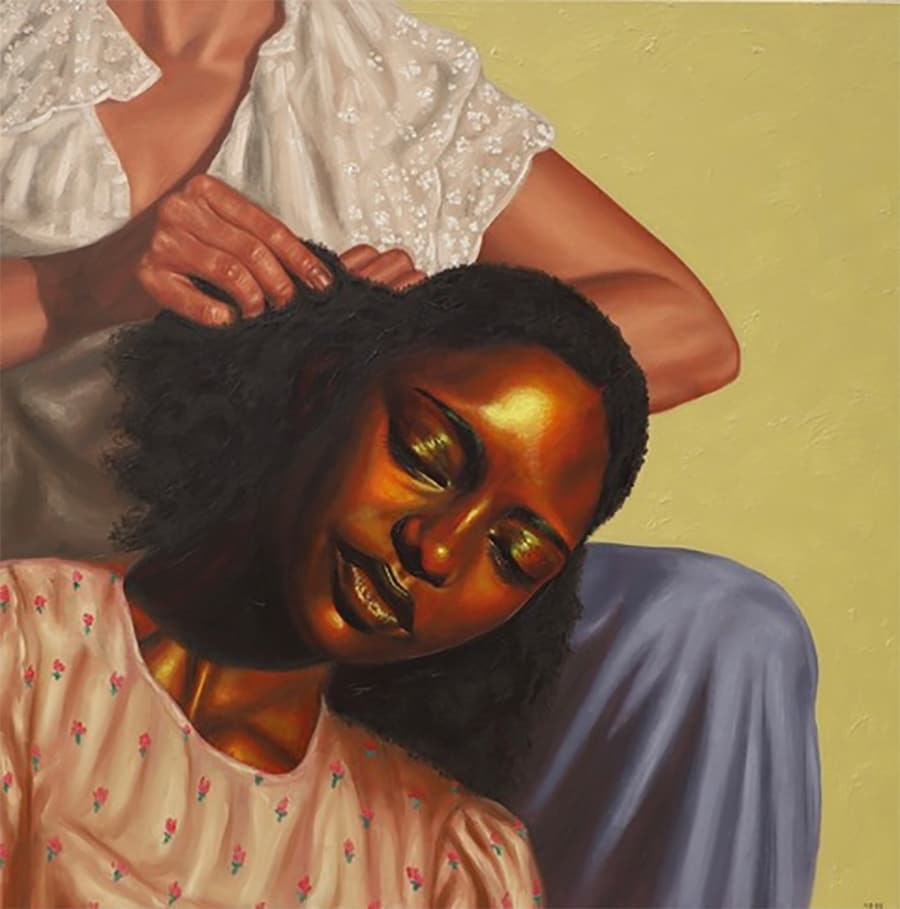
Among the proposals of 99 Loop Gallery, founded in 2015 with a focus on painting, are the paintings of luminous, sun-kissed figures by Barry Yusufu (1996), a Nigerian artist whose career began in 2017 with drawings of family and friends and rapidly developed around portraiture as a means of asserting identity. In recent years, his portraits have received recognition from institutions and private collections (prices from €4,000 for small formats up to €16,000 for larger ones).

The Italian presence

There was no lack of Italian representation at the Investe Art Fair. There were those who focused on the show alone, such as Giovanni Bonelli (Milan), presenting in the Tomorrows/Today section curated by Mariella Franzoni, the works of Chiara Calore (class of 1994) whose painting plays with the overlapping and merging of very different figurative elements: characters, animals, historical visual symbols and surreal visions combine in rich and complex compositions where references to the history of Western art, particularly Flemish painters, are reworked and become contemporary images (often taken from the web), producing compositions in which the past dialogues with the present (prices from 1.400 euros). Other galleries such as Francesco Pantaleone Arte Contemporanea (Palermo) presented a women-only group show with a strong social and political vision, close to activism. "The public's response," explained the founder, "was really positive, there was a lot of interest, a few sales and a lot of photos in particular for Claire Fontaine's 'Margherita' and for Loredana Longo's carpets/phrases (11,000 euro for a carpet by Loredana Longo and 29,000 euro for Claire Fontaine's works). Back for the fifth time was Trento's Cellar Contemporary, which presented the South African artist of Ndebele culture, Zana Masombuka (1995), who in her works operates a synthesis of photography, painting and performance, transforming small material elements such as beads and coins into powerful symbols of identity.

Copyright reserved ©
Loading...

Brand connect

Loading...

Newsletter

Notizie e approfondimenti sugli avvenimenti politici, economici e finanziari.

Iscriviti