
Investindustrial to buy Bindi: merger with Sammontana
Industrial project to create a billion-turnover maxi confectionery cluster

2' min read
2' min read
The sale of the Fda Group (Bindi-Forno d'Asolo) is in its final stages. Andrea Bonomi's Investindustrial group seems to be in pole position and the signing would have taken place tonight.
A maxi-industrial project in the confectionery-food sector is on the table, as Investindustrial could aim to unite Bindi-Forno d'Asolo with Sammontana. The result would be a maxi-food hub, where the Bagnoli family, a shareholder in Sammontana, would maintain a significant stake in the new entity and, according to rumours, industrial control. Leonardo Bagnoli would be chairman.
The conditional is a must, but this would be, according to rumours, the plan of the group led and founded by Andrea Bonomi. Bindi-Forno D'Asolo is one of the country's leading operators in the frozen bakery and pastry products sector, controlled by international private equity firm Bc Partners.
Last autumn, the latter launched a process to enhance the subsidiary's value, managed by advisors Rotschild and Latham & Watkins, which attracted the attention of numerous private equity funds and food multinationals. At the photofinish in recent days, with binding offers, private equity Pai, the Belgian industrial group Vandemoortele and Investindustrial, which now seems to be one step away from an agreement. The potential valuation of the Bindi-Forno d'Asolo operation, according to some estimates circulated in the past, would be around one billion euros for a group with a turnover of more than 500 million euros and a gross operating margin of around 80 million.
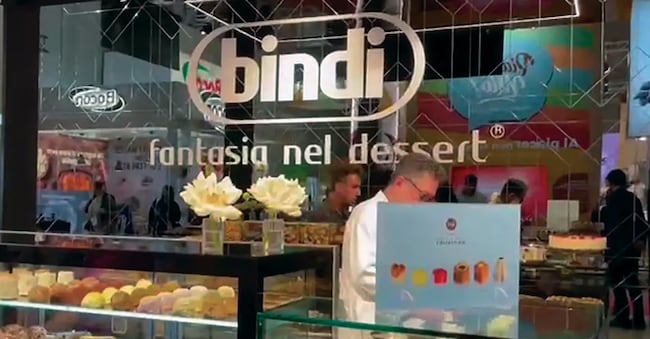
The Bindi Group is a historical confectionery company: it was founded in the immediate post-war period as a pastry shop in Milan. It was founded by the Tuscan restaurateur Attilio Bindi. Over the years, Bindi has grown in the production of industrial frozen pastries in Italy and abroad, with 25,000 customers served in the Ho.Re.Ca sector and about 40 foreign markets reached, generating 40% of revenues.


