
Investing in commodities: the advantages of gold and the complexity of indices
Precious metals offer more efficient prices while the derivatives effect weighs on other commodities

4' min read
4' min read
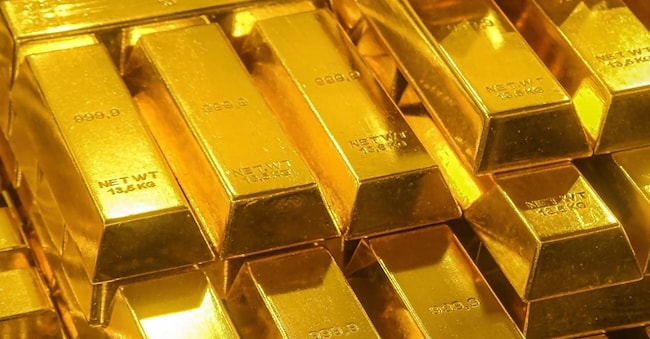
Investing in commodities is very attractive. Thanks to the 'clones' that have been listed in Milan for the past twenty years, even the small saver with a few hundred euros at his disposal can be exposed to gold, oil and other commodities. But once these instruments are purchased, a real conundrum opens up as commodities are traded with derivatives. This problem fortunately does not affect physical gold and other precious metals that can be stored in vaults. Etc's linked to physical precious metals are more efficient.
The Benefits of Gold
.The storage of the physical asset allows gold to be priced spot, i.e. on the spot market, away from the dynamics of futures. There are also Etc's linked to gold futures as underlying but the most popular are those with physical gold. For example, since the beginning of the year, spot gold has risen by about 29%, while the Etc has advanced by just under 20%: the difference is attributable to the dynamics of the dollar, as is the case with oil. Also in the long term the correspondence is significant: for example at 5 years both gold and the physical Etc gain around 100%. The advantage in the long term is that the currency effect tends to fade, with exchange rates usually returning to some sort of long-term average. The advantage of gold ETFs is therefore that they have prices that are more controllable and thus more closely linked to spot dynamics. The problem of the exchange rate effect can be overcome by focusing on hedging instruments, but in this case the costs increase. To overcome this problem, many investors decide to expose themselves to the commodity sector by betting only on precious metals. But these last are only a partial component of the entire world of the commodities with an incidence on the general index of the commodities (see other article on the page) which is always a minority. Instead, when the other Etc are handled, starting from the energy and agricultural ones, one enters into a world of technicalities where the trend of the instrument almost never respects the quotation of the oil or wheat that the saver sees on TV.
The Oil Node
.A very concrete example: Wti oil, the one traded in the United States and the underlying for some Etc listed also in Milan, has shown a slight upward trend since the beginning of the year, a drop of 8% at one year and a drop of 38% at three years. The main Etc linked to Wti follow ad hoc indices created by providers and which are replicated through swaps. The Etc therefore usually follows an ad hoc index, but usually the performance is different from the first futures contract exchanged, precisely because the problems associated with swaps cannot be nullified. "Futures contracts," explains Federico Pigatto, a Consultique analyst, "having an expiry date must be renewed in order to maintain exposure to the underlying. This peculiarity, in most cases, has a negative effect on the investor due to the structure of the forward curve. Under normal market conditions, this curve is usually in 'contango', with futures contracts on longer maturities having higher prices than those with shorter maturities due to higher commodity storage costs. When the forward curve is in contango, rolling activity on the next futures contract produces a capital loss for the investor.
It is essential that the saver knows the technicalities and does not panic. Since the beginning of the year, the Etc has fared worse than oil, as it is also affected by the devaluation of about 10% of the dollar against the euro. In recent years, also as a result of geopolitical crises, periods with oil prices in backwardation, i.e. with the highest values on the first maturities, have increased. This has benefited Etc holders and this may be one reason why at three years Etc's on oil lose just over 20% compared to minus 38% for crude oil.
General indexes
.An alternative way to ride commodities is to bet not on individual commodities but rather on the general index that brings the entire sector together. This is a convenient way for the investor to ride a general trend involving a total of some twenty very different commodities.


