Intervention

Investing in nature is an opportunity the EU cannot miss

Joint op-ed by European Commission President Ursula and EU Commissioner for the Environment

by Ursula von der Leyen and Jessika Roswall*

Aggiungi Il Sole 24 Ore
ai preferiti su Google
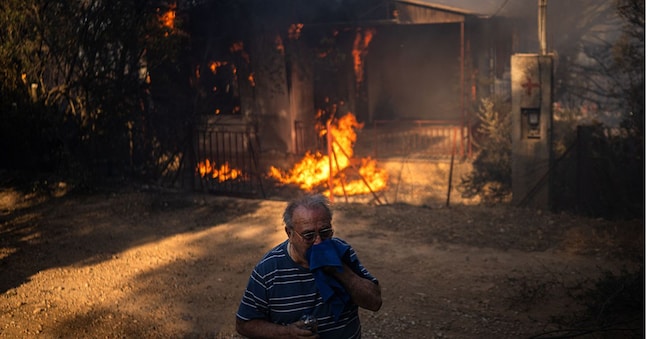
Un uomo è in piedi davanti a una casa in fiamme durante un incendio boschivo a Pikermi, circa 30 km a est di Atene, il 3 luglio 2025. Il clima caldo e secco in Grecia, non insolito in questo periodo dell’anno, ha aumentato il rischio di una ripetizione degli incendi estivi che hanno colpito il Paese negli ultimi anni. (Photo by Angelos TZORTZINIS / AFP)

4' min read

4' min read

In one way or another, three quarters of businesses depend on nature: for raw materials, such as wood, cotton and agricultural products; for ecosystem services, such as the microbes and decomposing organisms that keep farmland fertile; for protection from extreme weather, thanks to coastlines and floodplains that protect valuable infrastructure.

This means that when nature is healthy, so are businesses, and that when nature suffers, so do businesses.

Loading...

We see this all too clearly today. Climate risk has caused insurance premiums to soar. Floods have disrupted supply chains and damaged critical infrastructure. Declining pollinator populations have damaged agricultural production. According to research by the World Economic Forum, climate risks could cost businesses that fail to adapt up to 7 % of their annual revenues over the next decade, roughly the effect of a COVID-19 pandemic every two years.

It is too high a price to pay. The time has come to allocate funds to nature, to understand that it is a valuable asset in which to invest: an asset that generates income, now and in the future.

The EU and its Member States have already provided substantial funding for nature and will continue to do so in the future, but public investment alone is not enough. We need to create a system that incentivises the private sector to invest in nature. We need a functioning market that rewards companies, farmers and investors who take care of our land, sea and sky.

Nature credits are proving to be a promising and innovative tool for changing the way we value natural resources. They essentially offer entrepreneurs the opportunity to invest in nature, promoting biodiversity, preserving habitats or creating new ones. In turn, these investments generate revenue for those working to protect nature: farmers diversifying crops; landowners sustaining wetland ecosystems; foresters protecting threatened carbon stocks.

We know that this model can work, because we have evidence of it. Twenty years ago, the EU created an effective carbon market. The logic is simple: if you insist on polluting, you have to pay; if you don't want to pay, you have to innovate. It is an efficient, market-oriented instrument that incentivises the private sector towards innovation. And it has worked! In these two decades, greenhouse gas emissions in Europe have decreased by almost 50 % and the economy has grown. The price we set for carbon has raised EUR 180 billion, which is now reinvested in climate and innovation projects.

Despite the positive outcome of this experience, we know that nature is more complex and more diverse than carbon. What do Greek olive oil and Finnish fir trees have in common? What is the relationship between a wetland preservation project and reforestation? The establishment of this new system will raise a number of new and difficult questions, for example how to measure and quantify the impact of positive nature initiatives.

For nature credits to work, we need a rigorous measurement system and sound methodologies to assess their results. We need strong governance structures and fair access for local actors. We need predictability to attract local investors. We need verification systems and real transparency to avoid greenwashing. And we need to avoid heavy administrative burdens, making participation easy and attractive.

These are complex problems, but solvable. And, above all, current trends work in our favour. Demand for nature credits is growing in the EU and globally. The EU is now supporting pilot projects in France and Estonia and there are more on the horizon. Some Member States have developed their own systems and all over the world local authorities and companies are implementing new projects. According to the World Economic Forum, global demand for nature credits could reach USD 180 billion by 2050. The range of potential buyers is wide, because the prospect is attractive. As floods and droughts become more frequent, companies are looking to secure supply chains, reduce insurance premiums and promote positive actions for nature. Financial institutions are also starting to consider biodiversity risks among the most significant financial risks that need to be mitigated.

This week the European Commission presented a roadmap on nature credits to catalyse private financing and create new sources of income for businesses. We want to develop this market step by step, starting from the grassroots, together with local communities and stakeholders. The EU, with its single market connecting 450 million people and 25 million businesses, is ideally placed to expand these innovative markets, promote investor interest and safeguard market integrity.

For too long we have subsidised activities that degrade nature instead of preserving it. But with the right investments and incentives, we can come up with smarter, win-win solutions. What is good for nature is good for business and ultimately good for citizens.

* President of the European Commission, EU Commissioner for the Environment, Water Resilience and the Competitive Circular Economy

Copyright reserved ©
Loading...

Brand connect

Loading...

Newsletter

Notizie e approfondimenti sugli avvenimenti politici, economici e finanziari.

Iscriviti