
Strait of Messina: from investments to tolls, here are all the numbers of the bridge
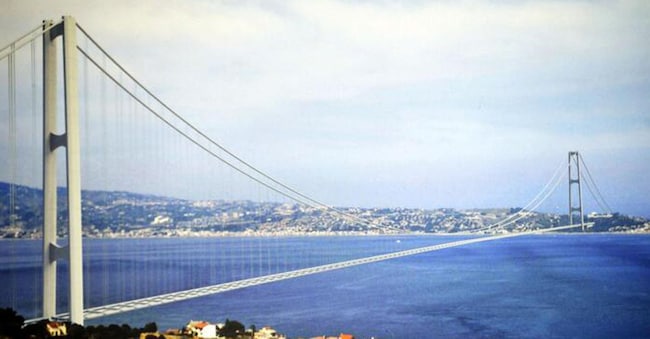
The bridge over the Strait of Messina is destined to be much more than just an infrastructure, because it may be the choice on which the direction to be given to the economic policy of an entire area of the country depends.

6' min read
Key points
6' min read
It debates, it divides. And it is likely to do so for a long time to come. The bridge over the Strait of Messina is destined to be much more than a simple piece of infrastructure, because it may be the choice on which the direction to be given to the economic policy of an entire area of the country depends. For this reason, too, a debate based on numbers is essential, without neglecting an estimate that has been little discussed: the drastic drop in population that the very area of the country most affected by the project, the Mezzogiorno, will see between now and 2070.
1. Traffic: estimated 30% growth to 2062
On 6 August, CIPESS (the Interministerial Committee for Economic Planning and Sustainable Development) approved the final design of the bridge. The decision followed the signing of the additional deed to the contract between the Concessionary Company Stretto di Messina and the General Contractor Eurolink, led by Webuild.
It is now the turn of the Court of Auditors to give its opinion, and a few days ago the Minister of Transport Infrastructure Matteo Salvini said he expected a green light in about a month. Most of the figures to be examined are contained in the Economic and Financial Plan and its annexes, which extend over a time horizon of 38 years (2025-20262), of which eight years of design and construction (2025-2032, with a tail end of investment in 2033) and 20 years of management (2033-2062). The investment, net of planned public contributions, is amortised by the expiry of the concession with no take-over value.
The study carried out by the company Tplan consulting, attached to the Pef, conservatively forecasts for traffic, for the years of the concession period after 2032 (when the work is expected to come into operation), for both passengers and freight, an average annual growth rate of 1% until 2062, with a cumulative increase of more than 30%.
2. The Dipe's doubts: the node in the South: -32% of inhabitants in 2070
In a preparatory note for the CIPESS meeting that gave the go-ahead for the final project for the bridge, the Dipe, i.e., the Department for Planning and Coordination of Economic Policy under Palazzo Chigi, dwelt on this estimate. The Dipe asked for the reasons behind this estimate to be specified, noting that - according to ISTAT projections on the country's demographic trends - there will be a sharp reduction in the population of southern Italy over the same period, in the order of 32% by 2070. In response to the Dipe's observations, the company Tplan Consulting has updated its study, adding that until 2032 passenger mobility is expected to grow by 1.5% per year and freight traffic by 2%, while in the following years a prudent increase of 1% for both components would still be possible, as the study highlights, however, "how the growth in mobility is not strictly related to demographic dynamics or regional GDP, but is rather influenced by structural and systemic factors - such as links with the rest of the country, tourist demand and the evolution of the transport offer - that have historically supported the increase in flows, even in contexts of demographic contraction or local economic stagnation". Conclusions that were shared by the Ministry of Infrastructure and Transport.


