Show

The invisible identities of EGS

On show in Reggio Emilia the works of the Finnish artist who crosses expressive and geographical boundaries in the name of research into identity
by Veronica Constance Ward

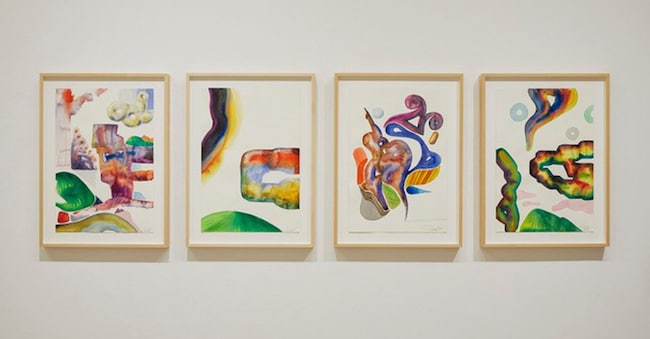
EGS, Invisible Identity, 2025, water colour on paper, ph Alessandro Bonori

3' min read

Translated by AI
Versione italiana

3' min read

Translated by AI
Versione italiana


EGS traverses places, life passages, encounters and discoveries in an endless journey, in which identity, geography and creativity represent one continuous adventure. He changes means along the way, loves its surprises and evolutions, poised between what he has been and what he does not yet know but already loves.

Loading...

EGS, three letters that represent his visual language and his personal alphabet, is the stage name of one of the most significant artists on the Finnish and European contemporary scene who, at a very young age, began expressing himself in graffiti, a practice for which he enjoys international fame, before moving on in the early 2000s to studio work and then to canvas, and to group exhibitions in the major European capitals.

Since 2015, thanks to a collective of craftsmen rescuing and acquiring the historic Lasismi glassworks in Riihimäki, EGS has been approaching the world of blown glass, of which Finland has an important tradition, and turning it into an expressive material and technique for its ongoing and constant research into identity.

EGS in mostra a Reggio Emilia

Photogallery8 foto

SpazioC21 of Reggio Emilia

The exhibition Invisible Identity, at SpazioC21 gallery in Reggio Emilia, is the result of a residency project started in 2024 with SpazioC21 and explores memory, transformation and the invisible layers of the self. The artist works on identity "as a fluid material shaped by travel, light and changing geographies" in a play between what is evident and what remains hidden, in the shapes, folds and contortions of the glass works, in the evocative signs of the paintings.

Seguso Vetri d'Arte in Murano

The exhibition is divided into two parts in close dialogue, watercolours and mixed techniques and only two glass works at the gallery and the complete exhibition of blown glass works at Villa Levi Terrachini, a historical residence in the centre of the city, which the artist has created between Italy and Finland divided into two rooms, one dedicated to works produced at the Seguso Vetri d'Arte family company in Murano, founded in 1397, and the second at the Riihimäki Glass Factory near the Finnish Glass Museum.

If one finds a clear overview in the evolutions of matter and light, it is also evident, in the Finnish production, the artist's surrender to the indeterminacy of the creation process, which is also the pleasure of improvisation and a vital desire for wonder along the way, both personal and creative.

The forms on display encapsulate presence and disappearance, fragility and resistance. The irregularities of matter, the random or intentional, yet stubbornly present deviations affirm the will not to yield to conformity. The defects become the idiosyncrasies of humanity and the natural world while light appears as an element of hope.

EGS manages to make beauty and perfection out of defect. Amorphous figures conceal living and complex essences that speak of the fragility and weakness of the human. One glimpses the lucidity of the project as a whole and appreciates the extraordinariness of the means of expression, in the delicate but relentless nature of the watercolours that do not allow for any change of intention, in the blown glass technique whose tradition considers every defect as a failure, and so in the mixed media paintings that are heirs to his first mode of expression (graffiti). EGS brings us back to our humanity to the vitality of our individual peculiarities, showing us the absolute beauty of unconscious and natural becoming.

The exhibition is accompanied by a photographic book in a limited edition of 100 copies, documenting the artist's creative process through three exceptional viewpoints: Paolo Pellegrin, Magnum photographer and World Press Photo prize-winner, who followed the Murano production; Marko Rantanen, Finnish author known for his landscape sensibility, who portrayed the work in Lasismi; and Valerio Polici, Roman artist and photographer, who portrayed the more intimate and pictorial dimension of the Italian residence.

EGS - Invisible Identity, SpazioC21, and by appointment at Villa Levi Terrachini, Reggio Emilia, until 14 February

Copyright reserved ©
Loading...

Brand connect

Loading...

Newsletter

Notizie e approfondimenti sugli avvenimenti politici, economici e finanziari.

Iscriviti