Holy See

Ior, reform at the test of Leo XIV. And the dividend arrives for 13.8 million

The real crux is the 70 million 'red' in the Holy See's budget in 2024

by Carlo Marroni

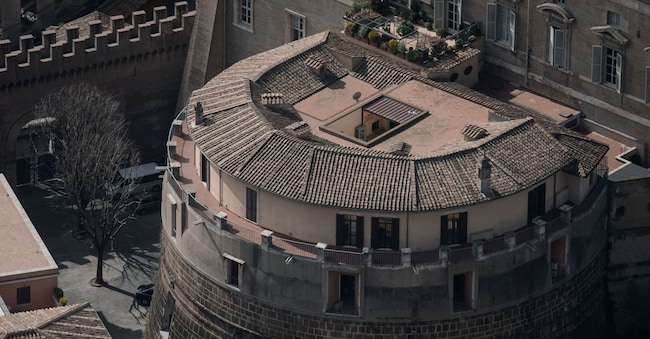
Il Torrione di Niccolò V, sede dello Ior

4' min read

4' min read

Profit grew by 7% over 2023, the 'dividend' allocated directly to the Pope was 13.8 million, just above that of last year. The Ior - the Institute for Works of Religion, the 'Vatican bank' - archives a good year for accounts, with administered assets growing to 5.7 billion, made up of current accounts, deposits, asset management and custody securities from clients, who are Vatican employees, religious congregations, dioceses, and embassies to the Holy See. Now the Ior - having filed the balance sheet - must present to Leo its "plans" for the future in line with the whole reform of the finances, now almost stabilised, but the knot of appointments remains: the president Jean Baptiste de Franssu, a French banker, has been in office for almost 15 years, more than two terms, and according to the statute should be replaced, as among other things had emerged in the last phase of Francis' pontificate. Instead, the management is entrusted to Gian Franco Mammì, a long-time executive who had full confidence in Bergoglio.


Loading...

Market investment management is among the issues

.


Certainly Leo will take his time. Between October and February 2025, Francis had appointed three new members of the board of superintendence, the 'lay board' (of which not a single Italian is a member), and in the note it was added - an unusual fact - 'this renewal at board level will continue in the coming months in order to ensure a linear and gradual transition and greater heterogeneity of its members'. We will see what Prevost will decide, who will in any case have to deal with the Vatican finances as a whole, both for the completion of the reform and the state of the accounts. In fact, after the "Sloane Avenue" affair, Francis had decided on the complete centralisation of all finances in the Apsa, as well as real estate outside the territory of the state, and in particular had removed the "cash" from the Secretariat of State, including the Obolus. But based on Leone's recent declarations, a return to the centrality of the "Third Lodge" is foreseeable, perhaps with some reassignment of certain competences from which it had been excluded (probably starting with the "reserved matters"). In addition, what in fact appears to be a double assignment decided by Francis, without a formal resolution, of financial management in the funds markets between Apsa and Ior (the latter formally holding the function) will have to be resolved.


For the president, 'the markets have no mercy', but the Ior must adhere to very strict ethical standards


"The financial markets have no mercy," de Franssu, president of the Ior, said in an interview with Bloomberg. "If the Ior does not deliver what is expected of it, we will be in serious trouble." This is the meaning of the 'internal' reform of the Vatican bank, which has kept its structure designed in the early 1990s by John Paul II after the Banca Ambrosiano scandal. The president's statement emphasises that the Ior must act professionally, even while respecting all the very stringent internal ethical codes, which prohibit, among other things, investments in companies that manufacture arms or are active in the pharmaceutical field that produce products for the interruption of pregnancy, and many other types as well. Certainly we are a long way from what Monsignor Paul Marcinkus, president of the IOR at the time of Calvi, said: 'The Church does not stand on Hail Marys'.


The real crux is the 70 million 'red' in the Holy See's budget in 2024
 

Things have changed, not only since the Ambrosiano affair, but also since the Enimont scandal, the Great Contracts scandal (linked to the G8 in 2009), and even the 2013 case of the purses full of money that a monsignor transported here and there over the borders of the Leonine walls on behalf of Italian rich people. By now, on paper, all the institute's standards are internationally recognised, by Moneyval of the Council of Europe and the same is for Asif - the control authority - which after a brief suspension following the outbreak of the scandal in 2019 over the management of funds of the Secretariat of State had been briefly suspended by the Egmont Group, the intelligence unit network. The issue of Vatican finances is therefore now not so much one of structure - although it is still considered an open building site, due to the issues mentioned, including the powers of the Secretariat for the Economy over the setting of budgets for each dicastery - but of effectiveness. The dividend of almost 14 million is necessary to stem the red that plagues the Holy See's budget (of which the IOR is not a part), which for 2024 was 70 million, and had been over 80 million the year before. The problem is the income, which for the most part is the offerings from the various countries, faithful and dioceses (especially from the USA and Germany): it is in constant decline, both because of the reduction in the faithful and the maxi compensation paid for child abuse.

Copyright reserved ©
Loading...

Brand connect

Loading...

Newsletter

Notizie e approfondimenti sugli avvenimenti politici, economici e finanziari.

Iscriviti