
Iran attack on Kuwait: one dead and 60 injured at the airport
Drones and missiles launched from Tehran overrun defences and hit the international airport. Trump flaunts optimism on nuclear issue and says he is ready to meet Supreme Leader Khamenei
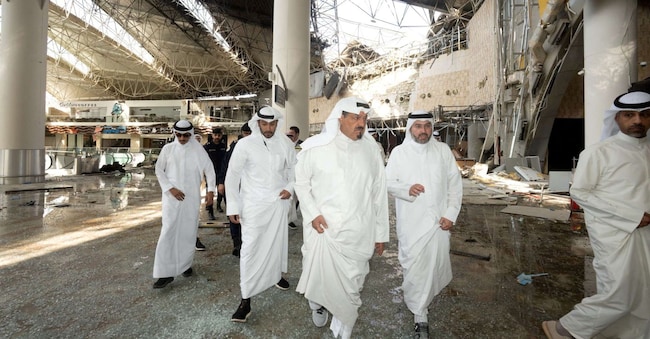
The war between the United States and Iran flared up again in the Persian Gulf yesterday, with the most serious clashes in the - token - truce agreed at the beginning of April. Negotiations to at least reach a ceasefire and the reopening of Hormuz are at a standstill: this is reiterated by Tehran, contradicting the reassurances and optimism flaunted by Donald Trump.
Missiles and drones launched by Iranian forces struck and damaged Kuwait's international airport, killing one person and injuring over sixty people (some seriously and requiring emergency surgery). 'This criminal Iranian aggression led to the bombing of vital civilian infrastructure, resulting in the death of an Indian citizen and the injury of several people, as well as extensive material damage,' Kuwait's Ministry of Defence said, adding that it had intercepted dozens of Iranian missiles and drones. Kuwait has since expelled two Iranian diplomats from the country and denied that US forces are using its territory.
However, the Pasdaran denied hitting Kuwait International Airport, claiming that the attack was caused by a malfunction of a US-made Patriot missile system.
Earlier - according to Iranian state media - the Guardians of the Revolution had attacked US targets in Bahrain. Centcom, the US Central Command, explained that the Iranian missiles did not reach their targets in the region. Centcom itself stated that it had conducted a new series of 'defensive attacks' in southern Iran, on Iranian missile centres and boats trying to lay mines, and had carried out attacks on the island of Qeshm, near the Strait of Hormuz.
Since the US and Israel launched their military campaign against Iran on 28 February, Tehran has repeatedly struck both civilian and military targets in the Gulf States. And the clashes have become more frequent in recent weeks, despite the cease-fire, concentrating around Hormuz, where the tensions of the dual bloc, Iranian and American, add up.


