Middle East

Axios: Trump did not attack Iran partly because of Israel's fear of reprisals

Israel reportedly pointed out the lack of preparation for an Iranian counterattack

Aggiornato il 19 gennaio 2026, ore 16:50

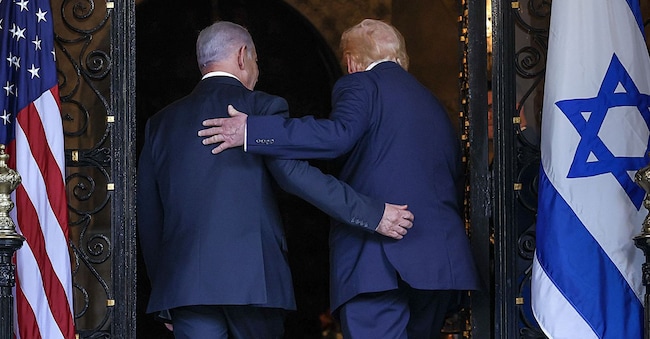
foto d’archivio - Il presidente degli Stati Uniti Donald Trump dà il benvenuto al primo ministro israeliano Benjamin Netanyahu nel suo club Mar-a-Lago il 29 dicembre 2025 a Palm Beach, in Florida. Joe Raedle/Getty Images/AFP

3' min read

Translated by AI
Versione italiana

3' min read

Translated by AI
Versione italiana

US President Donald Trump's decision not to strike Iran this week was reportedly also influenced by a warning from Israeli Prime Minister Benjamin Netanyahu, who signalled Israel's lack of preparedness to defend itself against any retaliation from Tehran, According to Axios quoting US and Israeli officials.

In last Wednesday's telephone conversation, which took place while Trump was considering air strikes against Iranian targets, Netanyahu reportedly explained that Israel is not able to cope with a possible Iranian response with missiles and drones, partly because the US does not currently have sufficient forces in the region to support the interception.

Loading...

One of the Israeli PM's advisors, quoted by Axios, also stated that Netanyahu considers the US military plan not effective enough and unable to guarantee the desired results.

Contrary to the attacks was also reportedly expressed by Saudi Crown Prince Mohammed bin Salman during a phone call with Trump, over regional security concerns.

Axios reports that, among the factors that led Trump to renounce the operation, would be:
1) the shortage of US military assets in the area;
2)
the reservations expressed by allies;
3) the concerns of some advisers about the effectiveness and consequences of an attack,
4) the existence of confidential communication channels with Tehran.

What's happening in Iran: 19 January 2026

Senior Iranian officials have called for 'clemency and compassion' for some of the protesters arrested during the latest wave of unrest, despite the police pledging to continue cracking down on dissidents.

The statement, issued jointly on Monday byIranian President Masoud Pezeshkian, Chief Justice Gholam-Hossein Mohseni-Ejei and President of Parliament Mohammad-Bagher Ghalibaf, comes just days after US President Donald Trump appeared to call off an attack on Iran for its use of deadly violence against protesters, saying he had received assurances that hundreds of planned executions and further killings had been called off.

"In addition to decisive punishment of the murderers and instigators of terrorists, we must apply Islamic compassion and clemency to those who were deceived and did not play an essential role in the terrorist events," the semi-official news agency Tasnim quoted the three senior officials as saying.

According to human rights groups, almost 3,500 people were killed during the Islamic Republic's crackdown on protests, and the actual death toll is probably much higher.

Almost 25,000 people have been arrested, human rights groups said, since the riots broke out on 28 December over the collapse of the Iranian rial and the worsening living conditions.

The authorities deny that the state crackdown has caused thousands of deaths, instead accusing the US and Israel of fuelling the riots and facilitating the killings, while the authorities shut down mobile networks, blocked text messages and implemented a nationwide Internet blackout, which activists say has been in effect for the twelfth consecutive day.

Internet

According to a report by Tasnim on Monday, internet access is expected to gradually return to normal by the end of the week.

Iranian police ultimatum: 'Three days to turn yourselves in'

Iran's police chief, Ahmad Reza Radan, announced that 'deceived' people who took part in last weeks' riots will face lighter punishments if they constitute themselves within three days.

"The youth who were unknowingly involved in the riots are considered deceived individuals, not enemy soldiers" and "will be treated leniently by the Islamic Republic system," Radan told state television, adding that they will have "a maximum of three days" to surrender.

Copyright reserved ©

Brand connect

Loading...

Newsletter

Notizie e approfondimenti sugli avvenimenti politici, economici e finanziari.

Iscriviti