Repression

Iran summons Italian ambassador: 'Irresponsible statements by the foreign minister'

Nearly six thousand confirmed dead in protests. The BBC report: repression, hospitals full of corpses and snipers on rooftops

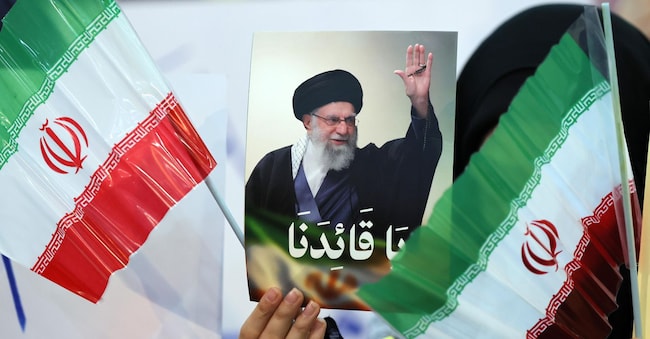
 Un sostenitore di Hezbollah porta un ritratto della Guida Suprema iraniana Ayatollah Ali Khamene durante una manifestazione di solidarietà con la Repubblica Islamica dell'Iran nel sobborgo di Dahieh a Beirut, in Libano, il 26 gennaio 2026. Migliaia di sostenitori si sono riuniti per esprimere solidarietà alla Repubblica Islamica dell'Iran e condannare quelli che considerano "insulti e sabotaggi diretti alla Guida Suprema Ayatollah Ali Khamenei".  EPA/WAEL HAMZEH

3' min read

Translated by AI
Versione italiana

3' min read

Translated by AI
Versione italiana

New videos from Iran and checked by the BBC reveal the extent of the Tehran regime's repression. The images show protesters destroying security cameras and checkers placed on the roofs of buildings.

 The images verified by the BBC

In a video shot in the capital, a protester climbs a pole and destroys two surveillance cameras, applauded by the crowd. Another clip in Mashad, in the northeast of the country, shows two snipers, part of the Iranian security forces deployed to counter the protests. One is standing next to a rifle leaning against a wall, while the other is smoking crouching on the ground, probably in a surveillance position. The British broadcaster reports that the protests involved at least 71 urban centres, but information is partial due to the internet blackout imposed by the authorities since 8 January. Some citizens managed to connect briefly thanks to satellite systems such as Starlink or via vpn, allowing the partial broadcast of videos.

Loading...

The images cited by the BBC date back to 8 and 9 January, days when, following an appeal by Reza Pahlavi, the exiled son of the last Shah, there were more victims among the protesters. Verified videos also show at least 31 bodies inside the Tehranpars hospital morgue and seven body bags outside the entrance. In another clip, hundreds of people protest along a highway west of Tehran, while gunshots and shouts are heard.

The Numbers of Repression

In the meantime, the death toll of the riots continues to update. According to the Human Rights Activists News Agency (Hrana), almost 6,000 people have been confirmed killed, including 5,633 protesters, while a further 17,ooo deaths reported are currently being verified. The actual toll could exceed 25,ooo casualties, as reported by the Norway-based Iran Human Rights (Ihr) association.

The regime denies it and recounts a different reality: more than 3,100 dead, who, however, according to the Iranian authorities, are mostly security personnel or civilians affected by the "revolt".

Iran summons Italian ambassador

On the diplomatic front, relations with the West remain tense. According to state media reports, Iran summoned the Italian ambassador to the Foreign Ministry after what he called "irresponsible statements by the Italian Foreign Minister" on the Iranian Revolutionary Guards. Tajani had announced a proposal to include the Pasdaran in the list of terrorist organisations. The proposal will be evaluated on Thursday at the Foreign Affairs Council.

Tajani: 'It is not our fault there was carnage in Iran'

"It is obvious that they do not agree," Foreign Minister Tajani replied on the sidelines of an initiative at the Farnesina. "It is not our fault if there was carnage in Iran and the opposition that was in the streets was massacred. Thousands and thousands died. This is unacceptable," the minister continued, confirming his willingness to propose the inclusion of the Pasdaran in the list of terrorists. "At the next European Council on Thursday we will propose together with others sanctions against the Pasdaran and we will give a favourable opinion to those who will ask for their inclusion in the list of terrorist organisations," Tajani concluded.

Tensions with Whashington

Tensions are also high with the United States. Washington is reinforcing its naval presence in the Middle East and Donald Trump has spoken of an 'evolving' situation. In response, Tehran is reportedly organising a reaction, increasing its military presence along the southern coast and deploying air defence systems, ballistic missiles, suicide drones and submarines. The stated objective is to prevent any US amphibious operation and to maintain the ability to strike enemy naval forces in a strategic maritime space such as the Strait of Hormuz, through which some 20% of the world's oil transits.

Iranian currency collapses

As protests and repression continue in an international environment increasingly hostile to the regime, the Iranian currency has hit a new all-time low. The rial is currently trading at 1.5 million to one dollar. This further slump exacerbates the country's economic difficulties, which also contributed to the protests of recent weeks. The Islamic Republic's foreign exchange bureaus offered this rate today amid a backdrop in which Iran's economy continues to be impacted by international sanctions, particularly related to its nuclear programme.

Copyright reserved ©
Loading...

Brand connect

Loading...

Newsletter

Notizie e approfondimenti sugli avvenimenti politici, economici e finanziari.

Iscriviti