
26 August 2026
War, latest news. Iran-Oman agreement on the distribution of revenues from the Strait of Hormuz. Pizzaballa: the West Bank is a no-man’s-land
The US Secretary of State has said that, at least until the mid-term elections, the United States wishes to avoid military action. Tehran warns that the Strait of Hormuz will remain closed until the US brings the war to an end
For feedback, please contact
english@ilsole24ore.com
 Aggiungi Il Sole 24 Ore
ai preferiti su Google
Summary by points
26 August 2026
Media: Aramco bypasses Hormuz, impact on Singapore and global prices
Saudi Aramco has begun offering new crude oil contracts with loading points located outside the Strait of Hormuz for September deliveries, after selling at least 4 million barrels to China, according to a Reuters online report. To circumvent the risks of conflict in the strait through which a fifth of the world’s energy passes, the world’s leading exporter – with daily flows of several million barrels – is using oil tankers with their transponders deactivated (dark fleet) and open-sea transfers (ship-to-ship).
The logistical reorganisation has a direct impact on Singapore, a key hub for refining, physical price-setting (benchmarks) and commercial storage in Asia, where operators build up stocks to safeguard supply chains.
26 August 2026
Hegseth: “We do not rule out the use of military strikes”
The United States has not ruled out further military action against Iran, including in the Strait of Hormuz. This was stated by US Defence Secretary Pete Hegseth, after Washington announced this week new and heavy sanctions aimed at increasing Tehran’s economic isolation in the context of the conflict between the United States, Israel and Iran. “Economic pressure, as we know, is what is affecting them most at the moment, but we do not in any way rule out the use of military strikes anywhere in the Strait of Hormuz,” Hegseth said in an interview with the US broadcaster Newsmax.
26 August 2026
Aragchi writes to Guterres: “The UN must condemn the US operation against our economy”
Iranian Foreign Minister Abbas Araghchi has called on the United Nations to condemn Operation “Economic Outcast” launched by the United States, describing it as a campaign of “economic terrorism” against Iran. In a letter sent to UN Secretary-General António Guterres, the President of the Security Council and Member States, Araghchi stated that “the stated aim of this so-called ‘operation’ is to put an end to legitimate economic relations with Iran, through the threat of secondary sanctions and exclusion from the US financial system”. According to the minister, Washington is seeking to extend its laws and foreign policy objectives beyond its own jurisdiction, forcing sovereign states to alter their legitimate trade relations.
“The Security Council and all members of the United Nations now face a decisive moment,” wrote Araghchi, arguing that the choice is between defending “sovereign equality, non-interference and the sovereign rights of states” or “submitting to the unilateralism and bullying of a rogue state”. Tehran also asked Guterres to assess and report on the humanitarian and human rights consequences of the US measures, particularly regarding access to food, medicines, healthcare, energy, transport and humanitarian aid. Iran, Araghchi concluded, reserves the right to pursue “all available avenues” to secure accountability, compensation and redress for the damage caused by the US campaign.
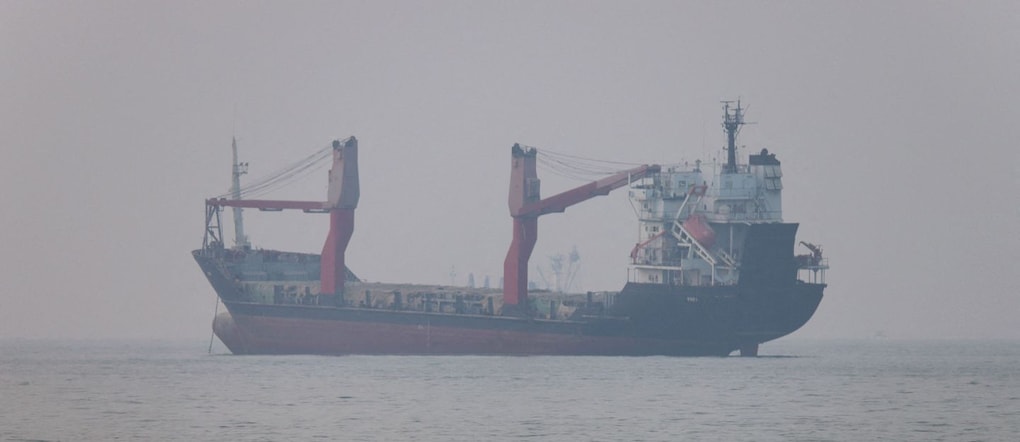
FOTO D'ARCHIVIO: Una nave nello Stretto di Ormuz, vicino alla spiaggia di Bandar Abbas, in Iran, 30 giugno 2026. Amirhosein Khorgooi/ISNA/via WANA (West Asia News Agency) via REUTERS via REUTERS
Ask the editorial team
Have questions or feedback about this article? Contact our editorial team.
26 August 2026
‘Russia and Iran pose a threat’: London updates its security plans
The UK is stepping up the review of its national defence plans and is preparing to launch a public information campaign on how to deal with an emergency, against the backdrop of increasingly tangible ‘threats’ from Russia. This comes in the wake of the cyberattack on an energy facility attributed to hackers linked to Iran. The Financial Times reports that, according to the British government, it is updating its ‘war book’ – the manual setting out how the country should respond to external threats, both in the military sphere, such as in the event of a conflict, and in the civilian sphere. This is a necessary undertaking, whilst the war rages on and risks escalating: according to Bloomberg, which cites sources close to the Kremlin, Vladimir Putin is in fact preparing for an escalation against Ukraine, launching powerful ballistic missiles at Kyiv and at infrastructure targets in other cities.
For the Tsar – it is explained – negotiations for a peace agreement have effectively reached a deadlock. And the escalating spiral of attacks is reportedly leading an increasing number of Russian officials to conclude that Putin might, as a last resort, decide to deploy tactical nuclear weapons as well. Bloomberg’s revelations come as the Kremlin has confirmed that CIA Director John Ratcliffe visited Moscow, though without meeting Vladimir Putin. “It was a semi-routine matter,” Donald Trump played down the visit, claiming that Ratcliffe’s trip had nothing to do with a possible Russian escalation. In any case, it comes as no surprise that the UK is stepping up its preparations for war – which, according to the City newspaper, can be traced back to the warning issued in recent months by former Labour Prime Minister Keir Starmer, who stated that “Russia could attack NATO as early as 2030”.
Meanwhile, the administration of his successor, Andy Burnham, is preparing a public information campaign to encourage families to build up basic supplies – such as tinned food and bottled water – in anticipation of prolonged disruptions caused by hostile actions by foreign states or cyber-attacks. “It will be nothing like the instructions issued in the US during the Cold War,” explained a government source: “There will be practical advice on how to improve household resilience. It will be common sense, not scaremongering.” A number of incidents in recent weeks have given further impetus to the issue. Moscow has threatened repercussions following reports that British-made drones were used by Ukraine in attacks deep inside Russian territory. In addition, a former Russian deputy foreign minister claimed that there could be acts of sabotage against drone factories in the UK carried out by “unknown groups”, following the British green light for Kie to produce Storm Shadow long-range missiles. Meanwhile, the Tehran regime has been suspected of carrying out a cyber-attack on a small, unidentified power station, fuelling fresh doubts about the resilience of the country’s critical infrastructure.
However, “there was no threat to the electricity grid and no one was left without power”, as the Deputy Minister for Energy, Michael Shanks, stated. Nevertheless, the heads of the main energy companies were summoned to review and strengthen their security measures. It was the Starmer government last year that began reviewing national contingency plans to deal with hypothetical acts of war orchestrated by Moscow (or other hostile states), whether in conventional or unconventional forms, or in the form of potential cyber-attacks and large-scale sabotage. This comes against the backdrop of repeated accusations from military leaders regarding the country’s lack of preparedness in the event of large-scale ‘aggression’. The current plans, in fact, are 20 years out of date in their fundamental structure. There has also been talk of ‘new, more secure bunkers’ to shield senior government officials, public media organisations or depots containing resources crucial to the country’s survival. Not to mention, of course, members of the royal family. Numerous warnings have been issued by experts quoted in the media regarding the country’s vulnerability, which is said to be not only outmatched by Moscow’s firepower but also lacking in its capacity to defend the home front, starting with the protection of key national infrastructure: gas terminals, undersea cables, nuclear power stations and transport hubs.
26 August 2026
Iran: “Iranian nuclear sites damaged by air strikes are not safe for IAEA inspections”
The head of Iran’s Atomic Energy Organisation, Mohammad Eslami, has stated that the IAEA cannot inspect Iranian nuclear sites that have come under attack in recent months until a specific protocol for those sites has been drawn up and their security has been guaranteed. This was reported by Al Jazeera, citing the Iranian news agency IRNA. Eslami stated that Iran is still in a state of war and does not believe that security at the attacked nuclear sites has been fully restored. The Iranian official went on to accuse the United States and Israel of continuing to put pressure on the IAEA to inspect these facilities in order to assess the damage caused by their military operations.
26 August 2026
Pizzaballa: the Pope will visit the Holy Land, but preparations must be made for the visit
“Sooner or later the Pope will visit the Holy Land; it is only a matter of time. I think it is necessary to lay the groundwork for this visit, so that it may truly bear fruit. We will work on this together with the Holy Father, of course.” These were the words of the Latin Patriarch of Jerusalem, Cardinal Pierbattista Pizzaballa, in an interview at the Rimini Meeting. “I believe we must not rush things and that we must also avoid sensational gestures that amount to nothing,” added Cardinal Pizzaballa, “but it must be part of a meaningful process.”
26 August 2026
Pizzaballa: The West Bank – a lawless land, as tensions rise
“The situation is constantly changing, and not for the better. In Gaza, the situation may have deteriorated at the moment, but from a certain point of view it is also more stable; there is a great deal of political debate, but on the ground the human toll remains devastating. Meanwhile, in the West Bank, as we have all seen and heard, tensions are constantly rising, particularly between the settlers and the Palestinian population, almost everywhere. It has become a no-man’s-land, or rather, a lawless land, where everything that happens goes unchecked in terms of security and the rule of law.” These were the words of Cardinal Pierbattista Pizzaballa, Latin Patriarch of Jerusalem, in an interview at the Rimini Meeting.
Responding to Israeli Prime Minister Benjamin Netanyahu, who announced that he would continue with the settlements, Pizzaballa replied: “This is not the first time he has said this.” “The government,” he emphasised, “has made it very clear that this is their intention, even though it makes a political solution in the near future increasingly difficult. I hope that this downward spiral – this political confrontation, which is also evident in the language used and the positions taken – will ease over time, because the Palestinian people are truly very weary and can no longer bear all this.”
26 August 2026
Tajani: launch a process towards the establishment of a Palestinian state
“We are continuing to tell Israel that the time has come to set out on a path towards the creation of a Palestinian state. It is obvious that Hamas must be disarmed, and we must prevent Iran, through Hezbollah, from continuing to attack Israel, but I believe the time has come to guarantee the Palestinian people the chance to live in a different situation.” This was stated by the Foreign Minister, Antonio Tajani, on the sidelines of the Rimini Meeting.
26 August 2026
Mladenov at the UN: for the first time, Hamas has agreed to disarm
“For the first time, Hamas and the armed factions in the Gaza Strip have agreed to hand over their weapons and transfer full governmental, civil and security authority to a transitional administration recognised by the United Nations”: said Nickolay Mladenov, High Representative of the Board of Peace for Gaza, in his address to the Security Council, which had convened for a public briefing on ‘the situation in the Middle East, including the Palestinian question’.
“We now have the opportunity to bring about a significant and sustainable improvement in the lives of Palestinians in Gaza,” he added, “to ensure lasting security for Israelis, and to move from a conflict that has destabilised the region to a situation that offers peace, prosperity and economic opportunities for the whole of the Middle East.”
Mladenov explained that the roadmap drawn up for the disarmament of Hamas and the withdrawal of Israeli forces from Gaza provides for the handover of “every type of weapon; there are no grey areas and no category is excluded”, adding that “the withdrawal will follow verified disarmament and will proceed in phases”. “Each phase is contingent upon the successful completion of the previous one. Progress is based on results, not deadlines. Our approach during implementation will be to trust nothing and verify everything,” he explained.
26 August 2026
Tehran: “Hostile media outlets are potential military targets”
Media outlets deemed “hostile” by Iran could be included on the list of “potential military targets”. This is the warning issued by the spokesperson for the Iranian Armed Forces, Abolfazl Shekarchi, as quoted by the Fars news agency. “Media outlets such as the BBC, Iran International and Radio Farda are directly linked to the Mossad, the CIA and enemy intelligence organisations, and receive their support,” said Shekarchi. According to the spokesman, even those working for these organisations “may be included on the list of potential military targets because, from our point of view, these are not genuine media outlets”. “These pseudo-media outlets are responsible for promoting, propagating and spreading violence around the world, and have undermined the psychological well-being of humanity,” added Shekarchi.
26 August 2026
Haaretz: Armed militias in Gaza are the ‘operational arm’ of the IDF and Shin Bet
An investigation by Haaretz, based on testimonies from soldiers in the Israel Defence Forces (IDF), sources in the Gaza Strip and satellite imagery, reveals that Israel is supporting armed militias which have become “an operational arm” of the IDF and the Shin Bet within the Palestinian enclave. The Israeli newspaper states that it has “closely monitored the militias over recent months”, noting that they “do not act solely against Hamas militants, but also against Gazans who are simply trying to survive”.
“There are currently five major armed groups operating in Gaza, with names such as the Popular Forces and the Anti-Terrorism Assault Force. The videos they post online sometimes show dozens of armed men and, according to sources in Gaza, some of these groups now have hundreds of members. Each group operates in a defined area under IDF control,” Haaretz reported, adding that the groups are deployed in Beit Hanoun, Shujaiyeh, Deir al-Balah, Khan Yunis and Rafah.
Haaretz pointed out that “this militia project also has political implications”, because “Israel maintains that any progress in implementing Trump’s plan to end the war in Gaza depends on the disarmament of Hamas”, but the Palestinian group, “for its part, regards the militias as a threat and is calling for them to be disbanded before proceeding with disarmament”.
Meanwhile, some soldiers have told *Haaretz* that they fear this situation could lead to atrocities similar to the Sabra and Shatila massacres, which took place in Lebanon in 1982. An Air Force officer said: “You see the State of Israel, the IDF and the Shin Bet sending out armed and trained militias to commit war crimes, and it is I who have to protect them during their operations so that they do not get hurt.”
26 August 2026
Pakistan proposes a further 60 days of negotiations for a US-Iran agreement
Pakistan has proposed and is seeking a further 60-day extension to reach an agreement between Iran and the United States that would bring an end to the war, which began on 28 February. Pakistani government sources told the Anadolu news agency, adding that the United States wants the resumption of negotiations to coincide with the reopening of the Strait of Hormuz. The timeline proposed by Pakistan aims to “revive talks” on the reopening of the Strait of Hormuz and the lifting of sanctions against Tehran, the sources said on condition of anonymity. The 60-day deadline set on 17 June expired on 16 August, and so far neither side has commented on a possible extension. According to Pakistani sources, Iran and the United States have tacitly agreed not to initiate new hostilities. The proposal for an extension, the sources explain, was put forward to the Iranian leadership by the head of the Pakistani army, Field Marshal Asim Munir, during his recent visit to Tehran.
According to sources, Munir also told the Iranians that the United States is calling for the reopening of the Strait of Hormuz in exchange for the lifting of “a significant portion” of the economic sanctions against Tehran. “The two sides are exchanging messages via Islamabad to reach a preliminary framework before announcing the extension and resumption of direct talks,” the sources told Anadolu, acknowledging that significant differences remain between the parties, particularly regarding ceasefire violations and Iran’s support for Hezbollah and the Houthis. According to the sources, the United States wants the resumption of direct talks and the simultaneous reopening of the Strait of Hormuz, whilst Iran remains firm in its demand that Israel cease its ceasefire violations, mainly in southern Lebanon, before the strait is reopened. “Tehran has shown a positive attitude towards the new proposals, but no agreements have yet been reached on the key issues,” said another source. Munir, the sources added, has invited the Iranian negotiators to Islamabad to resume talks with the United States. “There is also the Doha option,” the sources said, referring to a possible meeting in the Qatari capital.
26 August 2026
Trump: Khamenei is seriously injured, but he is not dead
“I don’t believe Mojtaba Khamenei is dead. He was seriously injured on the left side of his body: his arm, his leg – everything was badly affected,” US President Donald Trump said today, reiterating that he does not believe the Iranian leader is dead. “If he were dead, they would be putting on a rather well-staged show, because they keep talking about returning to him to receive his final blessing each time,” Trump claimed in an interview with journalist Glenn Beck.
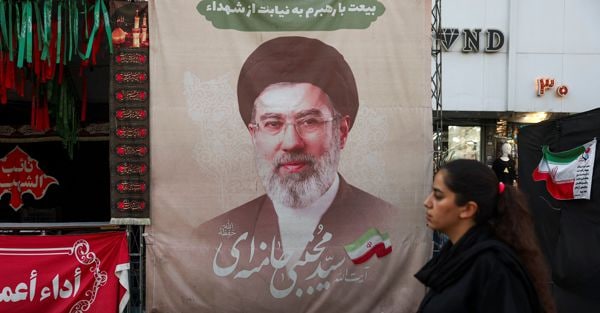
Una donna cammina accanto a uno striscione con l’immagine della Guida Suprema dell’Iran Mojtaba Khamenei, in una strada di Teheran, in Iran, il 13 agosto 2026. Majid Asgaripour/WANA (West Asia News Agency) via REUTERS
26 August 2026
US-Iran talks: Trump says, “I don’t have a deadline, I’m in no rush”
“I don’t have a deadline; I’m in no hurry.” This is what US President Donald Trump told Al Jazeera, referring to the negotiations with Iran. Trump went on to state that both economic and military measures “are effective”.
26 August 2026
Israel has bombed a Hamas site in the northern Gaza Strip
The Israeli Air Force bombed a Hamas site in the north of the Gaza Strip yesterday, which, according to the IDF (Israel Defence Forces), was located next to a hospital and a school. According to the army, the building in Jabalia was used by Hamas as an “ambush position”, as well as for storing weapons. The IDF states that Hamas had recently been planning attacks and working to restore the operational capabilities of the Palestinian Islamist movement within the building. According to the army, the strike killed several Hamas members. The military states that the “ambush position” was located approximately 50 metres from the Yellow Line in the area and that, as such, it posed a threat to IDF troops engaged in operations in the area”. The structure was also situated approximately **70 metres from Kamal Adwan Hospital** and **170 metres from a school**, according to the IDF.
26 August 2026
How game theory explains the six-month war between Iran and the United States/Israel

As I write, the United States has resumed strikes against Iran, whilst mediators are working to restart the negotiations.
Just four days ago, the opposite was happening: Washington had suspended the air strikes, Tehran had immediately halted its retaliatory actions in the Gulf and had declared itself willing to negotiate. Before that: a memorandum of understanding interpreted in opposite ways by the two sides, an attack in the Strait of Hormuz, retaliatory air strikes, a ceasefire unilaterally declared ‘over’, talks once more, and bombs once more. A broken record which, however, for those who study strategic games, follows a precise pattern. Understanding this helps to answer the two questions everyone is asking: why won’t this war end and whether those waging it are rational or mad.
26 August 2026
Pasdaran: agreement with Oman on the distribution of revenues from the Strait of Hormuz
Iran and Oman have reached an agreement on the sharing of revenue from maritime traffic through the Strait of Hormuz, according to Hossein Mohebi, spokesperson for the Islamic Revolutionary Guard Corps (IRGC). “During these negotiations, agreement was reached on each party’s access to the waters of the Strait, as well as the distribution of revenues between Iran and Oman”, said Mohebi, as reported by the IRGC press service.
26 August 2026
Iran, Netanyahu: “The Iranian challenge is not yet over”
Israeli Prime Minister Benjamin Netanyahu has praised the United States after Washington announced a new round of sanctions targeting Iran and countries that trade with the Islamic Republic. “What President Trump did yesterday was to tighten the noose around Iran, not only by tightening measures against Iran itself, but also against those who support this regime, this terrible dictatorship,” Netanyahu explained, adding: “The Iranian challenge is not yet over.”
26 August 2026
Pasdaran: if the US does not accept our terms, the Strait of Hormuz will not be opened
“If the United States abandons its obstructionist stance and returns to the memorandum of understanding, we will be able to open the Strait of Hormuz within the framework of the agreement reached; therefore, our conditions must be accepted by Washington,” said Revolutionary Guards spokesman Hossein Mohebi, adding: “If the United States does not accept our conditions, the Strait of Hormuz will not be opened under any circumstances.” “The Strait of Hormuz is under our control and there are no enemy military vessels in the Persian Gulf,” he emphasised, according to the Fars news agency.
26 August 2026
Iran: the US will gain nothing from economic pressure; we will stand firm
“The United States will gain nothing from exerting economic pressure on Iran at this stage, just as it failed to gain anything during the war in the face of our brave armed forces and our people,” said the Iranian President Masoud Pezeshkian. “Our policy is to understand and resolve issues through dialogue and negotiation, but at the same time we will stand firm in the face of economic pressure, as we have done so far and will continue to do,” he added, as quoted by the IRNA news agency.
26 August 2026
Iran: Netanyahu to Trump – consider tightening the siege on Tehran
Israeli Prime Minister Benjamin Netanyahu said that, during his meeting with US President Donald Trump in Washington in July, he had discussed three possible approaches towards Iran: diplomacy, military action and what he described as a tightening of the ‘siege’ on Tehran. Netanyahu linked the third option to the new, expanded sanctions campaign launched by Washington and added that he was sceptical about the possibility of reaching an agreement with “those savages” in Iran. “I spoke with President Trump several weeks ago at the White House, in the Oval Office. We discussed three options [regarding Iran]”, Netanyahu explained in a video released by his office, taken from a speech in Hebrew delivered last night during an event in Jerusalem. Netanyahu said he had told Trump he doubted the possibility of reaching a “good deal” with Tehran: “I told him: there is an old option. Of course, a deal can be reached. A good deal: we have no objection to that. I doubt that a deal can be reached with those people, with those savages. I’m telling you: no deal can be reached.”
26 August 2026
West Bank: settler abducts two Palestinians near Nablus
An Israeli settler abducted two Palestinian brothers this morning whilst they were travelling along the road linking their town, Asira al-Shamaliya, to Nablus, in the north of the West Bank. This was reported by the Palestinian media, citing Palestinian security sources. According to their account, the settler stopped a gas tanker near the northern entrance to Nablus, seized the vehicle’s keys and abducted the two brothers.
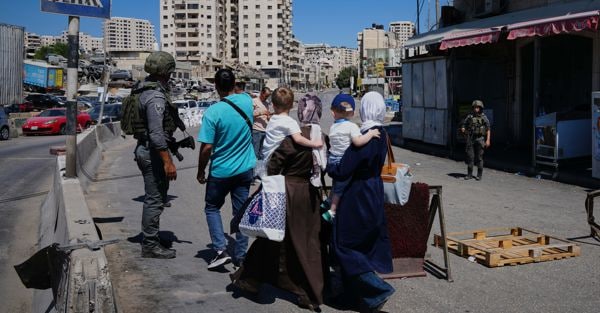
Agenti della polizia di frontiera israeliana parlano con alcuni palestinesi durante un’operazione dell’esercito nel campo profughi di Qalandiya, in Cisgiordania, martedì 25 agosto 2026. (Foto AP/Mahmoud Illean)
26 August 2026
Netanyahu, you can’t reach an agreement with those savages
“You cannot reach an agreement with those savages.” Benjamin Netanyahu reiterates his hardline stance on Iran and explains that he has outlined the possible options to US President Donald Trump, including that of reaching an agreement with Tehran. “We have no objection to a good deal,” said the Israeli Prime Minister, whilst making it clear, however, that he doubted the possibility of reaching an agreement with the current Iranian leadership. “There is also a third possibility: tightening the siege,” added Netanyahu, who argued that Trump – by announcing tougher sanctions – had “very, very strongly” increased the pressure on Tehran, and directly “on those who aid this regime, this terrible dictatorship”. “The challenge posed by Iran is not over,” Netanyahu then warned, emphasising that Israel still faces “the challenge in Gaza, in Lebanon and on other fronts. We are determined to tackle it”.
26 August 2026
Jet fuel: Nigeria is also among the alternatives to the Strait of Hormuz for supplying Europe
 by Mara Monti
The de facto closure of the Strait of Hormuz has reshaped the balance of the European jet fuel market. From 28 February, the Dangote refinery in Nigeria increased production and channelled around 40,000 additional barrels per day to Europe compared with the same period in 2025, helping to offset the loss of Middle Eastern supplies. European aviation fuel imports thus rose from around 612,000 barrels per day in January 2026 to 750,000 in June, remaining at similar levels in July. The new supplies are mainly coming from the United States and Nigeria, whereas before the crisis around 20 per cent of European imports came from the Middle East via the Strait of Hormuz.
According to Kpler, before the crisis, Europe imported a total of 550,000–600,000 barrels per day of jet fuel, of which around 300,000 came from the Middle East. The closure of the strait has therefore deprived the European market of almost 300,000 barrels per day. In April, the US and Nigeria accounted for almost 75 per cent of European imports, amounting to around 375,000 barrels per day. The United States was able to rely on its extensive refining capacity: US exports of jet fuel reached around 443,000 barrels per day in August, just below the record of 455,000 set in May. Meanwhile, the new capacity at the Dangote refinery has transformed Nigeria into an increasingly important supplier to Europe.
26 August 2026
Qatari Prime Minister likely to visit Tehran tomorrow
Qatar’s Prime Minister and Minister for Foreign Affairs, Mohammed bin Abdulrahman Al Thani, is expected to travel to Tehran, most likely tomorrow, as part of efforts to ease tensions and strengthen security and stability in the region. This is reported by the Iran Nuances website, which states that during the visit the Prime Minister of Doha will also discuss bilateral relations with the Iranian authorities.
26 August 2026
Media reports: Iran wanted to kill Netanyahu’s son in Florida
Yair Netanyahu, 35, the son of the Israeli Prime Minister, is reported to have been the target of an Iranian plot to assassinate him whilst he was in Florida. The news has been reported by the Israeli media. The Times of Israel cites the right-wing US website Newsmax, which in turn quotes a source within the US law enforcement agencies. The news comes the day after Netanyahu, in a telephone interview with Channel 14, stated: “Iran has targeted one of my sons. Iran has tried to kill, to assassinate one of my sons.” He did not specify which of his two sons was the target, nor did he provide further details about the plot, but the Newsmax source claims that Israeli intelligence had learnt last December that Iran was planning to kill Yair in Florida. According to the source, the secret services believe that Iranian agents were ‘on the ground’ in the Miami area to monitor the prime minister’s son’s movements. The report states that Yair was ordered to leave Florida immediately and return to Israel. It also adds that he left without taking his personal belongings and has been living in Israel ever since.
26 August 2026
Syria, Katz: “Israel will remain in the buffer zone for as long as there are threats”
Defence Minister Israel Katz reiterated today, during a visit to the area, that the Israeli army will not abandon its buffer zone in southern Syria. “We will not move from Mount Hermon and the security zone as long as there are jihadist threats to the State of Israel. The message to the Syrian president is clear: when you wake up in the morning in the palace in Damascus, look up towards Mount Hermon and see the Israel Defence Forces, you will know that we are here to defend our communities and our borders,” he said. Katz added that Israel “had acted against a Turkish attempt to establish a foothold in Syria, which would have jeopardised Israel’s security interests”, referring to last week’s attack on a Syrian airbase.
26 August 2026
Yesterday, five ships passed through the Strait of Hormuz; traffic was well below average
Yesterday, five cargo ships passed through the Strait of Hormuz, a figure virtually unchanged from the previous day, but well below the average of 15 over the last 10 days, according to preliminary maritime traffic data published today. Reuters reports this on its website. Two tankers carrying liquefied petroleum gas and one tanker carrying bitumen left the Gulf via the strait, whilst two empty tankers for refined products entered the strait from the Gulf of Oman, according to initial data from the vessel-tracking service Kpler. On Monday, four cargo tankers had passed through the strait, according to the same data. The figures may vary as some ships usually switch off their tracking transponders whilst at sea. According to Kpler’s data, transits through the Bab el-Mandeb Strait, another major maritime chokepoint in the Middle East, remained virtually unchanged, with 31 merchant vessels compared with 29 the previous day, in line with the average over the last 10 days.
26 August 2026
Bessent meets with the Bahraini minister; constant pressure on Iran
The US Treasury Secretary Scott Bessent spoke with Bahrain’s Minister of Finance, Sheikh Salman bin Khalifa Al Khalifa, regarding Operation “Economic Outcast” against Iran. This was reported by Al-Jazeera. In a post on X, the Department stated that Bessent emphasised that “Iran must not be allowed to threaten international trade or use the Strait of Hormuz as leverage against the global economy”. He also highlighted “the importance of sustained financial pressure on Iran’s remaining sources of funding” and stated that “the United States will hold those who finance the regime to account”. Bessent welcomed “Bahrain’s long-standing partnership and its continued commitment to safeguarding the integrity of the international financial system”, the Department said. Both officials agreed on “the importance of ongoing coordination between the United States, Bahrain” and partners in the Gulf Cooperation Council, as well as “the wider international community, to combat illicit finance and strengthen economic security”.
26 August 2026
Iran, Deputy Minister: Only commercial vessels will be allowed to sail through the Strait of Hormuz
Only commercial vessels will be permitted to sail through the Strait of Hormuz, whilst military vessels will not be allowed to do so. This was stated by the Iranian Deputy Foreign Minister, Kazem Gharibabadi, whilst commenting on the details of the memorandum on the Strait that Iran and Oman are drawing up. Previously, the Foreign Ministry in Tehran had announced joint work with Oman to establish a temporary shipping corridor through the Strait of Hormuz and to clear the route of mines, as well as an agreement to continue discussions on the creation of a permanent navigation corridor through the Strait, which currently remains closed. “According to the memorandum (between Iran and Oman), the route into the Persian Gulf (via the Strait of Hormuz) will pass through Iranian waters, whilst the route out will pass through Omani territorial waters. In both cases, ships will transit through Iranian waters,” said the diplomat, as quoted by Iranian state radio and television. According to Gharibabadi, this is a temporary route. Iran and Oman are expected to enter into negotiations within 30 to 60 days to establish a permanent route to replace the temporary one. The deputy minister clarified that “only commercial vessels will be permitted to use the Strait of Hormuz”, whilst “no military vessels will be allowed to cross it”.
26 August 2026
The war in the Middle East in pictures
Guerra in Medio Oriente - 26 agosto 2026
Photogallery9 foto
26 August 2026
Israeli settlers attacked AFP journalists in the West Bank
Israeli settlers in the occupied West Bank attacked AFP journalists who were documenting tensions with Palestinians, in an incident of violence that left at least five people injured, according to reports from journalists and medical staff. A three-person team from the international news agency had travelled to the village of Jannatah, near Bethlehem, to report on Israeli activists carrying out solidarity visits in support of Palestinians who have been harassed by Israeli settlers, who recently blocked a road in the area. Following a clash between settlers and activists, the Israeli army ordered the journalists to leave what it described as a ‘closed military zone’; at that point, two more cars full of settlers arrived. The settlers, many of whom were children, threw stones at journalists and activists. An AFP journalist managed to dodge a stone, but was then struck on the chin by a settler child wielding a stick, causing a minor injury, he reported. On their return, the AFP reporters found their two parked cars damaged, with shattered rear windows and punctured tyres. The activists’ cars also sustained similar damage. Five people were treated for injuries sustained, the Palestinian Red Crescent said, and the AFP journalists reported seeing at least one Israeli activist being taken away in a Palestinian ambulance. During the clash, an Israeli soldier temporarily seized a video journalist’s camera, before returning it. An Israeli military spokesperson stated that the temporary seizure of the camera “is currently under investigation”. The Israeli police joined the army in gathering evidence on the damage to the cars and “a police investigation into the incident has been opened”, the military spokesperson said.
26 August 2026
Iran: oil companies will avoid ships on the blacklist
At least three Indian refineries and a major international energy company plan to stop using vessels included on Iran’s new blacklist, including for ship-to-ship (STS) transfers, due to security concerns. This was indicated by sources with direct knowledge of the matter. On Sunday, Tehran announced a blacklist of 45 vessels which, according to the Iranian authorities, have violated the rules governing transit through the Strait of Hormuz. The Islamic Republic has also stated that it will take action against any vessel carrying out cargo transfers with ships on the list, stepping up its threats regarding control of the strategic waterway. Iran’s announcement appears to be aimed at hindering the so-called ‘shuttle runs’ carried out by Gulf oil producers, such as the United Arab Emirates and Saudi Arabia, which use dedicated oil tankers to transport crude oil from the Gulf through the Strait of Hormuz and transfer it, via STS operations in the Gulf of Oman, to other vessels bound for end buyers.
26 August 2026
The Strait of Hormuz remains closed despite talks on the transit corridor
Despite talks between Iran and Oman on a temporary transit corridor and the clearance of mines from the Strait of Hormuz, Tehran has warned that the vital waterway will not be reopened unless the United States brings the war to an end. According to AFP, Washington has announced new sanctions aimed at pressuring Iran into surrendering, with Treasury Secretary Scott Bessent threatening the Islamic Republic with “economic asphyxiation”. During the talks in Tehran, the foreign ministers of Iran and Oman discussed a “phased framework” that includes the establishment of a “temporary joint navigation corridor through the Strait of Hormuz and an agreement to implement a joint mine-clearance project in the Strait”, according to a statement. The two countries, both coastal states bordering the Strait, have sought to draw up a plan to regulate transit through it, as set out in a memorandum of understanding between the United States and Iran signed in June. Iranian Foreign Minister Abbas Araghchi said on Tuesday that the proposed framework is a “striking example” of how his country’s commitment to peace and stability is accompanied by unwavering diplomacy with neighbouring countries.
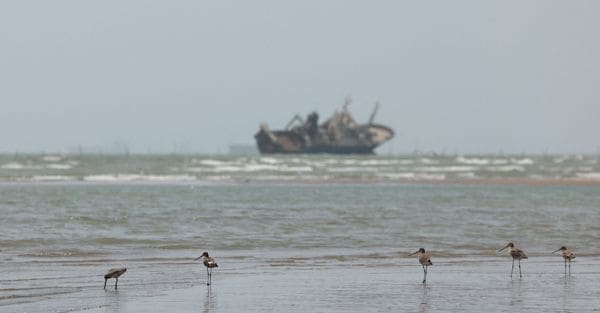
Uccelli sulla spiaggia, con imbarcazioni nello Stretto di Hormuz visibili nei pressi della spiaggia di Bandar Abbas, in Iran, 25 agosto 2026. Majid Asgaripour/WANA (West Asia News Agency) via REUTERS
26 August 2026
Qatar is discussing the provisional framework for the Strait of Hormuz with Oman and Tehran
The Prime Minister and Minister of Foreign Affairs of Qatar, Sheikh Mohammed bin Abdulrahman bin Jassim Al Thani, held separate telephone talks on Tuesday with the foreign ministers of Oman and Iran to discuss a proposal for a provisional framework for the Strait of Hormuz. According to Xinhua, “the proposal includes a temporary joint navigation corridor and a joint mine-clearance project”. “In his telephone conversation with Iranian Foreign Minister Seyed Abbas Araghchi, the Prime Minister of Qatar reiterated his support for all diplomatic efforts aimed at reaching a solution that guarantees freedom of maritime navigation and paves the way for a comprehensive agreement leading to lasting peace in the region”, according to a statement from Qatar’s Ministry of Foreign Affairs. In a separate telephone call with Omani Foreign Minister Sayyid Badr bin Hamad Al Busaidi, the Prime Minister “expressed Qatar’s appreciation for Oman’s efforts and reiterated its full support for Muscat’s diplomatic initiatives to ease tensions and strengthen regional stability”. “On Tuesday, Iran and Oman exchanged views on a phased framework involving the creation of a temporary joint shipping corridor in the Strait of Hormuz and an agreement to implement a joint mine-clearing project in the waterway”, according to a joint statement issued by the two countries’ foreign ministries.
26 August 2026
Rubio: no new attacks on Iran for the time being
For “the time being” there are no plans for the United States to launch new attacks against Iran. This is the message that Secretary of State Marco Rubio has conveyed in recent days to several foreign ministers from allied countries, explaining that the focus is now on other forms of pressure. According to Axios, Rubio outlined to his counterparts the policy the administration intends to pursue at least until the mid-term elections: namely, to avoid military action, increase economic pressure, and transport as much oil as possible through the Strait of Hormuz.
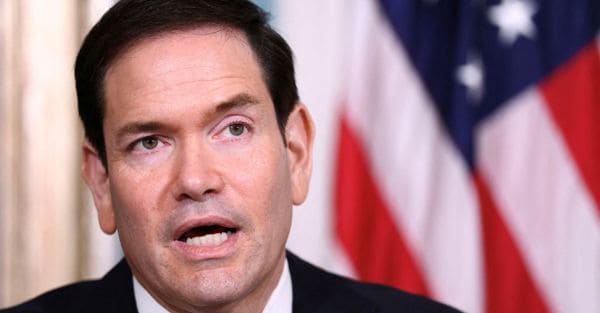
Il Segretario di Stato americano Marco Rubio interviene durante la cerimonia di firma di un protocollo d'intesa con il vicepresidente paraguaiano Pedro Alliana sulla cooperazione strategica nel settore nucleare civile, presso il Dipartimento di Stato a Washington, D.C., Stati Uniti, il 4 agosto 2026. REUTERS/Kevin Lamarque/Foto d'archivio
