
15 June 2026
Latest war news. Trump: ‘The Strait of Hormuz will be fully open by Friday’. Netanyahu: ‘I’m standing for re-election and I intend to win’
The lifting of the US naval blockade on Iranian ports is reportedly underway. This is according to Press TV, following the signing of the memorandum of understanding between Tehran and Washington. According to the broadcaster, “three oil tankers and two ships carrying essential goods for Iran have passed through the naval blockade”.
For feedback, please contact
english@ilsole24ore.com
 Aggiungi Il Sole 24 Ore
ai preferiti su Google
15 June 2026
Tehran media: US naval blockade begins to be lifted
The lifting of the US naval blockade on Iranian ports is reportedly underway. This is according to Press TV, following the signing of the memorandum of understanding between Tehran and Washington. According to the broadcaster, “three oil tankers and two ships carrying essential goods for Iran have passed through the naval blockade”.
15 June 2026
Iran: Hamas welcomes agreement between the US and Tehran to end the war
The Palestinian Islamist movement Hamas has welcomed the agreement between the United States and Iran, expressing the hope that it will help bring an end to the violence in the Gaza Strip.
Israel and Hamas accuse each other almost daily of violating the ceasefires, whilst the Gaza Strip continues to be the scene of violence and bloodshed. Progress towards a definitive end to the war remains at a standstill, partly because the group refuses to lay down its arms.
In a statement, Hamas said it “welcomed the announced agreement on the memorandum of understanding between the Islamic Republic of Iran and the United States”, congratulating its Iranian ally on its “resilience in the face of pressure and challenges”.
15 June 2026
Netanyahu: I know how to stand firm with the US
Responding to questions from Israeli journalists during his press conference, Prime Minister Benjamin Netanyahu stated that he knew how to “stand firm” with the White House when Israel’s security interests were at stake, against a backdrop of growing concern over US restrictions on Israel’s freedom of military action against Hezbollah and Iran.
Netanyahu avoided answering the question of whether he would allow Israel to strike Iran on its own or to act independently against Hezbollah in Lebanon. However, he insisted on defending Israeli interests in his dealings with US President Donald Trump, following days of reported tensions between the two leaders and public criticism levelled by Trump at the Israeli prime minister over these issues.
Speaking of Trump, Netanyahu said: “We often see things the same way, but there are also instances where our positions are less aligned. I am responsible for Israel’s security interests. I defend them”.
In what appears to be a pointed reference to his political opponents, whom he considers less experienced, Netanyahu added: “These interests cannot be defended with fiery rhetoric. It must be done with wisdom, and this requires a great deal of experience, sound judgement and a deep understanding of the American reality. It really does require a great deal of experience, and I believe I do this as well as I possibly can. And when necessary, I take a firm stance on our security interests.”
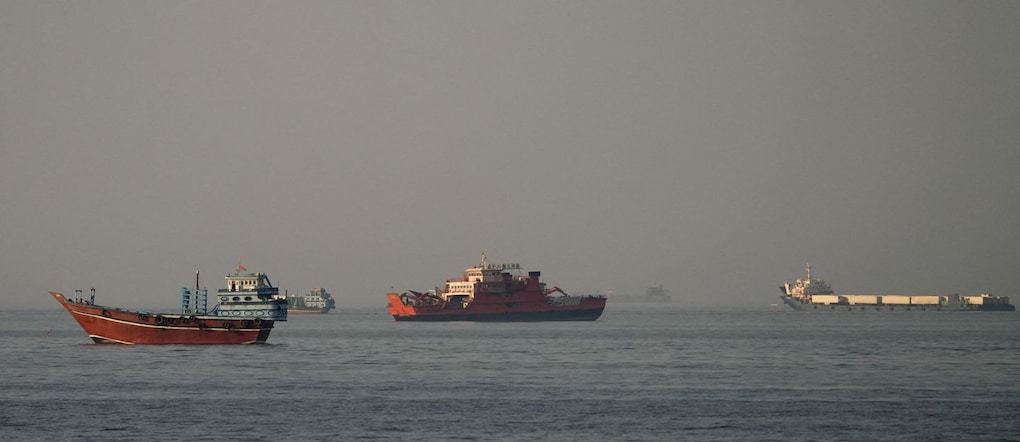
Imbarcazioni nello stretto di Hormuz REUTERS
Ask the editorial team
Have questions or feedback about this article? Contact our editorial team.
15 June 2026
Netanyahu: I am standing for re-election and I intend to win
“I will stand in the election and I intend to win.” Benjamin Netanyahu said this in response to a journalist’s question: “Can you say that it is you who governs Israel and not Trump, and that you will stand for re-election?” “My relationship with Trump is that of two long-standing partners, and occasionally there are differences of opinion. Anyone who thinks we can ignore what our US ally says is mistaken. But under my leadership, I have proven that I have brought Israel to its current position of strength,” added the Prime Minister.
15 June 2026
Netanyahu: ‘What have we achieved in Iran? We have eliminated an imminent threat’
‘People ask me what we have achieved. We have eliminated an imminent, existential threat to us. Together with our American allies, we carried out the largest air strike in Israel’s history. We eliminated the nuclear scientists and the leadership of the terror regime; we decimated most of the missile programme and countless military facilities. Basij commanders who were massacring their own people. We have inflicted trillions of dollars’ worth of damage.” This was stated by Benjamin Netanyahu at a press conference.
15 June 2026
Crosetto: Italia ready for mine clearance in the Strait of Hormuz, but preconditions are not yet in place
“Italia is technically ready to commit” to mine clearance in the Strait of Hormuz, but “the preconditions are not in place”. This was stated by Defence Minister Guido Crosetto, speaking to Italian journalists after a meeting at the Pentagon with US Defence Secretary Pete Hegseth. The preconditions listed by Crosetto are “external ones: namely, an agreement in place and a willingness on the part of both sides to accept this mission. Because we are not going to wage war, we are going to clear mines, so peace must be guaranteed by both sides’. And ‘on the other hand, at the national level, parliamentary authorisation’, the minister concluded.
15 June 2026
Crosetto: ‘No US withdrawal from bases in Italy’
Following his meeting with US Secretary of Defence Pete Hegseth, Guido Crosetto did not sense any intention on the part of the United States to withdraw from its bases in Italy. ‘On the contrary, from a bilateral and NATO perspective, cooperation with us is, in some ways, very important to the United States,’ the Defence Minister stated whilst speaking to the media at the embassy in Washington. As for a US withdrawal from Europe, Crosetto explained that this is a plan the Americans have been talking about for years: a reduced commitment. “Assets that they could withdraw from Europe and which could easily be replaced by European assets.”
15 June 2026
Pezeshkian: ‘There is still no final agreement, and we will not allow ourselves to be humiliated’
“What has been agreed represents an important step towards ending the war and launching negotiations, even though a final agreement has yet to be reached.” This was stated in a post on X by the Iranian president, Masoud Pezeshkian, commenting on the memorandum of understanding signed digitally yesterday by Tehran and Washington. “The Islamic Republic of Iran is prepared for all options, and the government’s focus, with or without an agreement, is to serve the people with honesty,” added Pezeshkian - “The Iranian nation has learnt from its martyred Imam (Ayatollah Ali Khamenei, ed.) not to submit to humiliation.”
15 June 2026
Update: Vance, Witkoff and Kushner to lead US delegation in Geneva
US Vice-President JD Vance and Special Envoys Steve Witkoff and Jared Kushner will lead the US delegation to Geneva for the signing of the memorandum of understanding with Iran. This is reported by the New York Times, citing US officials, who say that Vance himself will lead the second phase of negotiations with Tehran.
15 June 2026
Trump: ‘The Strait of Hormuz will be fully open by Friday’
“Essentially, the ships are starting to set sail. By Friday, everything will be fully open. We got on very well with Iran.” This was stated by US President Donald Trump at the G7 summit in Evian at the start of his bilateral meeting with French President Emmanuel Macron.
15 June 2026
Oil prices are falling, but the resumption of shipments through the Strait of Hormuz remains uncertain


“Let the oil flow!” proclaimed Donald Trump with his usual triumphalism. And the market immediately celebrated. Brent crude, down by more than 5%, fell below $83 a barrel on Monday 15th, to levels last seen in early March, when the war in the Persian Gulf had only just begun. Gas prices in Europe plummeted by almost 10%, to just over €42 per megawatt-hour on the TTF.
Investors’ relief is not without justification, given that this could genuinely be the moment. After dozens of empty announcements, concrete progress is finally being made towards peace between the United States and Iran. There is, however, great caution regarding the resumption of supplies from the Persian Gulf: that oil which, according to Trump, is ready to ‘flow’ in abundance, but also other commodities, including LNG, fertilisers and aluminium.
15 June 2026
Lebanon, Trump: ‘We want to resolve the issue; we will talk to Hezbollah’
“We want to see if we can resolve the issue of Lebanon, because it just seems to go on and on.” This was stated by US President Donald Trump, speaking to journalists ahead of his bilateral meeting with Emmanuel Macron. The tycoon described the situation in Lebanon as a “miniature version of what we were doing” in Iran, the resolution of which “shouldn’t be difficult”. “We’ll have to have a chat with Hezbollah,” he added.
15 June 2026
Trump: ‘We don’t need much help to reopen the Strait of Hormuz’
The President of the United States Donald Trump has stated that he does not need “much help” to reopen the Strait of Hormuz. He made the remarks whilst speaking to journalists in Évian-les-Bains, France, alongside French President Emmanuel Macron during the G7 summit. Macron indicated that France is ready “as early as tomorrow” to mobilise “the fighter jets already on the ground” to “assist with observation missions, the frigates that can be deployed within four hours, and the aircraft carrier with its accompanying frigates within two or three days”. “All this assumes that it is desired and requested by the United States, Iran and Oman,” the French president clarified.
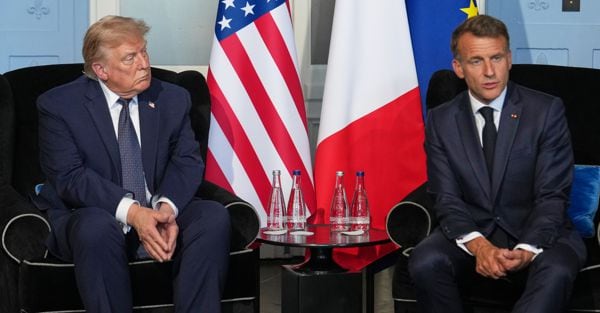
Il presidente Donald Trump incontra il presidente francese Emmanuel Macron durante un incontro bilaterale a margine del vertice del G7, lunedì 15 giugno 2026, a Evian-les-Bains, in Francia. (AP Photo/Julia Demaree Nikhinson) Associated Press / LaPresse Solo Italia e Spagna
15 June 2026
Trump: the deal with Iran does not provide for an easing of sanctions
The agreement with Iran does not include any easing of sanctions. This was stated by Donald Trump during his bilateral meeting with Emmanuel Macron. “It really is a question of behaviour. If they do what they’re supposed to do…”, Trump added.
15 June 2026
US: We will maintain our current military posture during the 60-day talks
During the 60 days of negotiations with Iran, the United States will maintain its military posture. This was stated by a US official, who emphasised that Washington would like to reduce its forces but not yet.
15 June 2026
Sharif: the signing ceremony for the US-Iran agreement will take place in Geneva
Addressing the Pakistani National Assembly, Prime Minister Muhammad Shehbaz Sharif stated that Pakistan “will host the signing ceremony for the agreement between the US and Iran in Geneva on 19 June”. This was posted on X by the Islamabad government’s account. Sharif also described the agreement as a ‘milestone for global peace’ and ‘a triumph of peace and dialogue over the devastation caused by war’.
15 June 2026
Media: ‘American prisoners in Iran not included in the peace deal’
A spokesperson for the Foreign Ministry in Tehran told CBS News that the US-Iran negotiations and the related memorandum to be signed on Friday in Geneva did not include any discussion regarding the release of Iranian-American prisoners in the country. Currently, according to US media reports, it is believed that four American citizens are being held in Iran, two of whom have already been identified: 49-year-old journalist Abdolreza Valizadeh, who has been a prisoner since May 2025, and 61-year-old Kamran Hekmati, who was arrested in July 2025 whilst travelling to Tehran to visit his family.
15 June 2026
Iran: Hezbollah welcomes the agreement; Tehran is a valuable ally
In a written statement, Hezbollah congratulated Iran on its ‘great achievement’ in securing an agreement with the United States and expressed ‘deep gratitude’ to the Islamic Republic for insisting that any agreement include a ceasefire in Lebanon. “Iran has once again confirmed that it is a truly valuable ally and a strong supporter,” said the Shia group, which hopes for “the full liberation of our land and the return of our prisoners to their homeland and families”. The Lebanese militant group added that “there will be no return to the situation that existed before 2 March”, referring to the 15 months preceding the last war with Israel, when a ceasefire was officially in place but Israel continued to launch regular attacks in Lebanon with the stated aim of preventing Hezbollah from rebuilding.
15 June 2026
JD Vance: Iran could receive $300 billion for reconstruction
Iran could gain access to $300 billion for reconstruction if it complies with the agreement with the United States, US Vice-President JD Vance said today. “Well, that’s the sort of funding they could have access to, through the Gulf Coalition, provided they meet their obligations,” Vance told CBS News when asked about the veracity of Iranian claims that Iran would gain access to $300 billion for reconstruction. The vice-president noted that Washington would not object if Gulf countries chose to invest in the Islamic Republic’s reconstruction process, provided that Tehran commits to honouring the agreements.
15 June 2026
Lebanon Media: Israeli drones kill one person in Nabatiyeh
An Israeli drone struck a car in Kfartebnit, a neighbourhood of Nabatiyeh, killing one person inside the vehicle. The victim has not yet been identified, as the body was found charred. This was reported by the Lebanese media outlet L’Orient-Le Jour. This is the second death recorded in the country since the announcement of the agreement between the United States and Iran, which includes a de-escalation on the Lebanese front. In fact, in the last few hours, a man was killed in an explosion, the cause of which remains unknown at present, in Yater, in the district of Bint Jbeil.
15 June 2026
Iran, Merz: ‘A mission to Hormuz is possible if the right conditions are in place’
Chancellor Friedrich Merz has stated that Germany could take part in a potential mission in the Strait of Hormuz. “We want to work with our partners to ensure freedom of navigation in the Strait of Hormuz,” Merz said in Berlin, before leaving for the G7 summit in Évian-les-Bains. “We will do so as soon as the necessary conditions are met. We will discuss this in Évian with the United States, US President Donald Trump, our European partners and the countries in the region,” the Chancellor added.
15 June 2026
Vance: ‘Digitally signed agreement; funds for reconstruction only if commitments are honoured’
“We have already digitally signed the agreement and no money has been disbursed. And that will not change.” This was stated by US Vice-President JD Vance, speaking to ABC News the day after the announcement of the agreement with Iran on the memorandum to end the war. “This is a results-based mechanism,” added Vance, referring to the $300 billion for reconstruction as “something they will be able to access if they fulfil their commitments.” “Iran will not receive a single cent until it fulfils its obligations. And the money we are talking about essentially consists of sanctions relief,” the Vice-President clarified. “We are not giving them US money: not a single dollar of US money will go to Iran. We are prepared to grant significant sanctions relief if the Iranians make the long-term commitments necessary to be a normal country, to abandon their nuclear weapons programme and to stop funding terrorist activities across the Middle East.”
15 June 2026
It will take between 3 and 6 months to clear Hormuz of all mines
It will take between three and six months to fully clear the Strait of Hormuz of mines. According to Gian Enzo Duci, an associate professor of maritime and port economics and management at the University of Genoa, who was interviewed by ANSA, this estimate does not completely prevent navigation through the Strait. ‘There are,’ he explained, ‘two areas near Oman and near Iran where there are no mines and ships are able to pass through. However, this does not facilitate a short-term solution to the congestion that has built up inside and outside the Strait.’ Due to the sheer number of ships that, in the event of a possible reopening of Hormuz following an agreement between the US and Iran, could resume transit, and due to infrastructure that may have been damaged, “we cannot expect 40 million barrels of oil to be exported on the very first day”. The possibility of returning to pre-crisis levels, including in terms of shipping flows, is becoming increasingly unlikely, especially with the introduction of a tariff system for transit agreed upon in the Strait. Maritime traffic “would thus be burdened by an extra cost”. As for concrete effects on the logistics costs of oil and LNG, the timeframe is likely to be lengthy, potentially taking over a year to return to pre-crisis levels. ‘Some movement will already be seen in the initial phase,’ he explained, ‘but the volumes involved are too small to have a significant effect.’
15 June 2026
Iran, Tehran: fees will be charged to ships passing through the Strait of Hormuz
This was stated by spokesperson Baghaei
Rome, 15 June (askanews) - The spokesperson for the Iranian Foreign Ministry, Esmaeil Baghaei, has indicated that tariffs may be imposed on ships passing through the Strait of Hormuz.
“The Strait of Hormuz is very important to us and we have adopted certain procedures, in accordance with international law, to protect the national security of Iran and the Islamic Republic of Iran,” the Iranian spokesperson said during a press conference, according to the Qatari broadcaster Al Jazeera.
“Our aim is to create the conditions for safe passage through this waterway. We need some time to discuss this important matter with the other parties involved,” Baghaei said, adding that charges would be applied. (Continued)
Rome, 15 June (askanews) - “These are comprehensive services that will be provided to preserve and maintain the environment. Many other services will be offered by Iran and Oman, and this will come at a cost. Consequently, charges will be applied, and that is clear,” noted the Iranian spokesperson.
15 June 2026
Von der Leyen: ‘There will be no peace while Lebanon is in flames’
“There can be no lasting peace as long as Lebanon remains in turmoil. We call for a genuine ceasefire and full respect for Lebanese sovereignty.” This was stated by the President of the European Commission, Ursula von der Leyen, at a press conference in Evian, welcoming “the agreement between the US and Iran”. “The priority now is implementation: the Strait of Hormuz must reopen and freedom of navigation must be restored without hindrance. This is essential for regional stability and the global economy,” she emphasised, adding that “the agreement must lead to the end of Iran’s nuclear and ballistic missile programmes.”
15 June 2026
Trump: ‘Ships loaded with oil are leaving the Strait of Hormuz’
“Ships are beginning to leave the Strait of Hormuz, many of them carrying oil,” US President Donald Trump said in a post on Truth Social. “They are taking the southern ‘highway’, which is absolutely safe, secure and uncontaminated,” he added.
15 June 2026
Iran, Gantz: agreement between Tehran and the US a ‘strategic failure’
The agreement between Iran and the United States represents a “strategic failure” that will have long-term consequences for Israel. This was denounced by Benny Gantz, leader of the Israeli “Blue and White” party. “The emerging deal with Iran appears to be a strategic failure that will require Israel to face diplomatic, military and legal battles in the years to come”, wrote Gantz, a former defence minister, in a social media post. “Under no circumstances should we accept restrictions on Israel’s freedom of action in Lebanon or a withdrawal that endangers residents of the north,” he added. Since its announcement, the preliminary agreement has been criticised by several opposition politicians in the Jewish state and by various members of the Israeli government itself, including the far-right Minister of National Security, Itamar Ben-Gvir, and the Minister of Finance, Bezalel Smotrich.
15 June 2026
Vance: Ghalibaf and Araghchi in Switzerland on Friday
The Speaker of the Iranian Parliament Mohammad Bagher Ghalibaf and the Foreign Minister Abbas Araghchi will be part of the Iranian delegation that will sign the peace agreement with the United States on Friday. US Vice-President JD Vance told CNBC, announcing a “broad spectrum of representatives” from Iran. “We no longer pass messages; we speak directly with them,” added Donald Trump’s second-in-command. According to him, “our relationship with Iran has fundamentally changed” in the sense that, until now, “we have never had this direct line of communication with Iran in the last 47 years. We are speaking with the highest levels of government.”
15 June 2026
Iran, Vance: ‘We expect the Strait of Hormuz to remain open and toll-free’
The US Vice-President, J.D. Vance, has stated that he expects the agreement between the United States and Iran to lead to the opening of the Strait of Hormuz without tolls in the long term. “We expect the strait to be open without tolls in the long term, and this is one of the aspects we will be defining in these technical negotiations,” Vance said in an interview with CNBC. According to the agreement signed between the US and Iran, the Strait of Hormuz is set to remain open without tolls for two months. The Vice-President also stated that ‘many’ details of the agreement between the United States and Iran remain to be defined. ‘We will see if Tehran makes concessions,’ he added.
15 June 2026
Media: First killing in southern Lebanon since the US-Iran agreement; case under investigation
In southern Lebanon, the first killing has been reported since the announcement of an agreement between the US and Iran, which also indirectly concerns the conflict between the Israeli army and Hezbollah. This is reported by L’Orient-Le Jour, which explains that the victim was a man who died as a result of an explosion. At present, the newspaper adds, citing a local source, ‘an investigation is underway to determine whether the explosion was caused by a suspicious object, an unexploded ordnance or an Israeli attack’. No hypothesis has been confirmed at this stage.
15 June 2026
Macron: ‘We are ready to lead the Hormuz mission alongside the UK, the Netherlands and Italia’
“France and the United Kingdom are ready to lead a mission in the Strait of Hormuz, with the support of the Netherlands and Italia, with the aim of helping to reopen this sea route once the agreement reached between the United States and Iran is effectively implemented.” This was stated by French President Emmanuel Macron in an interview with TF1 from Evian-les-Bains, at the start of the G7 summit. According to the President, the mission could be deployed “within two or three days”. For Macron, “the reopening of the Strait of Hormuz with the imposition of tolls would be contrary to international law”.
15 June 2026
Iran, Moscow: ‘We hope the agreements will be implemented’
Russian Foreign Minister Sergey Lavrov expressed his hope today that the encouraging statements made by the United States and Iran regarding the memorandum reached will be put into practice.
“We discussed the situation regarding Iran, including in terms of regional and international security. We hope that the encouraging statements issued this morning by Washington, Tehran and Pakistan, as the country mediating the negotiations, will be put into practice,” said Lavrov.
15 June 2026
China: we have worked hard to bring the war to an end
China has always worked to bring the war in Iran to an end and will continue to contribute to lasting peace in the Middle East, upholding a stance of “fairness and justice” and drawing inspiration from the four proposals put forward by Chinese President Xi Jinping for regional stability. This was stated by Chinese Foreign Ministry spokesperson Lin Jian, responding at the daily press conference in Beijing to a question about the role the People’s Republic played in the negotiations that led to the US-Iran agreement.
Lin stated that since the outbreak of hostilities, China “has always strived to bring the war to an end” and has worked towards peace. The spokesperson noted that Xi had put forward “four proposals” to safeguard and promote peace and stability in the Middle East. According to Lin, these proposals reflect China’s consistent stance and active efforts to promote an end to the conflict, support dialogue and resolve differences.
In an interview with The New York Times, US President Donald Trump thanked Russian President Vladimir Putin and Chinese President Xi Jinping for their contribution to the success of the Islamabad summit.
15 June 2026
Tehran media: ‘Agreement recognises Iran and Oman’s sovereignty over the Strait of Hormuz’
In the final stages of drafting the agreement between Washington and Tehran, the text of the memorandum “was amended to definitively and explicitly emphasise the exercise of sovereignty by Iran and Oman over the Strait of Hormuz”: reports Fars, citing a “well-informed source” on the negotiations. The same source maintains that the approved version of the agreement therefore stipulates that the “future administration of maritime services” in the Strait will be “determined” by the two countries and that the explicit use of this expression means that the US “has recognised Iran’s right to collect the relevant fees”.
15 June 2026
Phase 2 for Hormuz, Meloni: ‘Ready to send ships with Parliament’s approval’
The G7 summit opens in Évian with the US-Iran agreement on the Strait of Hormuz already in the bag. The signing of the memorandum of understanding is expected on Friday in Geneva, and the summit – which will close on Wednesday 17 – thus finds itself having to manage not the anticipation of a ‘deal’, but its consequences. Phase 2 has already begun: how to ensure the reopening of the Strait and what to do about the Iranian nuclear dossier. A diplomatic breakthrough that the main European partners describe as a genuine ‘breakthrough’, a turning point capable of opening a new phase for the Middle East and the global economy. Overnight, a joint statement was issued by the United Kingdom, France, Germany and Italia, which welcomed “the announcement of the memorandum of understanding between the United States and Iran” and congratulated Washington, Tehran and all the mediators involved, “including Pakistan, Qatar and all other mediators’. For the four major European capitals, ‘this is a moment of opportunity to restore regional stability and stabilise the global economy’. A message that, in effect, changes the agenda of the Évian summit. Whereas until a few days ago the discussions were dominated by the risk of military escalation in the Gulf, the focus has now shifted to managing the post-agreement period and the conditions necessary to consolidate it. The immediate priority identified by the Europeans is the reopening of the Strait of Hormuz, a strategic chokepoint for global energy trade. In the joint statement, the four leaders affirm that “the urgent reopening of Hormuz with unconditional and unrestricted freedom of navigation is essential”. This is an objective that London, Paris, Berlin and Rome declare they wish to support directly, “in accordance with their respective constitutional requirements”, including through “a strictly defensive and independent mission to reassure commercial traffic and conduct mine-clearing operations”. This is the issue set to dominate discussions on the first day of the G7 summit, where Donald Trump will be the main protagonist. With the most sensitive chapter of the nuclear dossier now closed, the focus shifts to ensuring the security of maritime routes. Prime Minister Giorgia Meloni confirmed Italy’s willingness to contribute to this effort. “This is an opportunity for peace that must be seized: Italia, as in the past, is ready to support the diplomatic process towards a comprehensive agreement,” she stated. She reiterated two principles that Rome considers non-negotiable: “Iran cannot acquire nuclear weapons and freedom of navigation must be guaranteed”. Hence the openness to operational involvement. “We are ready, together with our other partners and subject to the necessary parliamentary authorisation, to contribute to an international naval presence to facilitate the full reopening of the Strait of Hormuz,” said Meloni. The nuclear issue, however, remains on the table. In the joint statement, the four European countries reiterate that “Iran must never acquire a nuclear weapon” and say they are ready to work with the United States, Iran and the International Atomic Energy Agency. At the same time, they are open to the possibility of easing punitive measures: “We are ready to lift the relevant sanctions in response to clear and verifiable steps by Iran regarding its nuclear programme.” The stated aim is to transform the memorandum into a stable and lasting agreement. To this end, the United Kingdom, France, Germany and Italia assure that they will work “closely with the United States, Iran and regional partners to seize this moment, maintain momentum and achieve a long-term diplomatic solution”.
15 June 2026
Spain: EU to deploy a mission to Lebanon to take over from the UN
The Spanish Foreign Minister, José Manuel Albares, has proposed that the European Union deploy a mission to Lebanon to take over from UNIFIL once its mandate comes to an end on 31 December this year.
Speaking to the media in Luxembourg ahead of the European Union’s Foreign Affairs Council, Albares announced that he would propose to his colleagues the launch of a new EU mission in Lebanon.
Albares hailed the ceasefire agreement between Iran and the United States, announced this morning to end the war and reopen the Strait of Hormuz, as “excellent news”. The Spanish minister stated that “dialogue and diplomacy can resolve all outstanding issues, in particular Iran’s civilian use of nuclear energy”, and ensure that the Ayatollah regime does not acquire a nuclear weapon.
The Spanish diplomat also stressed that the agreement must guarantee freedom of navigation in the Strait of Hormuz, which “must always be safe, free, free of any economic burden and completely open to any country”.
Albares expressed the hope that the agreement would lead to peace and stability in the Middle East and help to “make progress towards a two-state solution”, as well as including Lebanon and guaranteeing “the territorial integrity of a sovereign country such as Lebanon”.
On the subject of Lebanon, following the agreement between Washington and Tehran, he stated that the European Union could play “a key role” and announced that he would propose to his colleagues a “strong and robust” EU mission to take over from UNIFIL when its mandate expires.
15 June 2026
Iran: the key points of the agreement – differing accounts from Tehran and Trump
The Iranian news agency Mehr released the 14 points of the memorandum of understanding between the United States and Iran overnight, but US President Donald Trump has given a very different account of the agreement’s contents from the Iranian version.
According to reports by Mehr, the agreement would provide for an immediate and permanent ceasefire on all fronts, including Lebanon, and a series of US commitments regarding the end of the naval blockade, sanctions and the military presence in the region. Washington would undertake not to interfere in Iran’s internal affairs and to respect the sovereignty of the Islamic Republic.
Among the points released by the Iranian agency are the complete lifting of the naval blockade within 30 days, the withdrawal of US forces from areas surrounding Iran, the reopening of the Strait of Hormuz within 30 days in accordance with terms defined by Tehran, and the suspension of sanctions on sales of Iranian oil and petrochemicals.
According to Mehr’s version, the memorandum would also require the United States and its allies to present a reconstruction plan for Iran worth at least $300 billion. The document would also reaffirm Iran’s commitment, under the Nuclear Non-Proliferation Treaty, not to develop nuclear weapons.
Negotiations on the final agreement are expected to last 60 days and cover the nuclear issue, the complete lifting of US primary and secondary sanctions, and the rescission of the relevant resolutions of the United Nations Security Council and the IAEA Board of Governors. Iran’s missile programme and Tehran’s support for other forces in the region (the so-called ‘proxies’) would, however, be excluded from the final negotiations.
Mehr also reports that, before the final negotiations can begin, half of the $24 billion in frozen Iranian funds must be released. The final talks would not begin until the funds have been released, exemptions from oil sanctions have been granted and the naval blockade has been lifted.
Trump’s version, however, is different. On Saturday, the US president had written that, immediately after the signing, the Strait of Hormuz would be “open to all”. On Sunday, following the announcement of the agreement, he said he was authorising “the toll-free opening of the Strait of Hormuz” and the “immediate lifting of the US naval blockade”.
In a subsequent post, according to Axios, Trump clarified that the strait would be opened “upon the signing of the agreement on Friday, for the purpose of clearing the mines”, adding that oil would once again flow “throughout the region and around the world”.
On the nuclear issue, Trump presented the deal as the opposite of the 2015 agreement, arguing that it constitutes “a barrier against nuclear weapons”. He wrote that the Iranians “no longer want a nuclear weapon” and that “they will not have one, whether through purchase, development or any other form of acquisition”. CBS also reports that, according to Trump, the United States will recover and destroy nuclear material once the situation has calmed down.
Trump also denied that any immediate release of funds was planned. On Saturday, he wrote that “no money will change hands”. The US administration’s line, as reported by CBS, is that the agreement is linked to Iran fulfilling its commitments and that “no funds” will be released to Iran until Tehran complies with the conditions.
15 June 2026
Tehran media: the National Security Council has declared the war over
“The Islamic Republic of Iran, following a difficult and intense period of negotiations lasting several months, and on the basis of a resolution by the Supreme National Security Council, finalised the text of the Memorandum of Understanding on the end-of-war negotiations between Iran and the United States on the evening of 14 June.” This was stated by the Secretary of the Supreme National Security Council in a statement reported by the ISNA news agency. Following the announcement of the agreement, the Secretary declared the “immediate and definitive cessation of the war and military operations on all fronts” and the end of the naval blockade against Tehran. “The signing of this memorandum of understanding will take place officially on Friday 19 June,” the secretary added.
15 June 2026
Meloni: ‘The US-Iran memorandum is an opportunity for peace that must be seized’
“Last night, together with France, Germany and the United Kingdom, we expressed our strong appreciation for the memorandum of understanding signed by the United States and Iran in the last few hours. Our heartfelt thanks go to all the mediators, and in particular to Qatar and Pakistan, who made this agreement possible. This is an opportunity for peace that must be seized: Italia, as in the past, is ready to support the diplomatic process towards a comprehensive agreement.” This is stated in a declaration by the Italian Prime Minister, Giorgia Meloni.
15 June 2026
Iran, von der Leyen: ‘A good agreement; now we need swift and full implementation’
European Commission President Ursula von der Leyen welcomed the agreement reached between the United States and Iran following “sustained diplomatic efforts” by various partners, stating that its swift and full implementation by all parties was a priority.
“The agreement should allow for the immediate reopening of the Strait of Hormuz,” said von der Leyen, stressing that freedom of navigation must be restored “without tolls”. This, she added, is an essential step for regional stability and the global economy.
According to the President of the European Commission, the agreement paves the way for broader negotiations on peace and security in the Middle East. These negotiations, she said, should lead to an end to Iran’s nuclear and ballistic missile programmes and its destabilising activities in the region.
15 June 2026
Kallas (EU): ‘The ceasefire agreement is a potential turning point’
The announcement by the United States and Iran to end the war and reopen the Strait of Hormuz represents “a potential turning point”. This was written on X by the EU’s High Representative for Foreign Affairs, Kaja Kallas.
According to Kallas, the agreement could provide the necessary scope for more in-depth negotiations on Iran’s nuclear programme and other critical issues. Once implemented, he added, the agreement should also help to alleviate the global energy crisis.
15 June 2026
Ben-Gvir: ‘The Washington-Tehran agreement is not binding on Israel’
US President Donald Trump’s agreement with Iran “does not bind” Israel, which “is not subordinate to the United States”. This was written on X by Israeli Minister of National Security Itamar Ben-Gvir, following the announcement of the memorandum of understanding reached between Washington and Tehran.
“My position is clear: we are not a party to this agreement, which does not guarantee our security, and it does not bind us in any way,” said Ben-Gvir.
15 June 2026
Stock markets: Wall Street closes sharply higher; Nasdaq up 3.07%. SpaceX soars
by Enrico Miele and Paolo Paronetto
Wall Street closes higher following the agreement between Iran and the United States. The Dow Jones rises by 0.92% to 51,671.83 points, the Nasdaq gains 3.07% to 26,683.94 points, whilst the S&P 500 gains 1.66% to 7,554.54 points. SpaceX ends the session up 20%, increasing its market capitalisation – according to Bloomberg – by $412 billion.
The ceasefire agreement between the United States and Iran is also bolstering European stock markets, which reached new highs during the day, and is pushing down the price of oil. The FTSE MIB in Milan, in particular, has surpassed the 52,000-point mark for the first time, ahead of the official signing of the agreement, scheduled for Friday in Geneva.
15 June 2026
Iran, Gharibabadi: we remain ‘with our finger on the trigger’
The Iranian armed forces will remain on high alert, ready to respond to any plot, “with their finger on the trigger”. This was stated by Iranian Deputy Foreign Minister Kazem Gharibabadi, according to the Tasnim news agency.
Gharibabadi stated that the armed forces of the Islamic Republic will keep “their finger on the trigger” to counter any plot against the country.
15 June 2026
Oil prices fall following US-Iran deal: Brent at $83.41 (-4.5%)
Oil prices have plummeted following the announcement of a preliminary agreement – due to be signed on Friday in Switzerland – between the United States and Iran to end the conflict.
Brent futures for August delivery have fallen below $85, trading at $83.41 a barrel, down 4.49%. WTI for July delivery is just above $80, trading down 4.91% at $80.71 a barrel.
With the outbreak of the conflict in Iran at the end of February, the Strait of Hormuz – a strategic chokepoint for global oil supplies – was blockaded: until 28 February, some 20 million barrels of crude oil passed through it every day, accounting for around a fifth of global consumption. During the night in Italy, US President Donald Trump, announcing the agreement, specified that “the Strait of Hormuz will reopen without tolls and the United States will end the naval blockade of Iran”.
15 June 2026
Iran: a provisional agreement has been reached, but there are still issues to be resolved
The United States and Iran announced a preliminary peace agreement on Sunday, a potential turning point after nearly four months of fighting that has caused global political and economic turmoil. However, the strength of the agreement will need to be tested in the coming days, starting with three key issues: the reopening of the Strait of Hormuz, the lifting of the US naval blockade and Israel’s conduct.
The agreement is due to be signed on Friday in Switzerland, according to US President Donald Trump and the Pakistani mediators. Trump had initially suggested he wanted the agreement signed as early as Sunday, but neither side has released a detailed list of the agreed points. The agreement will then be formalised through a UN Security Council resolution, according to a draft text reported by the Iranian news agency Mehr.
The US President has said that the Strait of Hormuz will be reopened on Friday, explaining on social media that time will be needed for mine-clearing operations. In an earlier message, Trump had announced the simultaneous and immediate lifting of Iranian restrictions on traffic through the strait and the US naval blockade against Iran.
Pakistani Prime Minister Shehbaz Sharif, the chief mediator of the agreement, announced that, following intensive talks, a peace agreement had been reached between the United States and the Islamic Republic of Iran. Sharif added that both sides had declared an immediate and permanent cessation of military operations on all fronts, including Lebanon.
The government in Tehran subsequently confirmed that an agreement had been reached. Iranian Deputy Foreign Minister Kazem Gharibabadi stated that “the text of the memorandum of understanding has been finalised” and argued that Iran’s threats of attacks against Israel had increased pressure on the United States to reach an agreement.
According to a senior US official quoted by the Wall Street Journal, Washington remains confident that a formal agreement could be signed this week, but some details still need to be finalised.
The new framework is expected to trigger a 60-day period of negotiations on Iran’s nuclear programme, which the United States suspects could be used to develop a nuclear weapon. In exchange for restrictions on the programme, Tehran expects access to billions of dollars frozen abroad and an end to sanctions that have weighed heavily on its economy.
Trump stated that the agreement includes a commitment by Iran not to acquire nuclear weapons, although this point did not feature in his messages released on Sunday evening. The US president also said he did not consider the removal of nuclear material from Iran to be a matter of urgency, explaining that the issue could be addressed at a later date.
15 June 2026
Pakistani Foreign Minister: Iran-US agreement marks a significant turning point
Pakistan has welcomed the agreement reached between the United States and the Islamic Republic of Iran, describing it as a “significant breakthrough” and a positive sign for regional and international stability. Ishaq Dar wrote this on X.
According to Dar, the outcome reflects “the strength of sustained diplomatic efforts” and the collective determination of friendly nations to choose dialogue over confrontation. The agreement, he added, also sends a reassuring message to the international community and provides confidence and stability to global markets and the world economy, particularly for developing countries, which are more vulnerable to regional instability.
Dar emphasised that Pakistan had remained actively engaged with all parties involved throughout the entire process, consistently advocating for moderation and a constructive approach. Islamabad, he said, has always maintained that dialogue and diplomacy remain the only viable means of resolving all issues.
Pakistan has expressed its appreciation for the trust placed in it by the leadership of the United States and Iran, and has commended both sides’ commitment to remaining engaged in the search for a peaceful, negotiated solution.
Dar also thanked the “brother” nations, including Saudi Arabia, Qatar, Turkey and Egypt, as well as the United Nations and international partners who have closely followed the process and helped to achieve this outcome.
Whilst negotiations continue on outstanding issues, Pakistan remains ready to support any initiative aimed at consolidating the progress made. Dar finally pointed to the formal signing ceremony on 19 June in Geneva as the next step in the agreement, expressing confidence that this positive development could pave the way for lasting peace, stability and shared prosperity in the region and beyond.
15 June 2026
Trump tells the New York Times that if the agreement is not honoured, the attacks will resume
US President Donald Trump gave an interview to The New York Times on Sunday afternoon, in which he stated that the agreement with Iran ensures that the Strait of Hormuz will be “permanently toll-free”.
In what the newspaper describes as a 28-minute phone call, Donald Trump also stated that if Iran fails to reach a final nuclear deal with the United States, he will resume military attacks or make the United States “the guardians of the Middle East” in exchange for a fifth of the region’s revenue.
According to the BBC, Trump has firmly reiterated his previous claims that the decision to attack Iran in February and the subsequent naval blockade of its ports have “reshaped the Middle East in America’s favour”.
15 June 2026
UK, France and Italia: Tehran must never be allowed to acquire nuclear weapons
In a joint statement on the peace agreement between the US and Iran, the leaders of the UK, France, Germany and Italia say they will work closely with the United States, Iran and regional partners to “seize this moment”. “We congratulate the United States, the Iranian government and all those involved, including Pakistan, Qatar and all other mediators, on this diplomatic breakthrough,” says the group, known as the E4, as reported by the BBC. “This is a moment of opportunity to restore regional stability and stabilise the global economy.”
The leaders called for the agreement to be “implemented swiftly and in full” and stated that “the urgent reopening of the Strait of Hormuz, with unconditional and unrestricted freedom of navigation, is essential”.
The group stressed that Iran “must never acquire a nuclear weapon” and that it is “ready to lift the relevant sanctions in response to clear and verifiable steps by Iran regarding its nuclear programme”.
“We will work closely with the United States, Iran and our regional partners to seize this opportunity, maintain the momentum and reach a long-term diplomatic solution.”
The leaders also reaffirm their support for “Lebanon’s stability, sovereignty and territorial integrity”.
15 June 2026
Trump celebrates his 80th birthday, the Iran deal and UFC martial arts
Donald Trump celebrated his 80th birthday just as he wanted: first he tore up the deal with Iran, then he let his hair down at the White House, surrounded by family and the entire US administration (from Vice-President JD Vance to Secretary of State Marco Rubio), a walkabout and his beloved UFC Freedom 250 mixed martial arts fights. In an unprecedented scene, Trump emerged from the Oval Office with UFC boss Dana White and made his way towards the 600-tonne steel arena and giant screens of ‘The Claw’, first watching the US national anthem being performed on the historic Truman Balcony, whilst in the Washington sky at sunset, the US Air Force deployed a ‘Super Delta’ formation as a sign of salute and respect, comprising the Thunderbirds and the US Navy’s Blue Angels. The cage, set up for the 14 mixed martial arts fighters, took its place on the South Lawn, next to the Octagon, for the first ever professional sporting event held at the White House, in front of over 4,000 ecstatic spectators. Thousands more fans gathered to watch the spectacle on a giant screen set up at the nearby Ellipse. “It’s something I never would have expected; it’s simply fantastic. Let’s enjoy it, it’s going to be a great fight,” said former footballer Zlatan Ibrahimovic in an enthusiastic clip posted by TNT Sports, just before the first bout between Brazilian Diego Lopes, who won by knockout against American Steve Garcia in the featherweight division. For a few hours, the White House turned into a giant reality show: the US commander-in-chief’s chambers were filled with fighters beloved by the public, warming up while leaning against the marble columns in their slippers: from Bo Nickal, who took on Kyle Daukaus, to Mauricio Ruffy, who fought Michael Chandler, to name just a few of the seven bouts. There was a standing ovation when British boxer Tyson Fury appeared. The American president, the second 80-year-old in office after Joe Biden, sought to assure that the ‘grand deal’ with Iran would bring peace and security to the entire region, claiming an achievement at which all his predecessors ‘had failed’. Speaking to the NYT ahead of the event, the tycoon threatened to resume “military attacks” if Iran failed to reach a final nuclear deal, in a process set to begin on Friday in Switzerland. Or to make the US “the guardians of the Middle East in exchange for 20% of the region’s revenues”. Whilst Trump was celebrating his 80th birthday, one of the worst Russian air raids since the start of the conflict struck Kyiv, leaving several dead. In the middle of the night, the flight on Air Force One to France for the G7. The Ukraine issue and the Strait of Hormuz are among the topics on the agenda.
14 June 2026
Israeli media: ‘Iranian airspace closed in anticipation of a potential retaliation’
The Israeli website *The Times of Israel* reports that, according to flight tracking data, Iranian airspace appears to have been closed in anticipation of the threatened attack on Israel. Maps show that the airspace above Iran is almost completely free of air traffic.
14 June 2026
Israeli media: ‘Trump offers Iran concessions in exchange for a pledge not to retaliate’
Israeli media are reporting behind-the-scenes developments in the ongoing negotiations between the United States and Iran, according to which Tehran will refrain, at least at this stage, from launching missiles at Israel in retaliation for today’s IDF raid on a Hezbollah stronghold in southern Beirut. According to Ynet and Channel 12, this decision is a ‘gesture of goodwill’ by Iran towards US President Donald Trump in exchange for ‘other concessions’ – which have not been specified – that will be granted to the Pasdaran ahead of the signing of the memorandum of understanding with the US.
14 June 2026
Guterres condemns Israeli air strikes: ‘This is a crucial moment for the negotiations’
The United Nations Secretary-General, António Guterres, has criticised the Israeli attacks on Beirut, which have jeopardised US plans to sign a framework peace agreement between Washington and Tehran later today. “The attacks took place despite the ceasefire and at a time when the United States and the Islamic Republic of Iran are expected to reach an agreement that will pave the way for a peaceful resolution of this conflict,” he said in a statement. “I urge all parties to show the utmost restraint at this crucial moment.”
14 June 2026
Netanyahu bombs Beirut and jeopardises the deal, sparking Trump’s anger
Netanyahu bombs Beirut and jeopardises the agreement. Trump is furious
“This could be the start of a long and wonderful peace: let’s not waste this opportunity.” In a few lines of a post on Truth, Donald Trump expresses his frustration at yet another IDF attack on the southern suburbs of Beirut. But it is in an interview with Axios that the tycoon unleashes all his anger: “Why did he have to carry out a bloody attack? I was so furious. I let him know. He’s got no fucking judgement,” is his unrestrained outburst against Israeli Prime Minister Netanyahu. Guilty, according to the US leader, of ordering the raids on the Hezbollah stronghold, thereby delaying the electronic signing of the Islamabad memorandum, which is unpopular with the Jewish state.
“The attack should never have happened, especially on such a significant day, when we are now just a step away from a peace deal with Iran,” declared the tycoon, who still hopes the agreement will be signed soon: “It will be signed electronically today and in person a week from now, somewhere in Europe.” Israeli officials quoted in the media said they were “stunned” by Trump’s words. The Israeli attack on Beirut — long a red line for Iranian forces — came in “response” to “Hezbollah attacks on Israeli territory”, stated Netanyahu and his Defence Minister Israel Katz, whilst the Lebanese media reported at least three dead and 15 wounded.
According to Axios, the IDF only informed US Centcom shortly before the attack, in response to which Tehran is preparing an “imminent” retaliation: “We have our finger on the trigger,” said Iranian Armed Forces Commander Ali Abdollahi, raising the alert level in Israel, which has banned public gatherings and is preparing to face a possible Iranian missile attack. Meanwhile, Mohammad Ghalibaf has pointed the finger at the United States, accusing it of having given the “green light” to the raid and of having “demonstrated once again that it is incapable” of honouring its commitments. “If you have neither the will nor the capacity to fulfil your commitments, there can be no question of continuing down this path,” the Iranian negotiator concluded in a post on X that sounds like a blow to the negotiation efforts.
Hence Trump’s response on social media, which focuses on behind-the-scenes diplomacy and public statements to secure the signing, now that Bibi “has thrown everything into disarray”. The tycoon has cautioned Israel over its reaction – which he considers exaggerated – to a Hezbollah attack “of negligible scale and of no real significance” that “should not jeopardise this fundamental process”. According to the president, “all parties need to take a step back”, now that the agreement is within reach. “There must be no further attacks by Israel anywhere in Lebanon, but, equally, there must be no further attacks against Israel by other parties.” Trump’s attempt is to keep his ally Netanyahu in check, who, it seems, sees no benefits in the agreement between Iran and the United States: according to Israeli officials quoted by the Jewish media, the Islamabad memorandum “jeopardises the interests” of the country, and by signing it, Washington is yielding to the “main conditions” set by Tehran.
Yet the tycoon claimed success, particularly for having secured a promise – apparently contained in the document – that Tehran will neither produce nor acquire nuclear weapons. And pending a final agreement, Iran will maintain the current status of its nuclear programme by refraining from further uranium enrichment and the expansion of its facilities. More generally, the nuclear programme will instead be subject to negotiation within 60 days of the memorandum being signed. A signature that, meanwhile, is still a long time coming: a delegation from Qatar, acting as a mediator alongside Pakistan, arrived in Tehran on Sunday “to help facilitate the finalisation of the agreement”, a diplomat familiar with the situation told AFP. There is hope in the words of Iranian President Masoud Pezeshkian, who stated that the country’s top security authority supports the “path of dialogue”. A clarification that sounds above all like an attempt to calm domestic waters, after fundamentalists at home criticised Tehran’s negotiating team, branding Araghchi a “liar” and an “infiltrator”.
14 June 2026
Media: ‘Israel stunned by Trump’s remarks, a slap in the face’
Israeli officials have described themselves as “stunned” by US President Donald Trump’s public criticism of Israeli Prime Minister Benjamin Netanyahu and the decision to strike Hezbollah targets in Beirut. This was reported by Channel 12, which stated that officials are increasingly concerned that the Iran-US agreement could drastically limit Israel’s freedom of military action in Lebanon. A senior Israeli official close to Netanyahu told the broadcaster that officials in Jerusalem were stunned by Trump’s remarks, which included accusing the prime minister of lacking judgement. “Trump’s statement is a slap in the face. The restrictions on Israel have been taken to another level: the expectation that we will not strike anywhere in Lebanon is incompatible with the behaviour of a strategic ally.” It is reported that during one of his recent conversations with Netanyahu, Trump proposed that Israel physically withdraw from southern Lebanon as part of a broader agreement under discussion with Iran. Netanyahu reportedly rejected the idea outright, arguing that it would be in the interests of neither Israel nor the United States. The broadcaster reports that the main concern within the Israeli political and security establishment is currently that Israel’s freedom of action in Lebanon could be significantly curtailed by Washington, should the agreement with Iran provide for the complete cessation of Israeli military activities throughout Lebanon, and not just in Beirut, as Tehran insists will be the case. According to the channel, officials in Washington have spent the last few hours pressuring Israel not to escalate tensions with Iran, whilst promising to do everything possible to prevent Iranian attacks against Israel. The American message, according to the report, is that even in the event of an Iranian attack, Israel should avoid any response that could jeopardise the memorandum of understanding currently being negotiated between Washington and Tehran, which Trump expects to be signed in the coming hours.
14 June 2026
Lebanon: Israeli attack on southern Beirut leaves buildings destroyed and causes severe damage
14 June 2026
Trump: ‘If Iran signs today, the blockade on its ports will be lifted immediately’
If Iran were to sign the memorandum on ending the war today, Donald Trump “would order the immediate lifting of the blockade on Iranian ports, before moving on to more detailed discussions regarding Iran’s nuclear programme”. This is what the tycoon said in a telephone conversation with Fox News.
14 June 2026
Tehran’s armed forces: ‘We have our finger on the trigger’
General Ali Abdollahi, commander of the Iranian armed forces, has stated that the country’s armed forces have “their finger on the trigger” and are ready to strike “at the heart of the enemy”, according to the state news agency IRNA. Abdollahi said that Iran was waiting for the enemy to make the “slightest mistake” in order to “teach them an unforgettable lesson”.
14 June 2026
Israeli raid on the southern outskirts of Beirut
14 June 2026
Trump: ‘Netanyahu delayed the signing by a few hours’
In an interview with Axios, US President Donald Trump launched a scathing attack on Israeli Prime Minister Benjamin Netanyahu over his decision to strike Beirut: “He’s thrown a spanner in the works. He’s delayed the signing by a few hours. It was supposed to happen now. Now it’s scheduled for a few hours from now.” “Why did Bibi have to carry out a bloody attack? I was furious. I let him know. He has no bloody judgement. I let him know,” said Trump, who, in a race against time to save the memorandum, is relying on behind-the-scenes diplomacy and public statements to secure the signing.
14 June 2026
The Pope: ‘The cry for justice is being silenced by increasingly subtle methods’
Social injustice affects the poor first and foremost. It also stems from a form of corruption that the Pope describes as ‘arrogant’, capable of discriminating against, marginalising and stifling the demand for justice.
This is the core message of the 10th World Day of the Poor, which will be observed on Sunday 15 November 2026 under the theme ‘The Lord is the refuge of the poor’.
14 June 2026
Iran: ‘A strong response against Israel is on the way’
“Today’s crime by the Zionist regime in Dahieh, Beirut, has once again demonstrated that the United States is weak and lacks credibility, as it is not even capable of controlling this illegitimate regime. A strong response is on the way.” This was written on X by the head of the Iranian parliament’s National Security Committee, Ebrahim Azizi.
14 June 2026
Pezeshkian: ‘Iran’s highest security body supports the path of dialogue’
Iranian President Masoud Pezeshkian stated today that the country’s highest security authority supports the “path of dialogue”, following criticism from hardliners of Tehran’s negotiating team in talks with the United States. “The Supreme National Security Council has concluded that the path of dialogue must be pursued,” Pezeshkian said at a meeting with media executives, according to the presidency’s website, adding that the Council is responsible for “decisions regarding war and negotiations”.
14 June 2026
Israeli media: government meeting held in a bunker over fears of an attack from Iran
In light of fears that Iran may launch missiles at Israel in response to today’s IDF raid in Beirut, the security cabinet meeting, scheduled to take place in an hour’s time, will be held in an underground bunker. This is according to Israeli media reports.
14 June 2026
Israel strikes a suburb of Beirut: there are dead and injured
14 June 2026
Putin and Zelensky ring Trump on his birthday and discuss the war
Russian President Vladimir Putin spoke to US President Donald Trump in a 55-minute phone call to mark Trump’s birthday, according to the Kremlin. During the call, Trump reiterated the need to end the war in Ukraine, Putin’s adviser Ushakov reported.
“The conversation focused on the situation regarding the memorandum of understanding currently being drafted between the United States and Iran. Donald Trump said that an agreement is close,” Ushakov told reporters. He then added that “it was agreed that the US President’s special envoys, Steve Witkoff and Jared Kushner, who are currently working on the Iran dossier, will return to Russia soon.”
14 June 2026
Hegseth (US Defence): ‘We are on track for an agreement with Iran’
“We are on track to sign the agreement with Iran; the question is not whether we will sign it, but when.” US Defence Secretary Pete Hegseth, speaking on CBS News, said that “President Trump has already dealt devastating blows to Iran’s nuclear programme, from ‘Midnight Hammer’ right through to this campaign. If Iran does not intend to comply, it will have to deal with the Department of War again, something we would prefer to avoid.” Israel’s attacks on the southern outskirts of Beirut “will not hinder the agreement with Iran”, which, however, “must firmly urge Hezbollah to stop attacking Israel”.
14 June 2026
The IDF is restricting gatherings across the country in anticipation of possible missile launches from Iran
The IDF has announced that, following a situation assessment, it has been decided to update the Home Front Command’s defence guidelines, limiting gatherings to 5,000 people nationwide. The directives take effect immediately, from 6.00 pm local time until 8.00 pm tomorrow. The changes are being made in anticipation of possible missile launches from Iran.
14 June 2026
Trump: ‘Israel’s attack on Beirut should not have happened’
“This morning’s attack in Beirut should never have happened, especially on such a significant day, when we are now just a step away from a peace agreement with Iran. Israel has the right to defend itself against threats, but the attack to which it reacted was negligible and of no real significance – causing no injuries or casualties – and should not jeopardise this fundamental process.” Donald Trump wrote this on his social media platform Truth. “All parties need to take a step back,” “this could be the start of a long and wonderful peace: let’s not ruin it,” he added.
14 June 2026
Iran, IDF: prepare for a possible missile attack on Israel
The Israeli Defence Forces have announced that they are prepared for a possible Iranian missile attack on Israel in the coming hours, following the earlier strike against Hezbollah in Beirut.
The army has stated that the IDF Chief of Staff, Lieutenant General Eyal Zamir, is assessing the situation “with all relevant commanders” following the attack, and that the current assessment is that Iran will launch missiles at Israel.
14 June 2026
Media: ‘Israeli airstrike on Gaza leaves 4 dead and several injured’
Israeli forces have killed four Palestinians and wounded several others in an attack near the Yemen Al-Saeed Hospital in the Jabalia refugee camp, in the northern Gaza Strip. This is according to the Palestinian news agency Wafa.
14 June 2026
Mike Waltz: “Trump is determined to finalise the deal today despite the difficulties”
US President Donald Trump remains determined to finalise a deal with Iran by the end of the day, despite the difficult negotiations. This was stated by the US Ambassador to the United Nations, Mike Waltz. Speaking on ABC’s ‘This Week’, Waltz said that Iranian negotiators had struggled to obtain guidance from Supreme Leader Mojtaba Khamenei and that they were ‘not always on the same page’ internally. Nevertheless, he expressed confidence that the agreement could be concluded, adding that both Trump and the negotiating team “are fully intent on finalising it today”.
14 June 2026
Iran: there is no point in continuing talks with the US if commitments are not honoured
Iran has accused the United States of failing to honour its commitments following the Israeli attacks in Lebanon. This was reported by its chief negotiator.
Tehran believes it would be “pointless to continue” talks with Washington if the commitments made during the ongoing discussions are not honoured.
14 June 2026
Iranian Army: ‘The attack on Beirut will not go unpunished’
The deputy commander of Iran’s Khatam al-Anbiya Joint Military Command has stated that Israel’s latest attack on Hezbollah in Beirut will not go unpunished. Mohammad Jafar Asadi described the attack in Dahiyeh as a renewed Israeli provocation. This was reported by Iran International.
14 June 2026
Iran: telephone conversation between the foreign ministers of Pakistan and Egypt
The foreign ministers of Pakistan and Egypt have held a telephone conversation for the second time in the last 24 hours. This was reported by the Foreign Ministry in Islamabad.
According to the statement, Pakistani Foreign Minister Ishaq Dar and his Egyptian counterpart Badr Abdelatty discussed progress towards a possible agreement between Washington and Tehran.
“They expressed the hope that these positive developments would contribute to lasting peace, security and stability throughout the region,” the statement added.
14 June 2026
Netanyahu: ‘The IDF has struck Hezbollah targets in southern Lebanon’
Israeli forces have struck “Hezbollah terrorist targets” in the southern suburbs of Beirut: this was announced in a joint statement, cited by The Times of Israel, by Israeli Prime Minister Benjamin Netanyahu and his Defence Minister, Israel Katz. According to the statement, the raids are a ‘response’ to ‘Hezbollah attacks on Israeli territory’. In a separate statement, the IDF spoke of ‘targeted’ strikes on infrastructure allegedly controlled by Hezbollah.
14 June 2026
Five people killed in the Israeli raid on Sidon
At least five people, including three women, were killed in attacks attributed to Israeli forces that took place between yesterday evening and this morning in Msayleh and Kaouthariyet el-Sayyad, towns in the Sidon district of Lebanon: according to the newspaper L’Orient-Le Jour. The same source reports relentless air raids and artillery fire in the Nabatieh area as well: in this case, the toll stands at at least three injured.
14 June 2026
Meeting between the foreign ministers of Pakistan and Turkey
Pakistani Foreign Minister Ishaq Dar held a telephone conversation with his Turkish counterpart, Hakan Fidan.
In a post on social media, the Pakistani Foreign Ministry stated that the two diplomats “exchanged views on developments in the regional situation and welcomed the encouraging progress towards an agreement between the United States and Iran”.
14 June 2026
Trump: ‘Iran has agreed not to acquire nuclear weapons’
“We have the Islamic Republic of Iran, which has just agreed never to possess a nuclear weapon, and the Strait of Hormuz will open shortly.” This is what US President Donald Trump stated in a post on Truth. In the message, which does not specify exactly when the Strait might reopen, Trump announces his endorsement of Congressman Mike Collins, now the Republican candidate for the Senate in Georgia.
14 June 2026
IDF: Hezbollah drone explodes over Israeli territory
Following the alert issued in Upper Galilee, the Israel Defence Forces (IDF) announced that a drone had exploded on Israeli territory, near the border with Lebanon. ‘There were no casualties and the incident is under investigation,’ the statement read, as reported by Ynet. According to the IDF, the drone, linked to Hezbollah, exploded in an area designated as a ‘military zone’.
14 June 2026
Pasdaran Agency: ‘The agreement is still under review; no final decision has been made’
“Tehran’s final decision on the agreement is currently under consideration.” This is reported by the Iranian news agency Fars, considered close to the Pasdaran, citing what it describes as a reliable source close to the negotiating team: “Iran has not yet announced its final decision regarding the proposed agreement. The examination of the political, legal and technical aspects of the proposals put forward is still ongoing.” According to the agency, which cites “informed sources”, “the examination of the various aspects of the proposals put forward is still continuing at the relevant levels of competence and decision-making, and the responsible institutions are carefully assessing the political, legal and technical aspects of the matter”.
14 June 2026
Al-Jazeera: Israeli airstrike in Faroun, southern Lebanon
An Israeli air raid has struck the town of Faroun, in the Bint Jbeil district of southern Lebanon. This is according to an Al-Jazeera reporter on the ground. Israel continues to attack Lebanon despite Iran’s claim that it will be included in a potential memorandum of understanding with the United States, the Arab news outlet adds, noting that new orders for forced evacuation have been issued following Israeli bombardments in several towns and villages in the south.
14 June 2026
Iran reports cyberattack on four banks: ‘But no data has been compromised’
A cyberattack has hit four major Iranian banks, but no customer data has been compromised, according to a statement from the country’s Banking Coordination Council. This is reported by Al-Jazeera. The attack targeted the shared communications infrastructure used by Bank Melli, Bank Tejarat, Bank Saderat and the Export Development Bank of Iran, prompting technical teams to implement protective measures, resulting in temporary disruption to some banking services. The Council stated that there had been no unauthorised access to customer information and no data had been deleted, adding that recovery operations were underway to restore the situation to normal.
14 June 2026
Iranian media: Qatari delegation in Tehran for peace talks
A delegation from Qatar, a country acting as a mediator between Iran and the United States alongside Pakistan, arrived in Tehran today as part of talks aimed at bringing about a lasting end to the war in the Middle East, according to reports in the Iranian media. The Isna news agency reported that an adviser to Qatar’s foreign minister had been sent to Iran. The purpose of this visit is to ‘examine the latest developments regarding the diplomatic process’, according to Tasnim, another Iranian news agency.
14 June 2026
Trump: ‘The agreement will be signed today.’ But Iran denies this
“The agreement with Iran is due to be signed on Sunday, and immediately afterwards the Strait of Hormuz will be open to all without tolls,” announced Donald Trump. Pakistani Prime Minister Shehbaz Sharif had previously set out the timetable for peace: an agreement “within 24 hours”, a “remote” signing, and technical talks to begin next week. But Tehran is putting the brakes on the timing of the agreement’s signing. The ceremony in Geneva with Vice-President J.D. Vance and Iranian Parliament Speaker Mohammed Ghalibaf has been cancelled. The US President is celebrating his 80th birthday today with a wrestling match at the White House before flying to the G7 summit in Evian, where he will also meet Ukrainian President Volodymyr Zelensky. French President Emmanuel Macron will receive him at Versailles on 17 June to mark the 250th anniversary of US independence. Meanwhile, Iran has announced that Ali Khamenei’s funeral will take place from 4 July.
