
War in Iran: latest news. Houthi attacks and the US warning to Americans in the Middle East
Tehran-backed attacks in Yemen are fuelling regional instability, whilst Washington is warning its citizens and tensions are mounting in Iran over a possible race to develop nuclear weapons

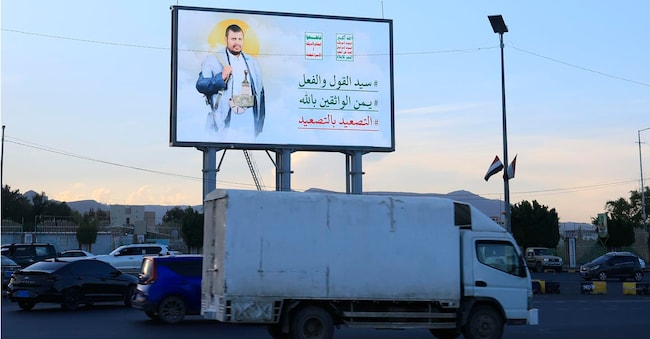
Tensions in the Middle East remain high due to the conflict between the United States and Iran. The most immediate threat comes from the Iran-backed Houthis, who, from Yemen, are destabilising the entire region with attacks that have particularly affected Saudi Arabia, a long-standing US ally. “US citizens currently in the Middle East should remain highly vigilant, given the complex security situation. It is recommended that they be aware of possible flight cancellations, airspace closures and travel disruptions”, writes X TravelGov, the Bureau of Consular Affairs of the US Department of State.
“The Houthis, backed by Iran, have launched hostilities against Saudi Arabia, including attacks on civilian airports and other critical infrastructure, which have resulted in civilian casualties and severe disruption to travel,” it notes - These hostilities could escalate rapidly, spreading beyond the area immediately affected. US citizens travelling to or from the Middle East should constantly monitor information regarding airport and airline operations, and draw up contingency plans in advance. Iran and groups supporting it may target other US interests abroad, or locations associated with the United States and US citizens worldwide, including US companies and other institutions.’ Meanwhile, Egypt says it is ready to ‘defend’ the Saudis against the Houthis.
News has emerged in the last few hours that the Iran-backed Houthi rebels have attacked a government military camp in southern Yemen, killing at least 20 soldiers, according to two Yemeni military officials. This was reported by AP. According to reports, the rebels fired ballistic missiles at the al-Alam military camp in the southern province of Shabwa, in an attack that also wounded at least twenty soldiers. The attack was one of the bloodiest in the recent escalation of fighting, which began months ago amid rising tensions in the wider conflict between Iran and the United States.
The hawks in Tehran are calling for the atomic bomb
And threatening rhetoric is coming out of Tehran. ‘The time has come’ for Iran to acquire nuclear weapons. This is the view of representatives of the most hardline wing of the Iranian regime, reports the Financial Times, which states that the debate on the subject has gathered pace following the war with the United States and Israel and the assassination of the Supreme Leader, Ali Khamenei. Among the proposals put forward by the ‘hawks’ in Tehran is withdrawal from the Nuclear Non-Proliferation Treaty (NPT), which some now consider useless for the Islamic Republic. ‘The latest military confrontations have shown that acquiring nuclear weapons is not merely an ambition for Iran, but a necessity more vital than bread,’ wrote Davoud Modarresian, a political commentator with close ties to Iran’s ultra-conservative circles, earlier this month.
The debate marks a turning point for the Islamic Republic, where openly supporting the development of the bomb has long been seen as challenging the authority of the late Supreme Leader. His successor and son, Mojtaba Khamenei, has not publicly clarified whether he intends to maintain his father’s position, who had issued a fatwa against nuclear weapons. This silence, according to the FT, has left room for the most hardline voices. The possibility that the Iranian leadership might revise its nuclear doctrine has also been raised by Hassan Ghashghavi, spokesperson for the Parliament’s National Security Committee, who believes the new Supreme Leader could issue a different religious ruling on the matter: “No one can stop him,” he said last month. The aim put forward by supporters of this shift is to build a “complete deterrence cycle” to prevent a repeat of attacks and negotiations, whilst some look to North Korea as an example of a nuclear arsenal capable of deterring foreign intervention.

