
Ali Larijani, Iran's shadow leader after Khamenei killed by Israel: from philosopher to security chief
He had sworn revenge against the US and that Iran would never surrender. He was killed by the Israeli army

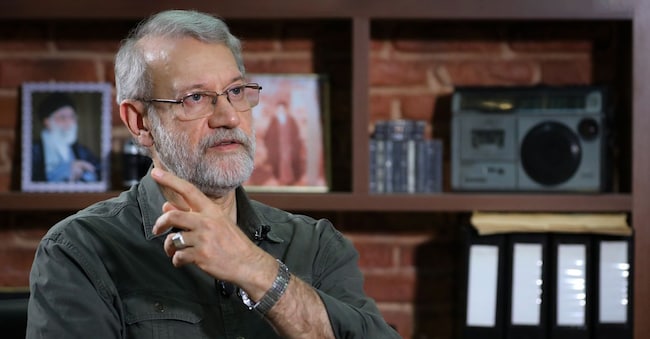
After the death of Supreme Guide Ali Khamenei, who was killed by a US-Israeli raid, the powerful secretary of the Supreme National Security Council, Ali Larijani was considered the de facto leader of the Iranian regime.
It was he who, in early March, after Khamenei's assassination, vowed revenge to the US and promised that Iran would never surrender to foreign forces or stop the attacks.
A figure very close to the late Supreme Guide, Larijani was the regime's point of reference for national security and foreign policy. Last January, when the anti-government street protests broke out, Khamenei appealed to Larijani to stop the popular movement against the regime and Larijani responded with one of the fiercest repressions in recent Iranian history (estimated tens of thousands dead).
Before he showed his ruthless face, Larijani, killed today by the Israeli army, was the calm and pragmatic leader of the Iranian establishment negotiating nuclear deals with the West and writing books on the German philosopher Immanuel Kant. He was not among the names for the possible succession to Khamenei because he lacked the necessary requirement, that of being a senior member of the Shia clergy.
Born in 1958 in Najaf, Iraq, Larijani came from a wealthy family so influential that American Time magazine dubbed them 'the Kennedys of Iran'. An eminent clergyman, the Larijani brothers were all and soon included in the vital ganglia of the regime, from the judiciary to the Assembly of Experts. In contrast to his peers, who had a purely religious background, Larijani had a robust secular education: a degree in computer science and mathematics from Sharif University of Technology and a doctorate in Western philosophy from Tehran University.

