
Iranian community in Italia doubled in the last six years
There were 23,626 residents in 2025, half of them women. Residence permits are issued mainly for study

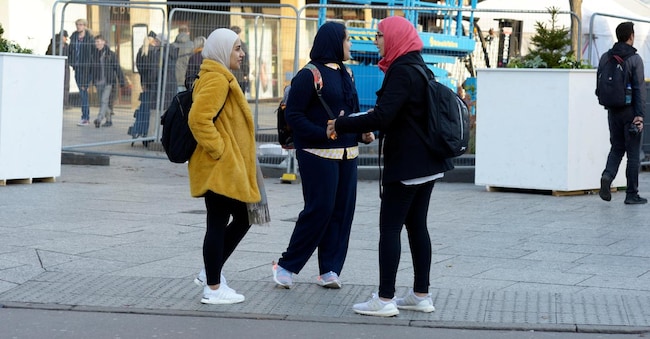
Italia is the second European country for the number of residents with Iranian citizenship: they are 23,626, almost 10% of all those living in Europe. Germany is the first destination country, with 144,336 residents out of a total of 250,000 in the EU-27. The presence of Iranian citizens in Italia has doubled since 2019, when there were 11,837. Half are women and most are students. The snapshot, updated to 1 January 2025, therefore to the situation prior to the military attack by the United States and Israel against Iran, comes from the Leone Moressa Foundation's elaborations on Istat and Eurostat data. The Iranian presence in Italia has been growing at a sustained pace since 2022. Most of the residence permits issued are for study (83.4% in the last year and 74.1% in the last ten years). In Germany, on the other hand, the largest component of permits is for other reasons, mainly asylum and international protection (44% in the last ten years).
The distribution
The top three regions for the presence of Iranian citizens are Lombardy (with 5,980 residents), Piedmont (4,058) and Lazio (3,044). The top provinces are Milan (3,830 residents), Turin (3,782), Rome (2,867), Padua (1,206) and Bologna (1,114), all university cities. 'Many young Iranians,' explains Shirin Zakeri, researcher and lecturer in History and Institutions of Western Asia at Unitelma Sapienza and adjunct professor of contemporary history of Iran and the Middle East at Sapienza in Rome, 'come to Italia after their three-year degree in Iran, to pursue a master's degree, especially since Italian universities have started courses in English. These young people often move on to other European countries. In Italia there is also a community of Iranian professionals: engineers, architects, nurses, doctors'.
On the growth of the Iranian presence in Italy in recent years, Shirin Zakeri sees mainly economic reasons: 'Iran in recent years has suffered greatly from international sanctions and rising inflation: young people, even if they have a university degree, find it hard to find a job and move abroad, starting with the Arab and Persian Gulf countries'.
The situation after the start of the war
As for the situation in Iran a week after the start of the war, Shirin Zakeri speaks of great concern for her family in Tehran. 'My brother and sister,' she explains, 'have left the city, while uncles and cousins remain in the capital. I couldn't hear them. Today, the city woke up under a black cloud, caused by the bombing of the Shahran oil depot, and the population was asked not to take showers or go out without masks for toxic residues'.
Iranians in Italia have different points of view on the military action conducted by the United States and Israel: 'At the procession organised for 8 March by the "Non una di meno" movement,' the Iranian lecturer recounts, 'a group of Iranians took part to say no to the war, but another group, made up of supporters of Reza Pahlavi's return, also organised to take part, which instead supports this action. Iranian civil society has worked hard in recent years to bring the population to demand more freedom and to defend human and women's rights'.

