
Iranian exile: 'Fled to Canada, I fear for my husband's life'
Azadeh Ghasemi left Tehran for Toronro. She has not seen her husband, an activist against the Khamenei regime, for four years. She is waiting for a visa to be reunited

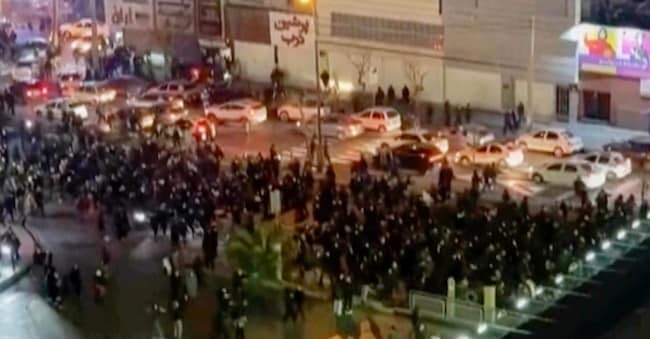
Every morning, Azadeh Ghasemi wakes up early in Toronto: it is already afternoon in Tehran, because of the time difference, the two cities are separated by eight and a half hours. He does this to find out how his ari are doing and to get his friends direct information about Iran: he sees on TV the protests of his compatriots and the brutal repression of the Muslim theocracy of Ayatollah Ali Khamenei. Since last Friday, however, she has not heard from either her parents or her husband. 'I am very worried about my family: my father and mother are elderly, they are barricaded in the house, they don't go out on the streets to protest, I fear for my husband's life instead,' she says on the phone from Canada. For years, the internet and the telephone has been the only way she has kept in touch with her loved ones and her country: she lives through days of anguish. But 'after 47 years and six attempts to change the regime, I hope this is the right time'.
Hope for the end of the Islamic regime
Despite her fear, the 44-year-old Iranian does not have a moment's hesitation when asked what the Iranian people should do: 'If every Iranian were to stop and think about the fact that they have a family or children waiting for them at home, then who could change things? I find what Iranian men and women are doing these days admirable'.
She fled Iran four years ago: she is not a refugee but an exile, yes. Azadeh does not call herself Iranian but 'Persian' and speaks 'Farsi', which was the country's ancient language before the Khomeinist Revolution of 1979: she understands and speaks Arabic, but does not use it. In the language of the Persia of Serse and the Achaemenids, her name means 'free woman'; but since she was born, she has only seen the medieval theocracy of Islamic religious leaders. Her sister, on the other hand, has also lived for years in Leeds, in the north of England.
Fear for her husband's fate
Azadeh married her husband six years ago, but has not seen him for four. She left on her own, he did not want to leave his country to stay with his other peers to fight against the regime: 'I don't want to reveal his name because he is an activist, he always went to the streets to protest. He is a person who fights for freedom and stops at nothing. If I were there, I would also go to the streets alongside him, like the many other brave women in Tehran who take to the streets and fight alongside their comrades'. She has chosen a quieter path: she is trying to obtain a permanent residence permit in Canada; once obtained, she could bring her husband along and be reunited. That is if, in the meantime, he is saved from the regime's repression: 'My husband has a history of political activism and has been arrested many times in the past. If the police stopped him this time too, they would never release him again or maybe worse'.
The last piece of advice is for Westerners who watch in dismay what is happening in the country: 'Don't think about going to Iran, to see what the situation is like for yourself. A European could be arrested for no reason and kept in jail for years'. Italy in the Cecilia Sala case knows something about this.

