
Iran’s Pasdaran against Trump: ‘Ready for devastating action’
A tough response to the United States’ ‘economic threats’. But Iranian President Pezeshkian strikes a more conciliatory tone: ‘It is time to reach a peace agreement’
From New York Luca Veronese
 Aggiungi Il Sole 24 Ore
ai preferiti su Google
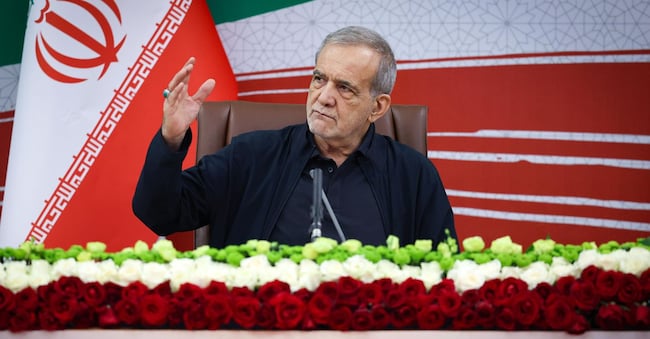
The Iranian Pasdaran have responded to Donald Trump by threatening ‘devastating actions’, whilst political leaders in Tehran are opening up – albeit very cautiously – to negotiations aimed at reaching a peace agreement. ‘It would be better to reach a solution and put an end to the war now, whilst we still have strength and dignity and the whole world recognises our victory,’ Iranian President Masoud Pezeshkian told the Iranian media yesterday.
Pezeshkian, Iran’s highest elected official, has thus joined Foreign Minister Abbas Araghchi and chief negotiator Mohammad Bagher Ghalibaf, who for months have been insisting on dialogue to bring the conflict to an end, whilst also taking into account the needs of a country in the throes of a deep economic and social crisis: the very same outline agreement for a ceasefire – accepted by the United States and then miserably reneged upon, with renewed bombings and the double blockade of the Strait of Hormuz – had been promoted by them.
The Ayatollahs’ regime is divided – as has often been the case, at least in public statements – whilst waiting for the United States to clarify what these ‘unprecedented economic measures’ will be, which are to be implemented to ‘completely isolate Iran’. On Monday, it will be up to the Treasury Secretary, Scott Bessent, to clarify the statements made by Trump in recent days and to explain in detail how the United States intends to proceed, having already called its allies to order and asked for their cooperation to ensure the new sanctions are effective. However, the US administration’s appeal has been directed primarily at its trading partners, sparking a highly difficult standoff with India, Turkey and China – the latter of which purchases over 80 per cent of Iranian oil transported by sea.
“Any country that allows its financial institutions, companies, airports or government bodies to provide aid to Iran will face enormous economic consequences,” Trump wrote on social media on Thursday. And Bessent was even more explicit, addressing the leaders in Beijing directly: “We will bring this regime down; these will be the toughest sanctions in history. And the time has come,” he said, “for our allies and the rest of the world to make a decision: either with us or against us.”
China and the other countries involved have responded to Washington by calling, once again, for greater diplomatic efforts, whilst traffic through the Strait of Hormuz remains almost completely blocked: despite Trump’s reassurances, no more than ten ships have passed through the Strait in the last two days, whereas before the war at least 130 passed through every day, carrying a fifth of the world’s oil trade.


