Technology and finance

Crack of iRobot: Chinese dominance conquers robot hoover market

The famous brand that produces Roomba files for Chapter 11. Could not withstand competition from Asian competitors such as Narwal, Dreame and Roborock
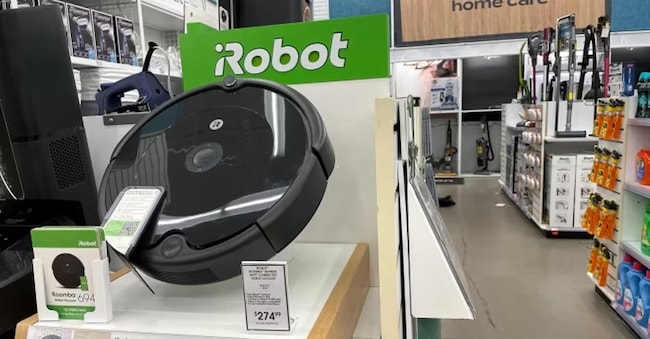
by Biagio Simonetta

3' min read

Translated by AI
Versione italiana

3' min read

Translated by AI
Versione italiana

iRobot has filed for bankruptcy. And it is not just market news. Rather, it is the symbolic end of an era. Because for those who lived through the early 2000s, Roomba was not simply a robot hoover. It was the robot hoover. The first true mass-produced domestic robot, the one that went into your home, ran around on its own, banged against the walls and made you think that the future was already there, under the sofa.

iRobot, founded in 1990 by MIT engineers, had done something very few can do: turn a complex technology into a popular object. Over 40 million robots sold worldwide. A name that has become synonymous with the category. Today, that name is changing hands. And it passes to China.

Loading...

Shares reset

The American company filed for Chapter 11 in the US and accepted a plan to transfer control to its main Chinese supplier, Shenzhen PICEA Robotics. The shares - which, in the meantime, have clearly plummeted - will be reduced to zero. The stock, for those who owned it, will no longer be worth anything. Formally, the company will continue to operate, pay employees and suppliers, and remain 'going concern'. Substantially, however, it is an exit.

An exit from the scene that is somewhat the classic parable of the great American tech icons that do not withstand the second half of globalisation. After the initial boom, iRobot's accounts started to deteriorate post-Covid: fragile supply chains, rising costs, weaker demand. But above all one decisive factor: Chinese competition.

In recent years, the robot hoover market has been taken over by brands such as Roborock, Narwal and Dreame. Not improvised start-ups, but companies with enormous industrial capacity, vertical integration, very fast innovation cycles and aggressive pricing. While Roomba remained tied to an idea of 'historic' premium, the Chinese competitors pushed on to increasingly sophisticated mapping, floor washing, automatic docking stations, artificial intelligence really applied to everyday use. Excellent performance, lower costs.

Buyers

The result is before the eyes of anyone entering a large store or browsing Amazon today: they have in fact taken the market. The Chinese such as Narwal Robotics, a relatively young manufacturer (founded in Dongguan in 2016) that has quickly built a reputation through robot hoovers and scrubbers with advanced technology and autonomous mapping and cleaning functions. Its latest model, the Narwal Flow, is a mix of artificial intelligence and high-precision mechanics. Or like Dreame Technology, another big emerging name: founded in 2015 in Suzhou, it has quickly become one of the world's leading smart home cleaning companies, with products in over 120 countries and millions of customers. Its latest model is the Dreame Aqua10, a condensation of high technology and design. Or how Roborock, another big industry leader, founded in Beijing in 2014, has combined industrial scale, strong R&D and an aggressive international strategy to become - according to IDC - the world's best-selling robot hoover brand by 2024. All players that have heavily attacked the market once in the hands of iRobot. And who are now also focusing (especially Dreame) on sectors notoriously in the hands of European brands such as Dyson and Vorwerk.

Cresce la chirurgia robotica. Il convegno a Santa Maria Hospital

When Amazon wanted iRobot

In 2022, there seemed to be an escape route. Amazon had put an offer on the table that could have saved iRobot and integrated it into the smart home ecosystem. But the deal crashed against the European competition authorities. Brussels feared excessive control of the home data and smart home market. And the deal fell through. iRobot collected over $90 million in compensation, but much of it ended up in consultancy fees and the repayment of a $200 million bridging loan from Carlyle.

Now we come to the final point. In the court filing, iRobot declares assets and liabilities of between 100 and 500 million dollars. Numbers that tell of a company still alive, but with no more strategic margins. Without an autonomous future.

It is a story that goes beyond robot hoovers. It is a snapshot of how, in certain segments of consumer hardware, American innovation has led the way and Chinese innovation has built the highway. Faster, wider, cheaper.

Copyright reserved ©
Loading...

Brand connect

Loading...

Newsletter

Notizie e approfondimenti sugli avvenimenti politici, economici e finanziari.

Iscriviti