Great interviews

The irony of an anti-hero: face to face with Matthew Macfadyen

She has transformed embarrassment and malice into a sophisticated form of seduction. She is now taking on a new role in *The Miniature Wife* and talks about her personal revolution against her mobile phone.

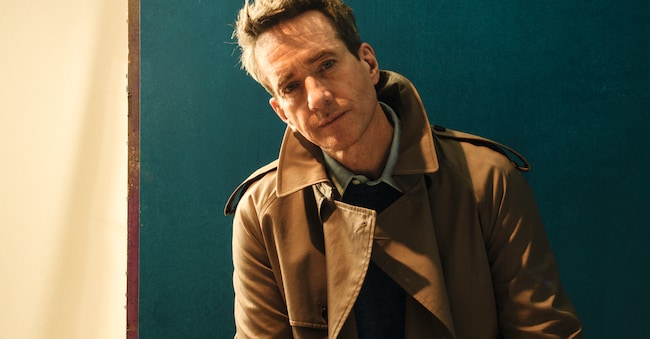
Trench doppiopetto in gabardine, BURBERRY (2.190 €). Maglione in shetland (390 €), camicia di cotone chambray (650 €) e pantaloni in lana

10' min read

Translated by AI
Versione italiana

10' min read

Translated by AI
Versione italiana

Matthew Macfadyen seems a little awkward when I meet him in a studio in west London. The 51-year-old actor is sitting on a rather low sofa and, at 1.90 metres tall, is adopting a sort of lotus position, his knees almost touching the floor. With his thick head of hair, intense blue eyes and alert demeanour, he looks like a guru, albeit dressed in an impeccable chocolate-coloured three-piece suit by Anderson & Sheppard. He also seems rather lost during the conversation. Perhaps because I’m nervous too. Macfadyen is one of my favourite actors and I feel as though I’m revealing my excessive admiration to him with too much emphasis, filling every silence with long reflections on the theory and meaning of his characters, whilst he smiles politely and replies in monosyllables. For example: does he believe that the ‘things that shrink’ narrative genre – the theme of the series The Miniature Wife – A Small Problem (airing from June on Sky and Now) – is a response to American consumerism? His eyebrows shoot up in an almost alarmed gesture, and he replies: ‘Probably.’

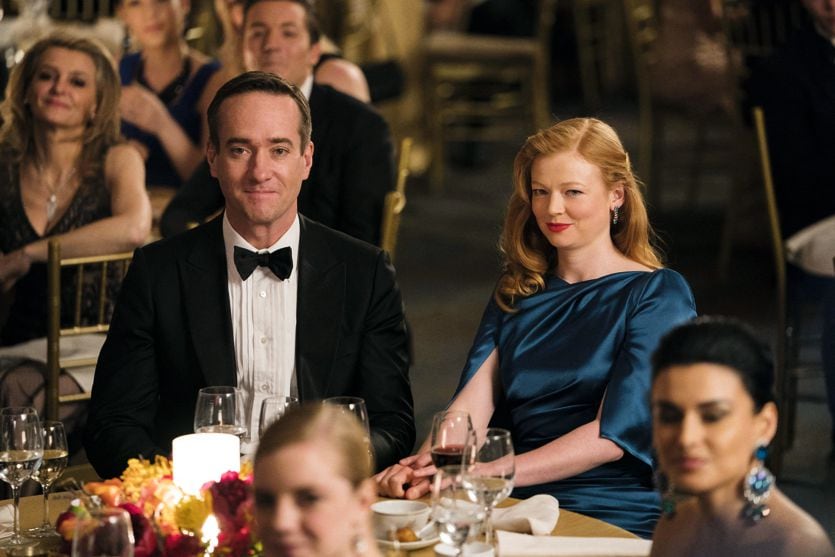
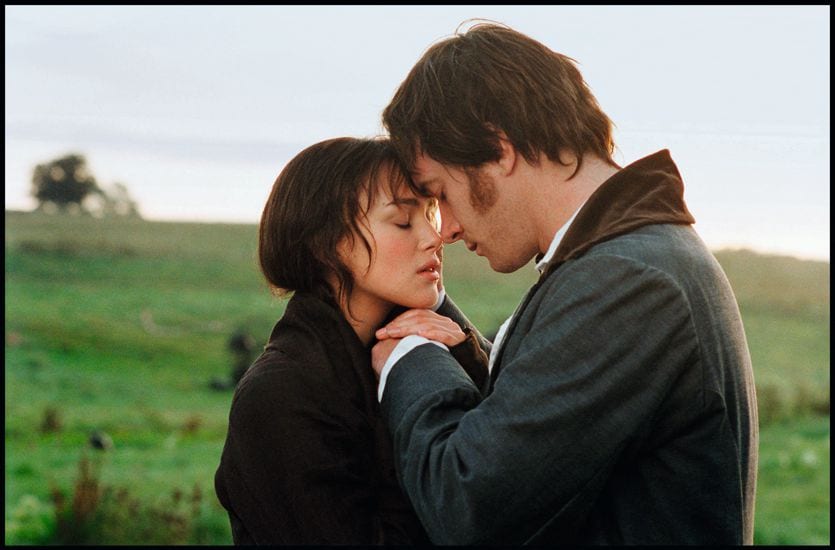
That Macfadyen is shy in real life should come as no surprise: actors aren’t expected to resemble the characters they play. Yet it still surprises me, because I associate him with his witty, brilliant and profound lines. Just think of his Mr Darcy in Joe Wright’s Pride and Prejudice (2005), when he declares to Elizabeth Bennet: ‘You have bewitched me, body and soul. And I love you… I love you… I love you’. Probably the most romantic attempt at seduction of all time. Or take Tom Wambsgans, the obsequious, Machiavellian strategist married to Shiv Roy in the HBO series Succession, whose venomous barbs — ‘Buckle up, you idiot’ — fly into conversations as naturally as an exclamation mark.
Loading...

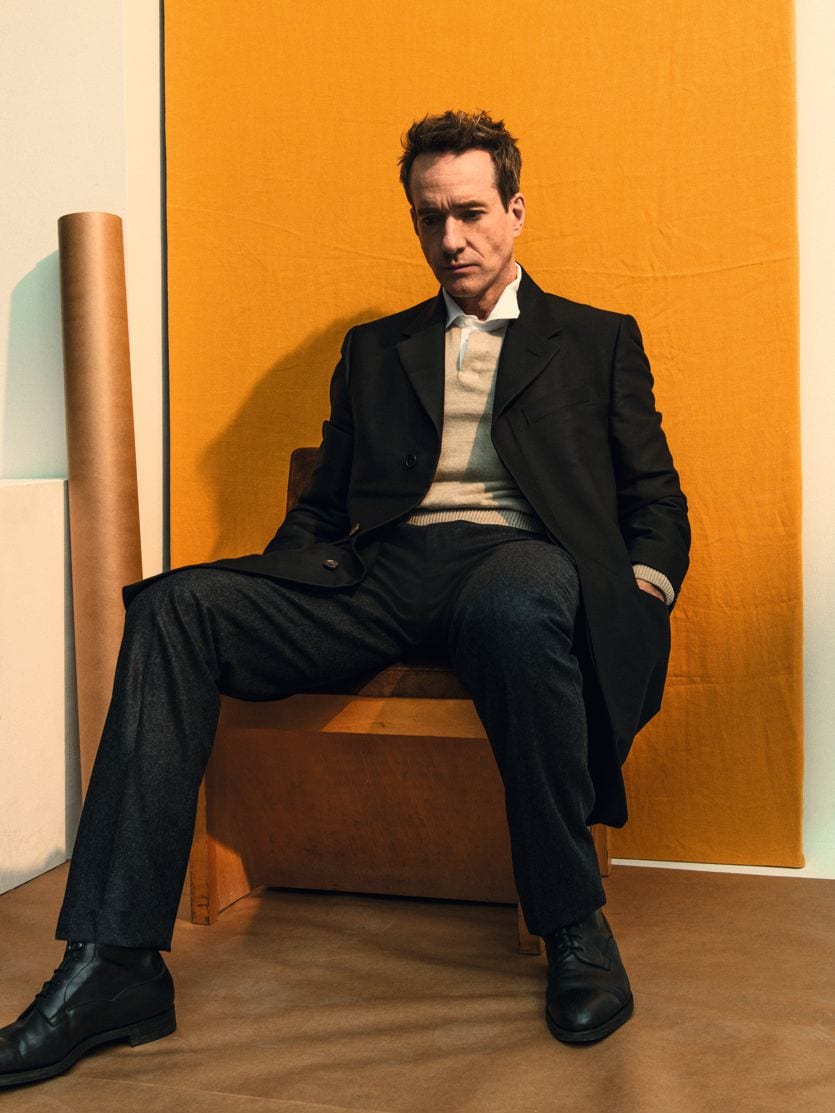
Soprabito in baby cashmere rain system, LORO PIANA (8.200 €). Polo di cashmere, DUNHILL (775 €). Pantaloni in flanella di lana, ANDERSON & SHEPPARD (835 €). Polacchini stringati in pelle, EDWARD GREEN (1.745 €).

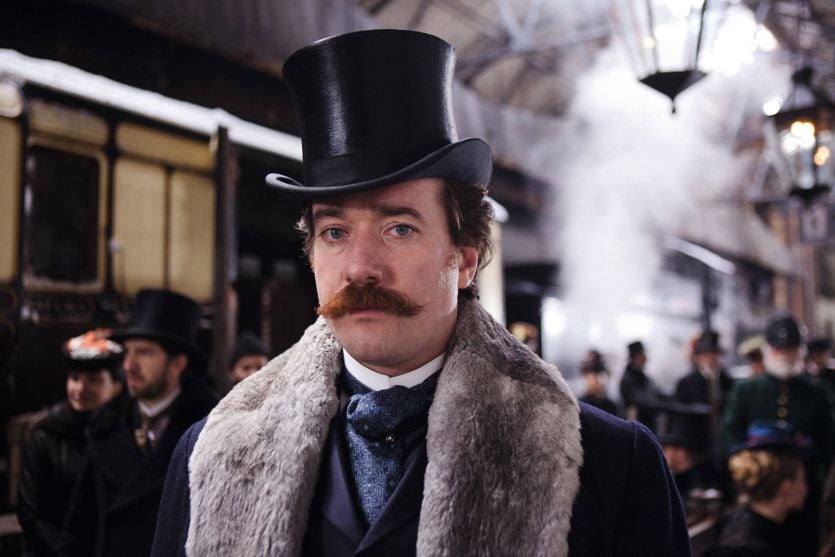
Macfadyen has been working non-stop for thirty years and has played an endless array of roles: an East End detective (Ripper Street), a presidential assassin (Death by Lightning), a Russian aristocrat (Anna Karenina) and a soulless executive, alias Mr Paradox, in the Marvel film Deadpool & Wolverine. He has also lent his velvety voice to the Harry Potter audiobooks, bringing the villainous Voldemort to life.

His speciality is a form of treachery laced with offbeat humour: throughout the four series of Succession, everyone — or at least I — was rooting for Wambsgans to manage to stab the detestable Roys in the back.

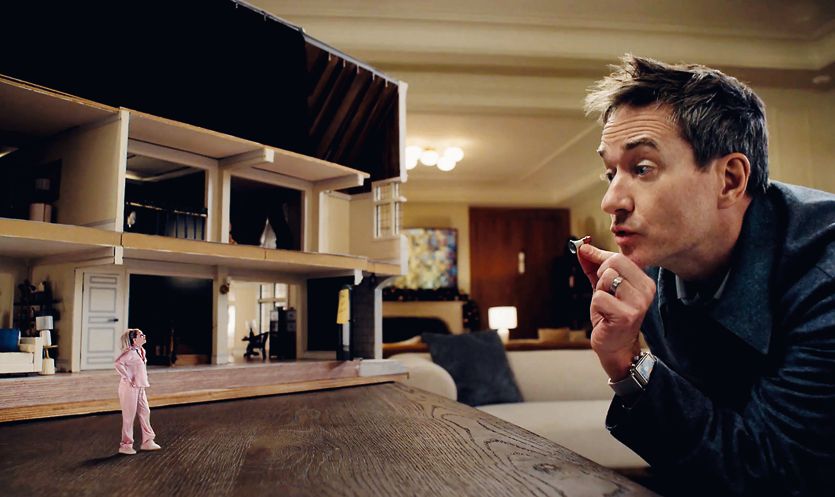
He now stars in *i* *The Miniature Wife* , a ten-episode sci-fi romantic comedy, in which he plays another hapless husband, this time alongside Elizabeth Banks. The series, based on a short story by Manuel Gonzales, centres on Les and Lindy Littlejohn, a couple trapped in a stagnant marriage: he works on a secret scientific project, whilst she is a best-selling author suffering from classic writer’s block. Their marital frustrations, already simmering, descend into black farce when a technological accident transforms Lindy into a version of herself just fifteen centimetres tall. The series is eccentric, almost delirious in its premise, but the focus is on the portrayal of a marriage that has become comically bitter. Banks and Macfadyen trade barbs with the same ferocity as in classic screwball comedies: on reading the script, the actor immediately thought of The War of the Roses. “It was a fantastic script, really funny,” he says in his deep, unmistakable baritone voice. “I kept thinking about the nineties and that sort of golden age of mad, adventurous, very funny films – but also dark and sarcastic, not as saccharine as they often are today.” Like Succession, The Miniature Wife also portrays marriage as a power struggle and explores what happens when one partner becomes embittered by the other’s success. Les, the character played by Macfadyen, is the less famous of the pair and desperately craves some form of validation; at one point he shouts: “You’ve already had your prize!” “He becomes very, very dark. Almost murderous,” says Macfadyen, who seems to take great delight in playing hateful and unpleasant men. ‘The more absurd the behaviour, the more I recognise it as human. Because human behaviour is always exaggerated. It doesn’t feel like an effort at all to do something totally ridiculous.’ Perhaps Macfadyen is drawn to toxic marriages precisely because his own is scandalously stable. He met actress Keeley Hawes on the set of the BBC series Spooks in 2002. She was already married; she divorced quickly in 2004, and the couple married that same year, soon welcoming two children. Both successful actors, they cope with the demands of domestic life in their home in south-west London (dogs included) by ‘making do as best they can’, says Macfadyen. Unlike the Littlejohns, there are no battles over who’s coming out on top in the relationship. “No,” says Macfadyen. “We’re happy about each other’s successes. It’s reflected glory, isn’t it?” Do they talk a lot about work? “Just the odd bit of snide grumbling,” he laughs. They can tell when the other is struggling because “Keeley knows exactly what my fears are, and vice versa.” But they don’t read each other’s scripts or rehearse their lines together. He seems almost horrified at the thought: “We’d end up arguing straight away.”
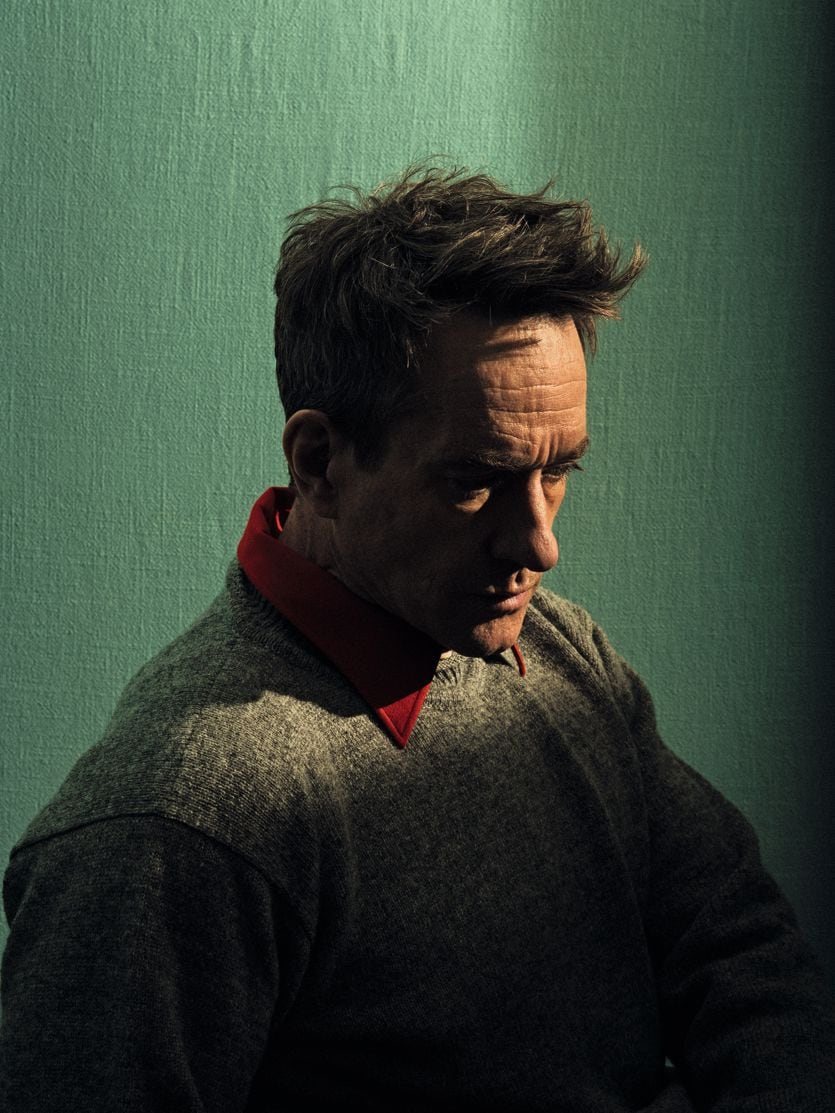
Maglione in shetland (390 €) e camicia di flanella (625 €), ANDERSON & SHEPPARD.

Matthew Macfadyen was born in Great Yarmouth in October 1974. His mother taught drama, whilst his father worked in the oil industry. “My father’s job meant we were constantly travelling around the world, so she would follow him and work wherever they happened to be.” His theatrical epiphany came when he played a king in a school Christmas play. He soon honed his craft, playing a particularly moving mayor in the school production of *i* *The Pied Piper of Hamelin* . “I wasn’t the lead, so there was no particular pressure,” he notes. “But, as the villain, I had everyone in stitches.” His first major role after graduating from the Royal Academy of Dramatic Art (RADA) came in 1998, playing Hareton Earnshaw in the television adaptation of Wuthering Heights. “I had absolutely no idea what was going on,” he recalls. “Back then, we were still shooting on film, and when a take was good, they’d shout ‘check the gate’ to make sure the film was clean. But we were filming in the Peak District and I had to walk right through a gate… So for weeks I thought that’s what they were actually talking about. Sometimes they’d say, ‘There’s a hair in the gate.’ And I’d imagine a rabbit had wandered into the shot.”

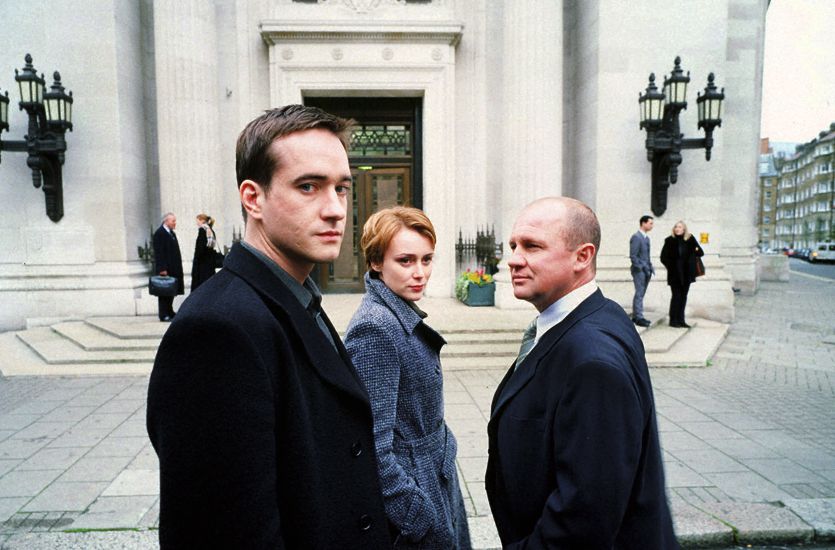
Spooks, the spy series about MI5, not only brought him together romantically with Hawes, but also rekindled his fascination with the genre, which continues to this day. Whilst Darcy may have turned him into a romantic hero, Macfadyen remains a magnificent comic actor. I remember seeing him on stage in 2013 in Jeeves and Wooster in Perfect Nonsense, an adaptation of a story by P.G. Wodehouse, alongside Stephen Mangan, in the role of the patient butler Jeeves. At the time, he was a few kilos heavier and wasn’t yet the slender, running enthusiast who sits on set today. Yet he already possessed extraordinary physical agility – the very same he would later use in the slapstick scenes of Succession with Nicholas Braun (his nephew Greg). “I loved working with him,” says Braun. “I think what makes him such an extraordinary comic actor is that he always approaches scenes with the utmost seriousness. He never puts comedy first. In every scene, on every take, he was completely present as an actor.” Sian Clifford, who plays his wife’s friend in The Miniature Wife, also describes him enthusiastically: “Acting with Matthew is an absolute joy — he’s free-spirited, fun, witty and kind. He’s a great comic actor because, regardless of the tone or genre, he always portrays the truth.”

Macfadyen is almost pathologically self-deprecating when it comes to his work. He dismisses the need for lengthy psychological preparation: ‘I just need a very short runway.’ Nor does he like to dwell too much on the creative process: “Research is wonderful, if it fuels the imagination. But you mustn’t get lost in it. It won’t automatically make you better at your job.”

‘I don’t really have a method,’ he says. ‘I’m convinced that a lot of things happen without me being aware of them. A great deal settles in the subconscious, in the imagination, and I try to trust that unconsciousness. You see many actors who have already decided everything in advance and, in doing so, stop really listening. Yet listening is fundamental, because that’s what we do in life. In reality, we aren’t constantly ‘feeling’ something: we’re simply present. Acting is less about feeling emotions and more about doing. It is pure attention. It is being in the flow.’

Succession has probably taken him into a new professional dimension, but Macfadyen maintains that his working life has remained largely unchanged. “That’s just the nature of being an actor. Sometimes nothing happens for months on end. Of course, after Succession something has changed: I no longer go to auditions. Although, to be honest, I didn’t go to many even before. After a while, people know what you look like. They know you can walk without tripping. And that you don’t have three eyes.” Yet he has a wealth of projects in the pipeline. He is currently filming the remake of Seance on a Wet Afternoon, directed by Tomas Alfredson and starring alongside Rachel Weisz. He will soon be playing George Smiley in Legacy of Spies, a major BBC co-production based on two novels by John le Carré, A Spy’s Past and The Spy Who Came in from the Cold.

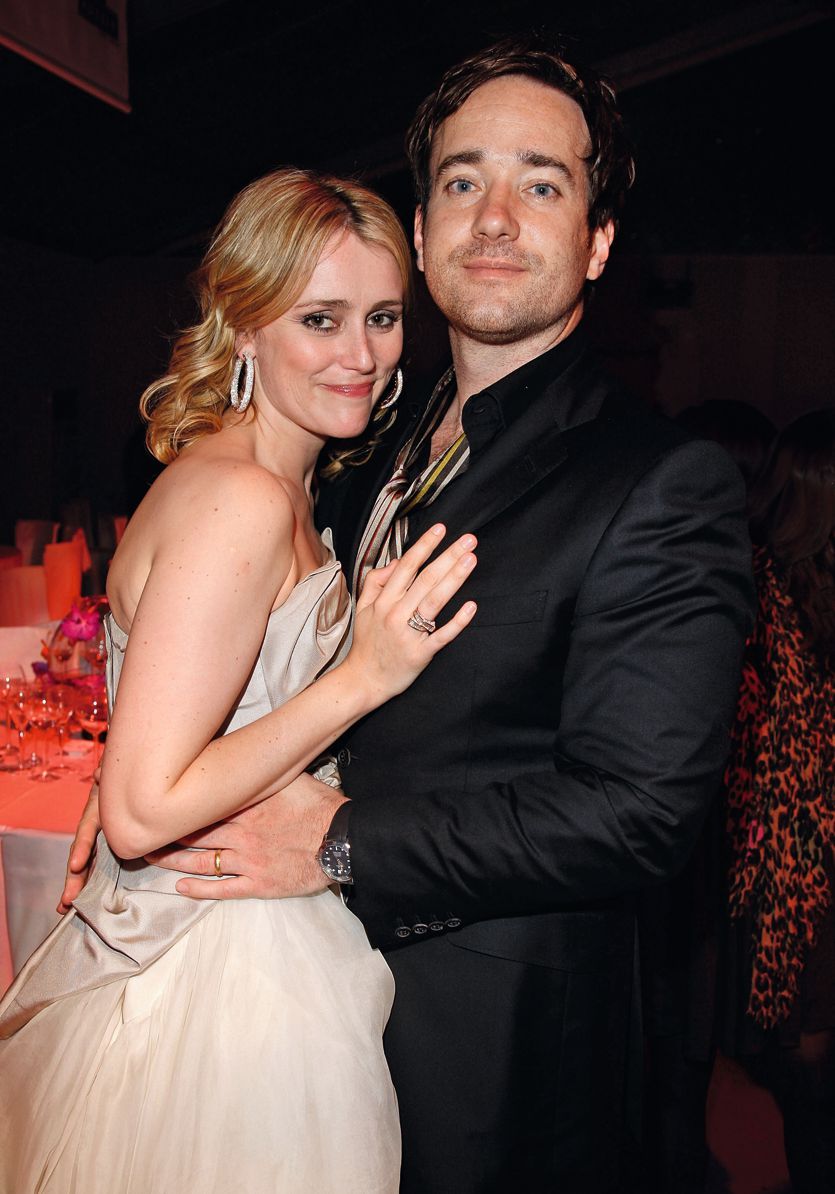
Macfadyen con sua moglie, Keeley Hawes, nel 2008.

Meanwhile, the new Netflix adaptation of Pride and Prejudice, starring Emma Corrin and Jack Lowden, has reignited the debate about all the on-screen Darcys of the past. The battle rages on: who was the best? Him, Colin Firth or Laurence Olivier? As far as I’m concerned, Macfadyen takes the crown thanks to the way he transforms Darcy from a staid landowner into an irresistible object of desire. The actor seems happy to pass the baton after twenty-one years of unchallenged reign. With a curious sense of full circle, he says, ‘Jack Lowden is filming a sexy spy thriller in Berlin with Colin: Darcy in 1995 versus Darcy in 2026. I left them a voicemail from my set — trying to channel the character a bit — saying that I have ‘mixed feelings’ about them working together. It’s hard not to feel a bit disappointed that there wasn’t a part for me as well.’ Does he feel protective of Darcy? ‘A little bit. No. Not too much. But it’s good for the ego to still be recognised for that role, given that quite a long time has passed. It makes me think that perhaps I’m still doing all right.’

And yet, by becoming George Smiley, he is stepping into an even more legendary role. Rupert Davies played him in 1965; Gary Oldman in 2011. And Alec Guinness’s portrayal in the famous BBC series of the 1980s was so definitive that, as Macfadyen recounts, David Cornwell — John le Carré’s real name — ‘said that Guinness’s Smiley had replaced his own imaginary Smiley. And that irritated him greatly. In the books, Smiley is short, fat and rather ridiculous. He wears outlandish clothes. But Alec Guinness didn’t really look like him, and certainly neither did Gary Oldman. Alec had something almost masterful about him.”

When those novels were first adapted, the Cold War was still a real threat. More than sixty years on, the world of espionage and terror imagined by le Carré once again seems prophetic and unsettling. Smiley is a quiet hero, driven more by fierce determination than by any real malice.

“It’s very complex,” says Macfadyen. “I think he’s basically a decent person, but he can be terribly cold when it comes to pursuing his goals; it’s all very nuanced, very interesting.”

There is also ‘a tremendous melancholy’ about him, he continues. His job is miserable and his wife, Lady Ann, keeps cheating on him. The role calls for a particular kind of melancholy, which Macfadyen masters brilliantly. If the first series is a success, the plan is to adapt the entire series of novels: it could be the role destined to define his career. No pressure, then? ‘It’s very flattering and also rather intimidating,’ he replies, in perfect Smiley style.

After an hour-long interview, Macfadyen is still curled up in the lotus position, but seems much more relaxed. The conversation turns to more general topics: his experience as a model for Burberry (“trench coats, all very British; Tim Walker photographed me with a pigeon on my head”), what he’s currently reading (The Land in Winter by Andrew Miller, La terra d’inverno, published in Italia by NN Editore — “dazzling, extraordinary, I highly recommend it”) and the film he would have liked to see triumph at the Oscars (Sinners: ‘Very entertaining, extremely elegant, sensual, and capable of saying so much without being didactic’).

He doesn’t watch many films: it would be like taking his work home with him. Although his idols are still the classic ones: ‘I’ve got loads of them: De Niro, Pacino, Christopher Walken. And I love Steve Martin too.’

“The Miniature Wife” (2026)

“Succession” (2018–2023)

Whilst arguing that the acting profession has changed little over the past few decades, the ‘memefication’ of the film industry — between hot takes and TikTok videos — makes him feel ‘catastrophically sad’. Promotional interviews are awful because ‘you find yourself locked in a dark hotel room regurgitating the same old things about a job you can barely remember anymore. I envy those who are really good at it, I really do, but it’s not my forte’. Why doesn’t he simply try to play the part of the self-assured actor? ‘I don’t know,’ he shrugs. ‘I should, shouldn’t I? But I just can’t do it’.

He’s trying to use his phone less to leave more room for the imagination. “Acting has a lot to do with thoughts, feelings, intuitions, hypotheses… And also with boredom,” he says. “The phone is really deadly because of that endless scrolling.”

“Anna Karenina” (2012)

“Orgoglio e Pregiudizio” (2005)

“Spooks” (2002-2011)

Using your mobile phone sparingly also means staying away from social media. ‘It irritates me to have a supercomputer in my pocket. It irritates me that it’s constantly calling out to me: inevitably, it’s like a centripetal force that pulls you in. The world’s brightest minds are being employed to make us addicted. And anyway, what am I really looking for? I don’t feel any better informed than before. Nor any smarter or more at peace – there’s never an end to it.’ His little intellectual revolution, however, is slightly shaken when he can’t remember the name of a bistro where he recently had a lovely meal. ‘I must look it up…’, he says. But he can’t. So I try to find it for him on Google.

At the end of this conversation, I find myself wondering whether Macfadyen has perhaps joined that extremely rare category of unattainable celebrities — those artists who read so many books and nurture their imagination on an island of creative reverie. Far from being ‘just a working actor’! ‘Oh my goodness, I’d be like those celebrities who say they haven’t had a phone for ten years just because they have an army of assistants!’, he laughs at my remark and assures me he doesn’t have an army of assistants. “But I do spend a lot of time saying to my wife Keeley, ‘Can you look it up for me?’”

Copyright reserved ©
Loading...
Loading...

Newsletter

Notizie e approfondimenti sugli avvenimenti politici, economici e finanziari.

Iscriviti