
Irrigation and rice paddies, for work on the Regina Elena Canal (East Sesia) 70 million investment
The climate crisis has increased the need for water storage, including through the flooding of rice fields

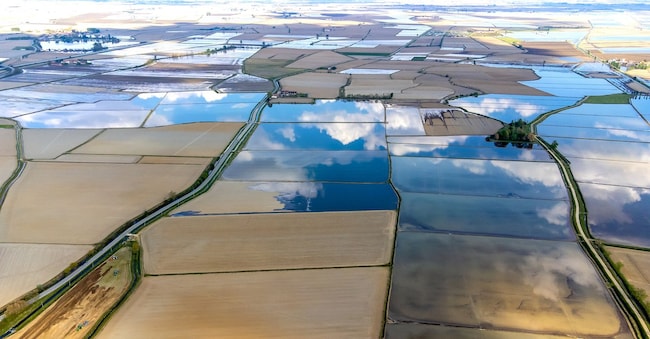
An investment of over 70 million to renovate and modernise the Regina Elena Canal, a strategic infrastructure for the country's most important rice-growing area managed by Est Sesia, Italy's largest irrigation consortium. The works are part of the 957 million national plan for infrastructure interventions and safety in the water sector. The consortium has already spent EUR 28 million to start the construction sites and has obtained another EUR 40 million from the Ministry of Infrastructure at the end of 2025, thanks to which it will start five integrated interventions to fix the most delicate stretch of the canal with a significant difference in height, while the planning for the 2026 irrigation season begins.
In addition to Novarese and Lomellina, the 'rice lands', Est Sesia and Ovest Sesia, as co-utility of the Cavour Canal also cover Vercelli, and altogether carry the water where 75% of Italian rice is cultivated. A crop that, according to some experts, would have to be totally rethought in order to survive. There is no more snow to feed the rivers in late spring, the glaciers are getting smaller, the weather has completely changed and the unions are asking farmers to go back to (more expensive) submerged sowing.
"There is no model that can even seasonally predict water availability. We are making important investments in a canal built in the post-war period that has two peculiarities," explains Ettore Fanfani, extraordinary commissioner of Est Sesia since last January. "It was built to save money, given the times, and in the first part it flows along the Ticino valley with several metres of difference in height, which inevitably leads to large losses along the way. We tend to lose a lot of water in the distribution, but this is a beneficial phenomenon for the environment because it replenishes the aquifers and replaces the reservoirs that we don't have and don't know where to build, and it also compensates for the shrinkage of the glaciers.
The climate crisis has changed priorities. "Water is still the same, the distribution has changed, concentrated in the autumn and spring periods. This,' Fanfani adds, 'has exacerbated the need for storage even further. Rice paddies mitigate the summer water shortage, even more so if they are cultivated under water, because they release it more slowly. In addition to groundwater and rivers, water from rice paddies replenishes wetlands. All our ancient flowing and submerged systems have this important role of retaining water that has landscape, environmental and hydrological value. Rice is a crop that produces wealth far beyond the production aspect'.

