
IRS, pressing for an end to paper receipts
In the Pnrr decree being examined by the Chamber, Fratelli d'Italia's amendment to provide for the digital issue of the document and printing only in the event of a consumer request

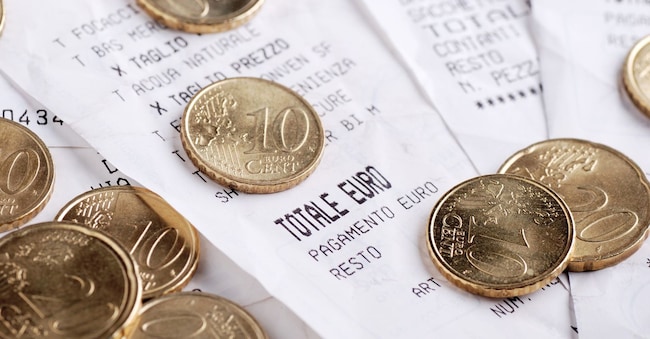
The pressure is on to do away with the printing of receipts. Indeed, to provide for only optional printing at the consumer's request. Among the amendments filed in the Chamber of Deputies to the Pnrr decree (Dl 19/2026) there is also one by Gianluca Caramanna (Fratelli d'Italia) that aims at overcoming the obligation to print receipts and establishing that the recording, preservation and archiving in electronic format of receipts issued fully replaces paper preservation.
Fewer paper documents
Let us take a step back. The text of the Pnrr decree sent to Parliament for conversion already provides for a dematerialisation rule. Article 8, in fact, provides for the farewell to the obligation of POS receipts. It will no longer be necessary to keep the paper document certifying the electronic payment, but it will become possible to use the communications sent to customers and the documentation provided, also in digital format, by banks and financial intermediaries. Thus account statements (also dematerialised) or notifications of outgoing movements will be able to replace the receipt issued by the terminals used for payments by credit, debit or prepaid card or virtual payment app. All provided that notices or documentation from banks and intermediaries contain information on the individual transactions carried out and that they are retained in such a way as to guarantee presentation in the event of any request by the tax authorities.
Printing only on request
Now the Caramanna amendment aims to go a step further by overcoming the obligation to issue paper receipts. It does so with an amendment to the Consolidated VAT Act (Legislative Decree 10/2026) that will enter into force on 1 January 2027. In practice, according to the amendment, the receipt will have to be 'issued in digital mode both for purchases made in cash and with electronic payment instruments, unless the final consumer explicitly requests to receive the receipt in paper mode'. The amendment also points out, however, that 'the recording, storage and archiving in electronic format of receipts issued shall in any case replace storage in paper format.'"
Electronic Storage
As the explanatory report explains, the current anti-evasion safeguard represented by the telematic transmission of daily receipts to the Revenue Agency, which is defined as a practice 'fully consolidated with the adoption of telematic cash registers', would not be touched. But it is emphasised that it must be considered that the storage of daily closing receipts 'is mandatory and must be carried out for a period of 10 years'. Therefore, the report continues, 'despite the fact that the transmission of data to the Revenue Agency is in real time, the obligation to preserve the original document remains, as it is fundamental for any disputes or controls'. The Civil Code (Article 2220) states that accounting records must be kept for 10 years from the date of the last registration. Moreover, accounting records, including daily closing entries, 'must be kept until the assessments relating to the tax period to which they relate are final'. Hence, in some cases, concludes the illustrative report, 'the records must be kept beyond the 10 years stipulated by the Civil Code, and that such preservation does not necessarily have to be on paper, but can also be in electronic format as long as the relevant function is fulfilled (correct and easy subsequent verification and consultation within the period provided for by law)'.


