
Israel and Lebanon, first meeting with promise of new talks
Secretary of State Marco Rubio: historic occasion. But no agreement from the face-to-face meeting between the two countries' ambassadors in Washington

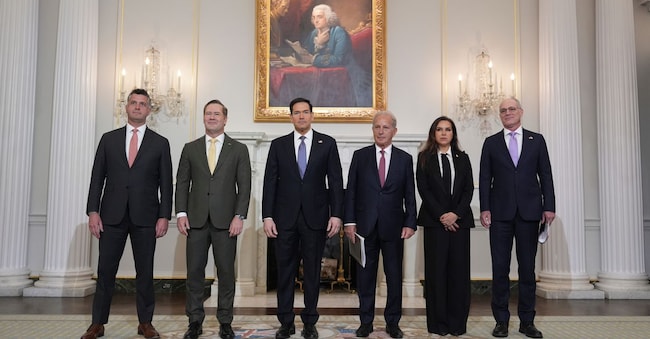
A prologue, perhaps historic, but for now only a prologue. Lebanon and Israel, who have no diplomatic relations, broke the frost and held their first meeting in decades: two hours of talks between their respective ambassadors in Washington, under the auspices of Secretary of State Marco Rubio. No immediate agreement, no stop to the Israeli military offensive against Hezbollah in the country, but positive statements from the parties. And a commitment to continue on a diplomatic path, to start bilateral negotiations.
The State Department, in a statement, called the meeting a "productive discussion on steps towards launching direct negotiations". Language that signals the possibilities open, but also indicates how many difficult steps are needed.
Rubio spoke of a 'historic occasion', a step towards a 'permanent end to 20 or 30 years of Hezbollah influence in this part of the world'. Formally, Lebanon and Israel have been in a state of conflict since 1948, since the birth of the Jewish state.
"We are on the same side, we and the Lebanese, the evil of Hezbollah must be eradicated," said Benjamin Netanyahu's government ambassador, Yechtiel Leiter. "It gives me hope that the Lebanese government has made it clear that they no longer want to be occupied by Hezbollah." he continued: "Some proposals have been made, some recommendations, we will take them to our governments and we will come back in the coming weeks, we will continue the talks, probably in Washington."
From the Lebanese ambassador, Nada Moawad, more cautious tones were chosen. She spoke of a "constructive" preliminary meeting. But she also reiterated Beirut's demands, now anathema to Israel: a ceasefire in the country, where Israel has decreased the intensity of attacks on the capital but not in the rest of the territory, the return of more than a million displaced persons, humanitarian aid and the territorial integrity of the nation, now partly, in the south, occupied by Israeli forces.


