
Israel: the Democratic Republic of the Congo is to move its embassy to Jerusalem
Joint statement by the governments following Leader Tshisekedi’s visit to Netanyahu
from our correspondent Alberto Magnani
 Aggiungi Il Sole 24 Ore
ai preferiti su Google
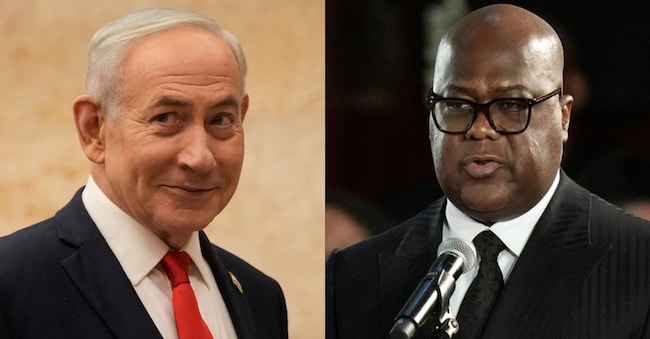
NAIROBI – The Democratic Republic of the Congo and Israel have confirmed, in a joint statement, their intention to relocate the Congolese embassy from Tel Aviv to Jerusalem and to open an Israeli diplomatic mission in Kinshasa. The official announcement of the ‘relocation’ comes just a few days after Congolese President Felix-Antoine Tshisekedi’s visit to Israeli Prime Minister Benjamin Netanyahu, confirming a plan that first emerged on the sidelines of the 2023 UN General Assembly in New York and has been underpinned by years of close ties. At present, ‘consultations’ between the two governments are ongoing, but the course appears to have been set. ‘The State of Israel and the Democratic Republic of the Congo,’ the statement reads, ‘will continue their exchanges through the appropriate diplomatic channels in order to agree on the arrangements for implementing these decisions.’
The relaunch of the Israeli network in Africa
The acceleration of events in Kinshasa marks the meeting between the two leaders on 1 September, against the backdrop of diplomatic manoeuvring that was also characterised by Israeli President Isaac Herzog’s visit as part of his November 2025 tour of Africa, which took in Zambia and the Democratic Republic of the Congo, and by February in Ethiopia. Israel is seeking to cultivate and strengthen diplomatic relations across Africa, a continent that has always maintained a certain degree of political unity in support of the Palestinian cause.
Almost all the countries under the umbrella of the African Union formally recognise the State of Palestine, with the sole exceptions of Paul Biya’s Cameroon and Isaias Afwerki’s Eritrea. The African Union supports the two-state solution and has repeatedly reaffirmed its condemnation of the Netanyahu government’s actions, whilst a major African power such as South Africa has taken the lead in bringing a case of genocide against Israel before the International Court of Justice.
Israel is seeking to counter this trend by expanding a diplomatic network that already encompasses relations with around 40 countries and by revitalising economic ties. The Horn of Africa and Central-Eastern Africa are already home to governments that maintain diplomatic and commercial ties with Israel, as in the case of William Ruto’s Kenya and its purchase of the Python and Derby (Spyder) surface-to-air defence systems. The recently strengthened partnership with Kinshasa opens up a new channel in the region, offering the Congolese government a foothold amidst its political and military turmoil with the pro-Rwandan M23 rebels and the Kigali government itself.
The country, which accounts for 70 per cent of global cobalt production, has agreed on a roadmap for the implementation of the peace agreement brokered in December 2025 by the US and Qatar, which has largely remained on paper ever since. Regional unease is compounded by internal tensions within the country, fuelled by Tshisekedi’s plan to extend his presidency beyond the two-term limit, which is due to expire in 2028.


