
Pizzaballa and Ielpo forbidden access to the Holy Sepulchre, then Netanyahu backs down
The Patriarchate of Jerusalem denounced a serious act of religious intolerance during Holy Week, with reactions from Pope Leo and the Italia government. The Israeli police: "Request rejected for security reasons". Israeli Prime Minister: We are working on a plan to guarantee celebrations at the Holy Sepulchre

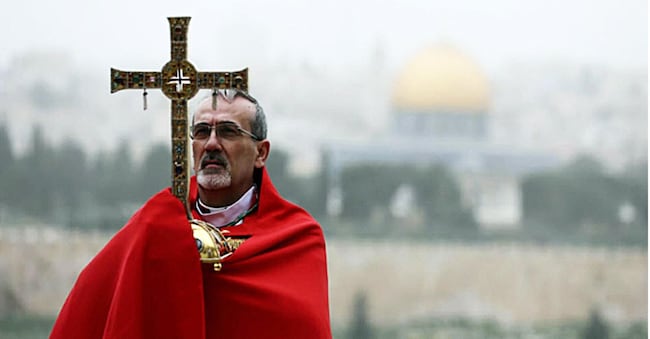
Key points
- The Pope, "restricted Easter rites, close to Christians in the Middle East"
- Meloni, no to Palm Mass at the Holy Sepulchre is an offence, government close
- Tajani: I summoned the Israeli ambassador tomorrow after ban on Pizzaballa
- Crosetto: Pizzaballa's stop undermines religious freedom
- Israel Police: Patriarch's request rejected for security reasons
"I have instructed the competent authorities that Cardinal Pierbattista Pizzaballa, Latin Patriarch, be granted full and immediate access to the Church of the Holy Sepulchre in Jerusalem". This was announced on X in the evening of 29 March, Palm Sunday, by Israeli Prime Minister Benyamin Netanyahu, pointing out that "in recent days, Iran has repeatedly targeted with ballistic missiles the holy sites of all three monotheistic religions in Jerusalem. In one attack, missile fragments fell a few metres from the Church of the Holy Sepulchre'.
Thus ended, amidst controversy and protests, the latest episode in the state of war that characterises Palestine and the Israeli territories, defined as a "wrong decision" by the Latin Patriarchate, and which led Italia to protest by summoning the Israeli ambassador to the Farnesina.
The news of the Israeli police's blocking of the Latin Patriarch of Jerusalem, Pierbattista Pizzaballa - who together with the Custos of the Holy Land, Father Francesco Ielpo, wanted to enter the Holy Sepulchre, the basilica symbol of Christianity, for a small private celebration on Palm Sunday - spread mid-morning on 29 March. And it immediately triggered a storm over Israel's decision. In a harsh note, the Patriarchate immediately called the measure "manifestly unreasonable and disproportionate" because it "represents an extreme violation of the fundamental principles of reasonableness, freedom of worship and respect for the status quo".
The Pope's 'closeness'
At the Angelus Pope Leo expressed "closeness" to the Christians of the Middle East who "suffer the consequences of an atrocious conflict and, in many cases, cannot fully experience the Rites of these holy days". But the indignation over the stop to a visit - which, as the Patriarchate stressed, was "private" in nature, and therefore did not compromise the strict security measures in force in Jerusalem - reached the Italian government. Prime Minister Giorgia Meloni was extremely harsh, calling Israel's decision "an offence not only for believers, but for every community that recognises religious freedom". Foreign Minister Antonio Tajani spoke of an "unacceptable" ban, underlined his outrage and summoned the Israeli ambassador. While Defence Minister Guido Crosetto called the Cardinal's ban a "worrying and unprecedented episode". From beyond the Alps, French President Emmanuel Macron also condemned the Israeli police decision.
The Italian Bishops' Conference expressed 'indignation' and called for a 'truce' for Easter. The tension escalated as the hours passed, as Pizzaballa went to the Mount of Olives for a Covid-style prayer for peace, again because of the restrictions: "We live in a very complicated situation but we want peace," he said in the liturgy. "Today Jesus weeps over Jerusalem," he added on the day when Christians commemorate Jesus' entry into the holy city on a donkey, a prelude to Holy Week culminating in Easter, "but war will not prevail.

