
Israel, Europe no longer a safe haven for Jewish tourists
From Italy to Greece, via Austria and Spain, incidents of hostility towards Israelis on holiday are on the rise. Jewish communities sound the alarm: 'It is no longer an isolated phenomenon'
by Davide Madeddu (Il Sole 24 Ore), Kostas Zafeiropoulos (Efsyn, Greece), Kim Son Hoang (Der Standard, Austria) and Ana Somavilla (El Confidencial, Spain)
 Aggiungi Il Sole 24 Ore
ai preferiti su Google
4' min read
4' min read
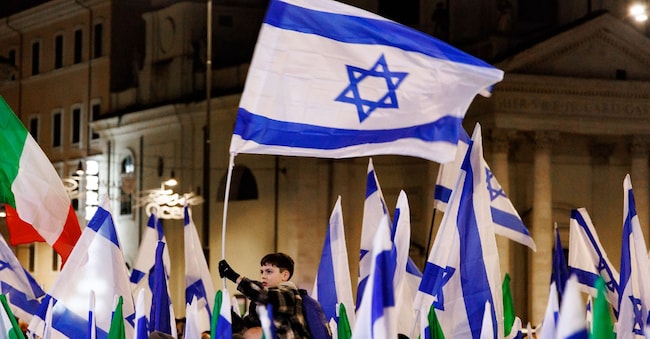
The shouting, pushing and kicking. These are the images of the aggression suffered by a French Jewish family on holiday in Italy. What triggered the episode of violence that took place in a rest area at Lainate, on the Milano Laghi motorway, and which is now being investigated by the Digos, was the yarmulke worn by a six-year-old boy. The scene of violence was filmed and posted on social networks. There was immediate solidarity with the victims and condemnation.
Non-isolated facts
.The episode brings to light a fact that 'is not isolated but is part of a trend that is beginning to take hold'. That is, that of violence being perpetrated even against those who practise the Jewish religion and are Italian or have another European nationality. "The attack on a French family because they are of the Jewish religion that took place in a service area on a Milanese motorway to the cry of "Free Palestine" - says Davide Romano, director of the Museum of the Jewish Brigade in Milan - signals for the umpteenth time how anti-Semitism is on the rise in our country". That there is a 'situation with a growing concern' at the moment, the director emphasises, adding a few more details: 'Very often it happens that someone gets insulted, or even pushed around, but this time it was really bad'.
B citizens
.Without forgetting another aspect: 'We, Italian citizens of the Jewish religion, feel second-class,' Davide Romano adds, 'because we are not allowed to promote any initiative in a normal way,' he adds, 'but we have to follow security protocols, limit external communication and disclosure. Security protocols that, as Romano points out, 'have the effect of limiting us and restricting our activities. This is why we feel like second-class Italian citizens'.
The appeal to law enforcement
.From the museum director also an appeal to the police and the judiciary to 'proceed swiftly to recognise and punish these racist anti-Semites. Not only because all hate crimes must always be prosecuted, but also to protect the good name of Milan and its traditional welcome, which has nothing to do with these troglodytes'. And then another invitation 'to many politicians, especially of certain leftists, to handle certain slogans with care, since their dangerousness is no longer a theory but a fact recorded by the daily chronicles of attacks and assaults. And history teaches that when hatred is aroused, it is everyone who pays, not just Jews'. Also expressing concern about these episodes are other young Italians of the Jewish religion who, although 'not afraid', cannot but watch these gestures with great attention'. "We would not like," says Mauro, who asks that his surname not be mentioned, "for this trend to start gaining ground, because now there is attention and a certain concern that tends to grow".
The Federation of Associations
A document signed by Bruno Gazzo, president of the Federation of Italian Israel Associations, condemned the attack on a father and son 'insulted and beaten because they wore the kippah'.

