
New Israeli blitz in the West Bank, arrests and injuries
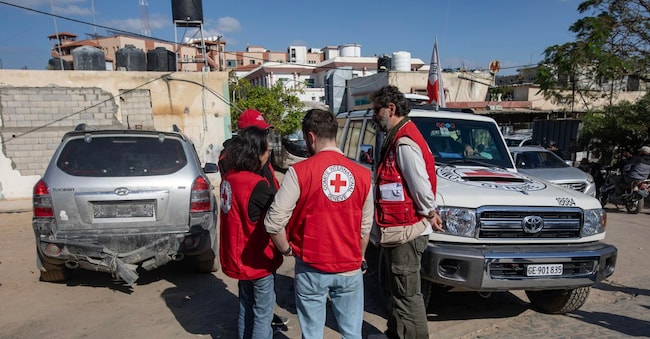
Acknowledging the remains received yesterday by Israel, the bodies of 15 Palestinians were handed over to the Red Cross today as agreed. Hamas loses support and contemplates turning into a party

Israel has launched a "new anti-terrorist operation" in the northeast West Bank, sending reinforcements, bulldozers and helicopters to the Tubas area. "The army and Shin Bet will not allow terrorism to gain a foothold in the area and are acting proactively to counter it," is the goal stated in an IDF note in the morning, when the operation had already been underway for hours. Local sources and the Palestinian Wafa agency reported dozens of arrests - at least 60 - in Tubas, and in the villages of Tammun, Aqaba and Tayassir, while the Red Crescent spoke of ten wounded, mostly from "brutal beatings", of whom six were transferred to hospital. The authorities closed schools for the safety of pupils and teachers. Witnesses reported that soldiers broke into several homes, vandalising them, and closed many roads in Tubas governorate to set up roadblocks.
The mayor of Tubas, Mahmoud Daraghmah, quoted by the Times of Israel, added that the IDF had imposed a curfew and that "in the morning, Apache helicopters fired at the population", while the first citizen of Tammun, Samir Basharat, was among those arrested. The army then gave its own account at the end of the day, explaining that the raid was triggered 'following a preliminary identification by intelligence of attempts to establish strongholds and build terrorist infrastructure in the area'. And he confirmed that 'the air force struck to isolate the area, prior to the entry' of the soldiers, and that 'searches' were initiated, which led to the discovery of a 'control room' and the confiscation of 'funds destined for terrorism'.
The IDF had already conducted an operation in the area, in the Faraa refugee camp south of Tubas, last February and the local authorities had reported the displacement of hundreds of inhabitants. In September, the army had reported killing gunmen in the same region who were preparing an attack. Hamas and the Palestinian Islamic Jihad condemned the IDF operation, considering it part of Israel's plan to annex the West Bank, where attacks by extremist settlers against Palestinians and their crops also continue.
The hunt for Hamas militiamen continues
In Gaza, meanwhile, the IDF continues to hunt for Hamas militiamen trapped in the Rafah tunnels under the Israeli-controlled airspace as they attempt to escape to the surface. It is unclear how many are still trapped, the latest estimates speak of between 60 and 80 men. The army claimed to have killed 20 and arrested eight in the last week alone: one was 'eliminated' this morning by an air raid, three others in a 'close firefight' when ground troops entered a compound to verify the outcome of the attack from the air. There is no trace, however, of the negotiations that the US had so far encouraged to resolve the issue - which risked jeopardising the ceasefire - by trying to convince Israel to let them go abroad or to the Hamas-controlled area of the Strip. Rather, the IDF seems to be waiting for the militiamen to come out in droves, driven by hunger and at the end of their strength, in order to capture or kill them.
In Lebanon, where the Pope's visit is expected, came the ultimatum of Defence Minister Israel Katz: "Either Hezbollah disarms within the year, or Israel will be forced to intervene forcefully" against threats to the Jewish state. "There will be no calm in Beirut or order and stability in Lebanon until Israel's security is guaranteed," Katz added, evoking Sunday's targeted attack on the pro-Iranian movement's military chief, Ali Tabatabai.

