
Israel goes to the polls: a tour of the polling stations amid demonstrations and moments of silence
The families of the victims of 7 October are calling for a commission of inquiry and ‘change’
from our correspondent Roberto Bongiorni
 Aggiungi Il Sole 24 Ore
ai preferiti su Google
TEL AVIV – The election day of what is perhaps the most important election in Israel’s history began 31 minutes before the polling stations opened. The families of the victims of 7 October 2023 and of those taken hostage gathered at 6.29 am in Hostage Square, Tel Aviv. At the exact time the Hamas-led attack began. A minute’s silence. Another demonstration began an hour later, near the Kirya military complex on Begin Street. There are essentially two messages: to call for a commission of inquiry into 7 October and the responsibilities of those who should have prevented it, and to go out and vote, in the name of those who can no longer do so today.
7.3 million Israelis called to vote
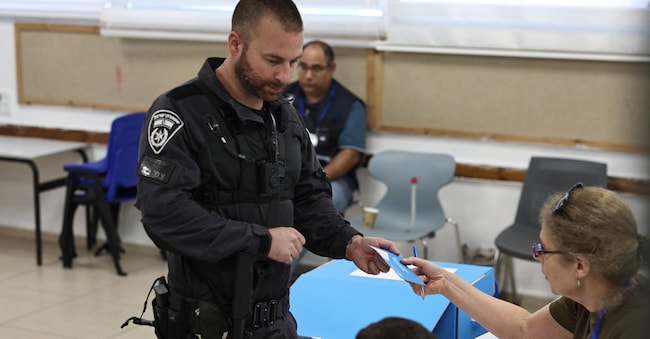
In the secular metropolis of Tel Aviv, the message has been taken on board. Voters have been flocking to the polling stations since the early hours of the morning. Polling stations opened at 7.00 am and will close at 10.00 pm. Around 7.3 million Israelis are eligible to vote to elect the 120 members of the Knesset. A neck-and-neck race between the right-wing bloc led by Benjamin Netanyahu and the opposition forces, in one of the most unpredictable elections in recent years. The most recent polls, however, showed the opposition bloc in the lead, with 52–56 seats compared to around 50 for the right. But neither side, again according to pre-election polls, would reach the 61 seats needed to secure a majority in Parliament and form a government. At stake is not only the leadership of the next government, but also the direction Israel will take after three years of wars and deep internal divisions.
Among Eisenkot’s supporters
At the polling station set up at the primary school on Balfour Street, in a quiet neighbourhood in central Tel Aviv, there were already long queues at nine o’clock in the morning. ‘Perhaps this is the first time I’ve been happy to stand in a queue and wait. After all, we’ve been waiting for this election for such a long time.” Avichai Grossmann prefers to joke about the long queue separating him from the polling booth where he will cast his vote. He will be voting for the party of Gadi Eisenkot, the main opposition candidate to lead the next government. “We’ll be voting for Eisenkot. This is the right time. After twenty years of the same prime minister, the country needs a change.”
The impression of a particularly high turnout is also borne out at national level. At 10.00, the Electoral Commission announced that around 1.2 million Israelis had voted, 0.78 percentage points more than at the same time in 2022. This is the highest figure recorded at this time since 1981. It is not yet possible to determine which bloc is benefiting from this.
Tomer Zak, a 25-year-old university student, is also calmly waiting her turn. “I’m waiting for a change; I was already waiting for it before. Our priority is a commission of inquiry to shed light on who was responsible for the events of 7 October.”


