New contracts

Israel signs new billion-dollar deals: gas to Egypt and arms to Germany

A 35 billion energy deal and a 6 billion-plus defence package strengthen Israel as a regional player, while internal tensions test the Netanyahu government

by Massimo De Laurentiis

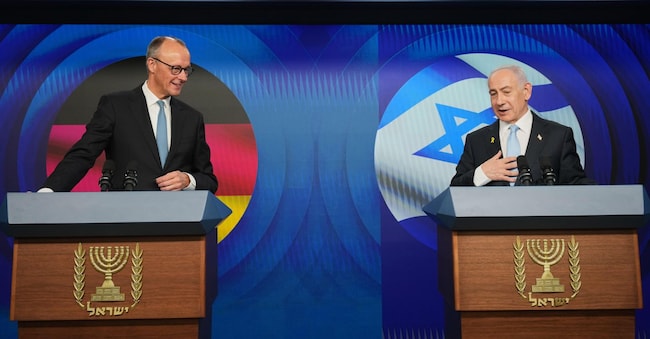
Il primo ministro israeliano Benjamin Netanyahu, a destra, e il cancelliere tedesco Friedrich Merz  (Foto AP/Ariel Schalit, piscina)

2' min read

Translated by AI
Versione italiana

2' min read

Translated by AI
Versione italiana

Israel's Prime Minister Benjamin Netanyahu announced a nearly $35 billion deal to supply gas to Egypt. The deal, unprecedented for the Israeli energy sector, will provide the Jewish state with $18 billion in revenue over the next few years.

The historic agreement with Egypt

An operation that Energy Minister Eli Cohen called historic, all the more relevant considering the complicated relations with Cairo's neighbours, among the voices most critical of Tel Aviv's actions in the Gaza Strip.

Loading...

Netanyahu specified that the agreement was signed with the US company Chevron, with Israeli partners supplying Egypt with natural gas. In a video message, the PM defended this decision, saying that it will strengthen Israel's position as a regional energy power and contribute to the stability of the Middle East.

"Egypt's position on the Palestinian issue is unwavering and will not change," explained Egyptian communications chief Diaa Rashwan, who clarified the exclusively economic nature of the agreement with Israel. According to Cairo, this is a move consistent with its strategic interests, including strengthening Egypt's position as a regional hub for gas trade in the eastern Mediterranean.

The agreement, announced months ago but then postponed, was also reached thanks to pressure from the United States, which has long been pushing for relations between the two neighbours to be eased by sharing economic interests.

The new contract with Germany

Meanwhile, Israel's business is also expanding in the armaments sector. On Wednesday, in fact, the German budget committee approved a 50 billion defence funding package, which also includes more than $3 billion for the purchase of the Israeli-made Arrow 3 anti-missile system. This is an extension of the first contract signed in 2023, which envisaged spending 3.5 billion.

In total, therefore, about 6.7 billion dollars will go to Tel Aviv, a figure that marks a new record. The Ministry of Defence, in fact, in a note celebrates this achievement as 'the largest Israeli defence export deal ever'.

The clashes in Jerusalem

Meanwhile, on the home front, Netanyahu's government remains under pressure. On Thursday, 18 December in Jerusalem, thirteen police officers were slightly injured in a clash with hundreds of ultra-Orthodox Jews. According to reconstructions, it all stemmed from a parking ticket, which triggered a violent reaction that degenerated into the throwing of stones at police and the overturning of a car.

Opposition leader Yair Lapid called the episode an 'unconscionable failure of the government', objecting to the failure to arrest the ultra-Orthodox identified as draft dodgers.

Netanyahu's decision to chair the ministerial team in charge of deciding on the governmental commission of enquiry into responsibility for the 7 October massacre also provoked new protests. According to critics, in this way the premier will influence the investigation, which the public believes should be entrusted to an independent committee.

Copyright reserved ©
Loading...

Brand connect

Loading...

Newsletter

Notizie e approfondimenti sugli avvenimenti politici, economici e finanziari.

Iscriviti