
Istanbul reinvents itself: Global Design Forum kicks off between tradition, innovation and sustainable future
The exhibition brings together designers, architects and artists from around the world to rethink the role of the city as a bridge between East and West. The theme Worlds in Contact guides the confrontation

Key points
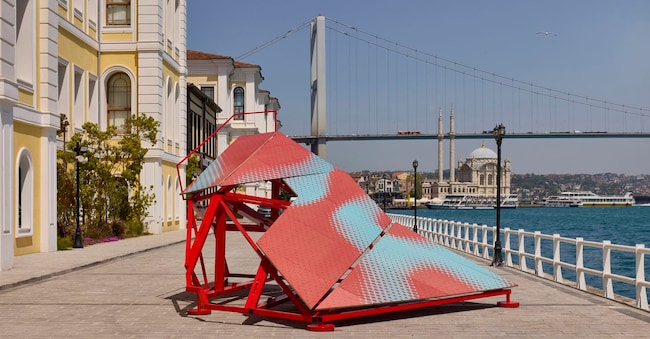
Relaunching Istanbul, the ancient Constantinople, which has always been a crossroads of art and culture halfway between East and West, also as a centre of contemporary design: this is the aim of the first Global Design Forum, underway this week in the Turkish city. "Designers tell stories and solve problems," explains Ben Evans, chairman of the inaugural Istanbul Global Design Forum, who is also director and founder of the London Design Festival and the London Design Biennale. Here we want to tell the new story of Istanbul, which has great energy and dynamism and a lot of talented designers'.
For four days, designers, architects, artists and urban planners from all over the world are gathered at Hagia Irene in the Topkapi Palace complex in Istanbul to exchange ideas and present proposals. The theme of the meeting, organised by People Places Ideas, is Worlds in Contact, to emphasise the importance of human contact and collaboration in a particularly difficult geopolitical context.
Between craftsmanship, innovation and sustainability
The programme, curated by the Forum's artistic director Malek Zeynep, explores the connection between craftsmanship and new technologies, tradition and innovation, respect for local communities and openness to the world, architecture and nature, creation and man's creations. Many famous names have accepted the invitation to create something new in Istanbul.
British designer Tom Dixon explained that the common thread of his 40 years of creativity has been the conviction that design should never be merely decorative but should reflect "a way of thinking and living", which in his case is a constant subtraction to the essential. Lebanese architect Lina Ghotmeh spoke about her 'archaeology of the future', which looks to the past and uses traditional craftsmanship and materials to create new buildings and creations that make space liveable.
Mexican designer Fernando Laposse explained how he rediscovered ancient and time-forgotten techniques and created a new type of craftsmanship using maize - native to Mexico - and transformed it into multi-coloured inlaid panels and furniture, giving employment and hope to farmers in a poor area of Mexico. "To work, ecological sustainability must also include economic sustainability," he said.
Brand connect


Newsletter RealEstate+
La newsletter premium dedicata al mondo del mercato immobiliare con inchieste esclusive, notizie, analisi ed approfondimenti
Abbonati