
Istat: August inflation confirmed to have risen to 3.3 per cent year-on-year
Up from 2.9 per cent in July. High energy prices are a major factor

In August 2026, the national consumer price index for the whole population (NIC), excluding tobacco, rose by +0.5 per cent month-on-month and +3.3 per cent year-on-year (up from +2.9 per cent in July), confirming the preliminary estimate. This was announced by Istat. The rise in inflation mainly reflects price trends for energy products, both regulated (from +14.8% to +18.6%) and, above all, unregulated (from +11.4% to +17.0%), durable goods (from +0.7% to +1.3%) and, to a lesser extent, unprocessed food (from +3.6% to +3.8%); by contrast, the rate of price growth for recreational, cultural and personal care services slowed (from +3.0% to +2.6%), as did that for transport services (from +1.6% to +0.8%). The year-on-year change in prices for food, household and personal care goods – the so-called “shopping basket” (which does not take into account the high cost of fuel) fell (from +1.0% to +0.9%), whilst that of frequently purchased goods (which does include the high cost of fuel) rose (from +3.4% to +4.3%).
Petrol prices rise from +8.0% to +16.3%
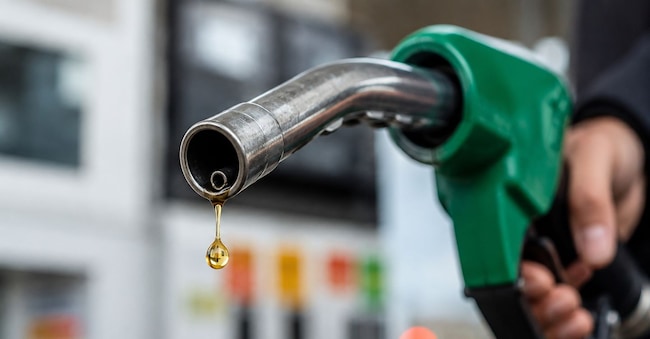
As regards regulated energy products (from +14.8% to +18.6%; +3.0% compared with July), prices for town gas and natural gas in the protected market are rising at an accelerated rate (from +21.8% to +31.0%; +6.2 per cent on July), whilst electricity prices in the protected market remain stable (at +9.7 per cent; no month-on-month change). As regards unregulated energy products (from +11.4 per cent to +17.0 per cent; +2.9 per cent on July), there has been a general increase in the rate of price growth, particularly for heating oil (from +18.2 per cent to +31.8 per cent; +10.7 per cent compared with July), petrol (from +8.0 per cent to +16.3 per cent; +6.3 per cent compared with July), diesel for transport (from +18.8 per cent to +26.7 per cent; +5.2 per cent compared with July), electricity on the open market (from +13.9 per cent to +18.6 per cent; +1.4 per cent compared with July), town gas and natural gas on the open market (from +7.4 per cent to +11.3 per cent; -0.2% compared with July).
Food sector shows slight slowdown
Overall, the food sector shows a very slight slowdown in price growth (from +1.1% to +1.0%; +0.1 per cent compared with July), driven mainly by a deeper fall in the prices of processed foodstuffs (from -0.2 per cent to -0.4 per cent; +0.2 per cent compared with July). This effect is only partly offset by the slight year-on-year acceleration in the prices of unprocessed foodstuffs (from +3.6% to +3.8%; no change month-on-month), which mainly reflects the faster rate of price growth for vegetables, tubers, plantains, cooking bananas and pulses (from +2.6% to +4.0%; +2.2 per cent compared with July), despite a sharper fall in the prices of fruit and nuts (from -0.7 per cent to -1.7 per cent; -4.2 per cent compared with July).
Tourism-related services are being curbed
Within the services sector, price growth for recreational, cultural and personal care services has slowed (from +3.0% to +2.6%; month-on-month change was zero), slowing mainly due to accommodation services (from +4.0% to +3.2%; -1.4% compared with July) and transport services (from +1.6% to +0.8%; +1.3% compared with July), held back by price trends in passenger air transport (from -5.6% to -11.5%; +5.7% compared with July).
Reggio Calabria: the most expensive provincial capital
Looking at the regions, August 2026 saw a generalised rise in the inflation rate. In particular, the year-on-year growth in consumer prices is in line with the national figure in Lazio and Trentino-Alto Adige, whilst it is higher in Calabria, Sicily, Campania, Puglia, Abruzzo, Sardinia, Friuli-Venezia Giulia, Liguria, Umbria, Marche and Veneto; in the other regions, the figure remains below the national average. Among the regional capitals and autonomous provinces, and among non-regional capitals with more than 150,000 inhabitants, the highest inflation is observed in Reggio Calabria (+4.6 per cent), in Naples (+4.0 per cent) and in Catania, Palermo and Rimini (all at +3.9 per cent); the lowest rates are recorded in Parma and Florence (both +2.7 per cent) and in Aosta (+2.6 per cent).


