
Istat and Save the Children data: one in eight children lives in absolute poverty. A deep social wound
The association: “The fight against child poverty must be a cornerstone of the Budget Bill. Among the priorities for action are ensuring school meals for all primary school children and free socio-educational facilities in vulnerable areas.”

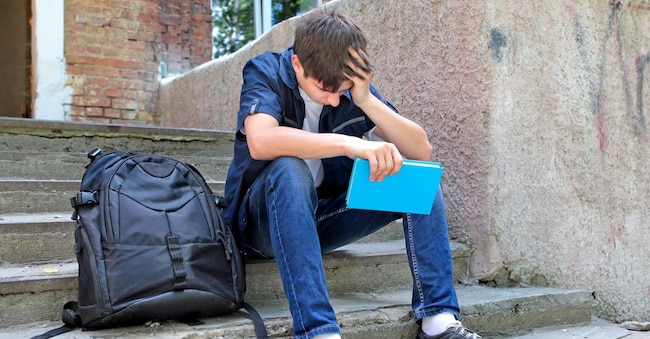
“The ISTAT figures released this morning confirm – albeit with some slight signs of improvement – the existence of a deep social divide in our country, which denies an entire generation of children and young people equal opportunities for development and the chance to let their talents flourish. Faced with this crisis, we expect a radical shift in political and institutional action: combating the social exclusion of children and young people must become a cornerstone of public policy, with structural investment capable of turning the tide before it is too late”, states Save the Children, the organisation that has been fighting for over 100 years to save children at risk and secure a future for them.
The figures
In 2025, one in eight children in Italia (12.5 per cent) will be living in absolute poverty: 1.14 million children and teenagers (1.28 million in 2024). Southern Italy remains the region with the highest incidence of absolute poverty amongst under-18s (15.2 per cent), whilst Central Italy has the lowest (10.7 per cent). Households with children living in absolute poverty account for 11.2 per cent, with a higher incidence among households living with other families (19.4 per cent) and among those with three or more minor children (17.7 per cent). In 2025, too, poverty was found to be much higher in households with children comprising only foreign nationals, for whom the incidence of absolute poverty (31.4 per cent) is four times higher than in those comprising only Italians (7.8 per cent).
“A concrete measure in the Budget Bill”
“In Italia, child poverty is not a temporary phenomenon, but increasingly a chronic condition. It is becoming entrenched before our very eyes as a structural factor passed down from parents to children, cementing inequalities and nipping the country’s social mobility in the bud,” says Giorgia D’Errico, Director of Institutional Relations at Save the Children - Ahead of the passage of the new Budget Law, we strongly urge that the fight against child poverty be placed at the centre of the political agenda through structural and long-term measures capable of addressing the issue on multiple fronts. Among the priorities for action are systematic measures to support families with children and women’s employment, and the expansion of educational provision starting from early childhood. In particular, we reiterate our call to guarantee school meals for all primary school pupils – free of charge for those living in poverty – as an essential public service, in line with the objectives of the European Child Guarantee. In our country, just over 6 out of 10 children benefit from school meals.”
In a context marked by growing pressure from inelastic expenditure such as housing, energy, transport and food – which account for an increasing share of household income – there is a risk that many families will cut back on other expenses such as sporting, cultural and educational activities, the purchase of books and social opportunities, which are, in fact, essential for the development and well-being of young people.
“Targeted measures in the most deprived areas”
“That is why we are calling for – particularly in the most deprived areas – public, accessible and safe socio-educational spaces, open in the afternoons, in the evenings, at weekends and during the summer, where children and young people can take part – helping to shape the programme – in cultural, sporting and recreational activities, and receive educational and psychological support. To this end, we have also put forward a bill, tabled in the Chamber of Deputies with the Chair of the Suburbs Committee as the lead signatory and endorsed across the political spectrum, which is now awaiting debate. ‘Child poverty is not an inevitable fate: we need public policies that rise to the challenge and structural investment in children, so that no child has to pay the price for inequality,’ concludes D’Errico.

Brand connect


Newsletter Scuola+
La newsletter premium dedicata al mondo della scuola con approfondimenti normativi, analisi e guide operative
Abbonati