The survey

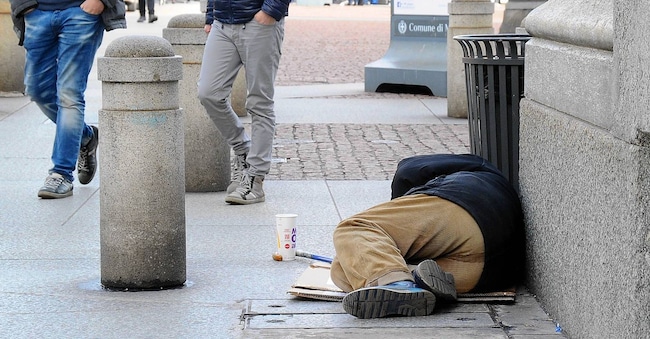
Homeless people, Istat: over half have health problems

Among the most common conditions are those related to mobility difficulties, cardiovascular diseases, mental health conditions and chronic respiratory diseases

 FOTOGRAMMA

3' min read

Translated by AI
Versione italiana

3' min read

Translated by AI
Versione italiana

From mobility difficulties to cardiovascular diseases, more than half of homeless people (54.2 per cent) report having health problems. And access to healthcare can be difficult: whilst 80 per cent of those born in Italia hold a health card, only 40.6 per cent of those born abroad can say the same. This is the picture painted by Istat, in collaboration with fio.PSD-ETS (Italian Federation of Organisations for the Homeless), in the report “Le homeless people: profiles and life trajectories”. The survey was conducted in the 14 central municipalities of the metropolitan area (Turin, Genoa, Milan, Venice, Bologna, Florence, Rome, Naples, Bari, Reggio Calabria, Palermo, Messina, Catania and Cagliari) and is based on data collected in January 2026. The total sample comprised 9,684 people, of whom 5,563 were residents of night-time accommodation facilities and 4,121 were counted on the streets.

Access to care

One of the major issues highlighted by the Istat report concerns the physical and mental wellbeing of those surveyed. When asked about their state of health, 8.5 per cent of homeless people counted on the streets said they did not know the answer, compared with 3 per cent of those living in shelters.

Loading...

A lack of a permanent home – and often of identity documents – can make it difficult to access the necessary healthcare. In total, 51.6 per cent of homeless people hold a health card and therefore have full access to National Health Service (NHS) services, 9 per cent have an STP or ENI code, which allows partial access, whilst 25.9 per cent state that they have neither a card nor a code, and are therefore only able to access emergency services.

Age groups

The proportion of people with the condition out of the total population depends largely on age groups. In the older age groups (aged 55 and over), the proportion exceeds 65 per cent and is significantly higher for people in care homes, but falls considerably when considering the 18–24 age group (where the percentage stands at 31 per cent).

The proportion of homeless people who report having at least one health problem is higher amongst those born in Italia (63.8 per cent) than amongst those born abroad (50.2 per cent); this finding is also linked to age, which is higher amongst those born in Italia.

The most common diseases

As regards the most common health conditions amongst homeless people, the Istat survey paints a varied picture. The most common are mobility difficulties, which also include musculoskeletal problems (12.4 per cent). These are followed by cardiovascular diseases (10.2 per cent), which are more prevalent amongst people born in Italia (16.3 per cent) than amongst those born abroad (7.7 per cent). Among the conditions most frequently cited by respondents are also mental health disorders or psychological distress (9 per cent) and chronic respiratory diseases (8.5 per cent). Finally, 1.2 per cent report having or having had cancer.

In many cases, Istat points out, these are conditions linked to homelessness – illnesses that are often only diagnosed when symptoms appear and are therefore at particularly advanced stages, at which point treatment becomes complex or even impossible in the absence of a stable place to live.

Other findings from the survey

Among the factors most frequently cited as causing homelessness, the survey reveals that financial difficulties – often linked to unemployment – were the predominant issue, mentioned by 31.7 per cent of respondents. A further 26.2 per cent cited housing insecurity (eviction or difficulty finding accommodation), whilst 23.4 per cent cited the breakdown of family ties. Other recurring issues include addictions – ranging from alcoholism to gambling addiction – as well as mental health, disability and illness. As further evidence that this situation is often not attributable to a single cause, four in ten people cited multiple factors (31.9 per cent cited two, and 8.4 per cent cited three or more).

The Istat study also shows that homelessness is often a long-term condition: around a quarter of those surveyed (24.7 per cent) have been living on the streets or in a night shelter for over six years – a figure that rises to 27.2 per cent among those born in Italia – whilst almost half (47.6 per cent) have been in this situation for no more than two years. Furthermore, as the study reveals, 31.7 per cent of those staying in emergency accommodation have never slept rough. These are predominantly mothers with children, women who are victims of violence, and people released from prison or from reception centres for migrants. Finally, for 9.1 per cent, this situation is linked to social isolation, with serious consequences for access to food: 37.7 per cent of isolated homeless people report having been unable to eat at least once in the last year.

Copyright reserved ©
Loading...

Brand connect

Loading...

Newsletter

Notizie e approfondimenti sugli avvenimenti politici, economici e finanziari.

Iscriviti